
Scemblix (Asciminib): The 2035-2040 Generic Opportunity Window
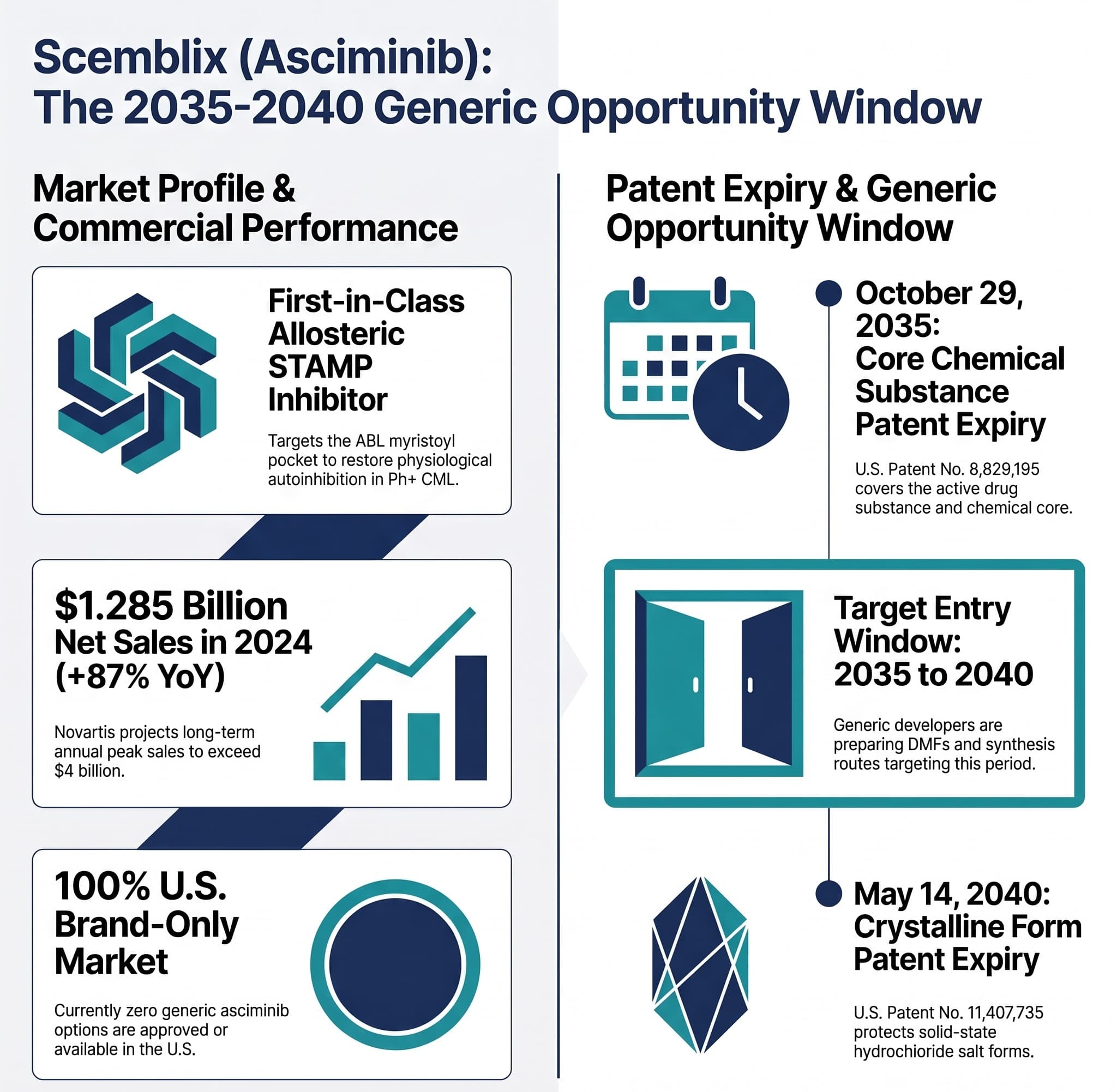
In the crowded and highly competitive market for chronic myeloid leukemia therapies, Novartis has achieved a major commercial and therapeutic milestone with Scemblix (asciminib hydrochloride). Approved under FDA NDA 215358 as oral film-coated tablets in 20 mg, 40 mg, and 100 mg strengths, Scemblix represents the first-in-class allosteric STAMP inhibitor, specifically targeting the ABL myristoyl pocket. By circumventing the traditional adenosine triphosphate catalytic binding site where conventional tyrosine kinase inhibitors bind, asciminib restores physiological autoinhibition of the BCR-ABL1 oncoprotein and maintains robust molecular efficacy even against recalcitrant gatekeeper mutations like T315I. Commercial uptake has surged accordingly, with Scemblix generating $1.285 billion in 2024 global net sales, an 87 percent increase year-over-year, leading Novartis to raise its long-term peak sales outlook to more than $4 billion following expanded frontline indications. The intellectual property fortress safeguarding Scemblix is anchored by foundational compound and solid-state patents listed in the FDA Orange Book. The primary drug substance patent, U.S. Patent No. 8,829,195, claims the core asciminib chemical entity, N-[4-(chlorodifluoromethoxy)phenyl]-6-[(3R)-3-hydroxypyrrolidin-1-yl]-5-(1H-pyrazol-5-yl)pyridine-3-carboxamide, alongside its pharmacological inhibition of ABL1 and BCR-ABL1, and carries an expiration date of October 29, 2035. Beyond this primary chemical barrier, Novartis erected a secondary patent estate led by U.S. Patent No. 11,407,735, which claims crystalline forms of asciminib hydrochloride and extends statutory Orange Book protection through May 14, 2040. Additional secondary filings, including drug product patent U.S. Patent No. 12,252,478 and method-of-use patent U.S. Patent No. 12,252,479, further reinforce the May 2040 perimeter. Today, the United States market for asciminib remains 100 percent brand-only, with zero generic equivalents approved or commercially distributed. With the initial four-year New Chemical Entity data exclusivity window opening generic challenge pathways, major international generic manufacturers and leading Indian API developers, including MSN Laboratories, Hetero Labs, Dr. Reddy's Laboratories, Natco Pharma, and Aurobindo Pharma, are actively mapping synthetic routes, developing non-infringing crystalline forms, and scaling active pharmaceutical ingredient Drug Master Files. The structural divergence between the 2035 core substance expiration and the 2040 crystalline salt cliff defines a high-value five-year generic opportunity window. Generic applicants capable of navigating or successfully invalidating the secondary crystalline form claims could unlock commercial access well before the turn of the decade. SCOPE NOTE: This analysis is based strictly on publicly disclosed FDA Orange Book patent listings, approved prescribing information, and corporate SEC and financial disclosures. It excludes non-public Paragraph IV certifications, confidential commercial licensing terms, and ongoing international administrative patent oppositions.
What we do
We track expirations like this continuously
This is one drug, picked for today's post. A Portfolio Retainer watches an entire portfolio or compound class on an ongoing basis and flags new matching filings as they publish.