
Allergan's First-Filed Eluxadoline Patent Outlived Its Children. The Federal Circuit Refused to Let Double Patenting Cut It Down.
By Prashant Kotian, PhD Researcher (Chemistry), ICT Mumbai
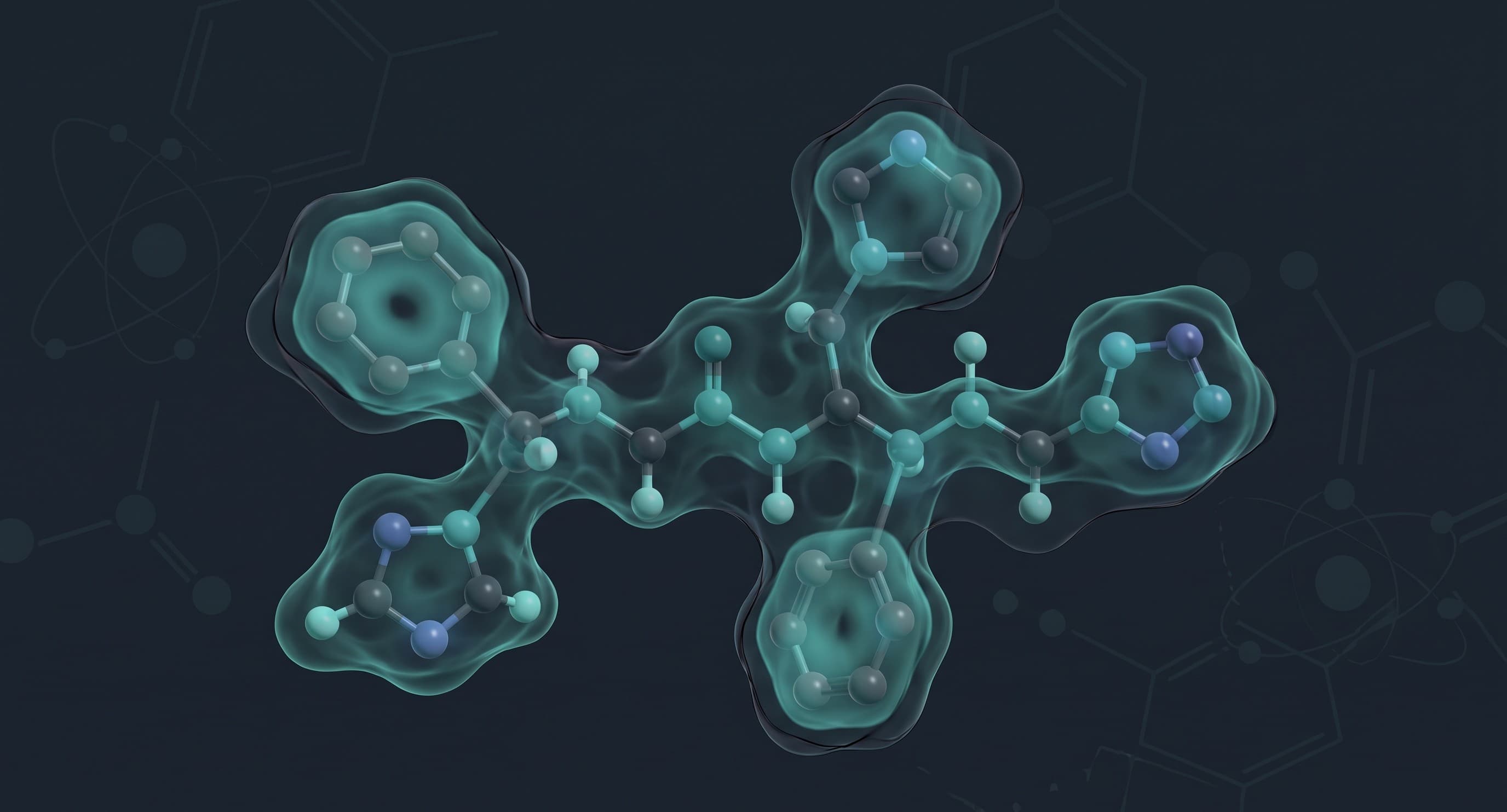
Eluxadoline, marketed by Allergan as Viberzi, is an orally active small molecule developed to treat irritable bowel syndrome with diarrhea (IBS-D). Chemically, the compound is a synthetic peptidomimetic designed with dual pharmacology: it acts as a mixed mu-opioid receptor agonist and delta-opioid receptor antagonist, alongside kappa-opioid agonist activity. This targeted receptor profile was engineered to normalize bowel motility and relieve visceral abdominal pain without the severe constipating effects and central nervous system liabilities common to traditional, unselective opioid agonists.
In U.S. Patent No. 7,741,356 (the '356 patent), Janssen Pharmaceutica and Allergan claimed the base chemical entity itself. Claim 40 specifically recites eluxadoline and its pharmaceutically acceptable salts. The application was filed on March 14, 2005, marking the very beginning of the patent family. Because the USPTO took over five years to examine the application, issuing it on June 22, 2010, the patent was awarded 1,107 days of Patent Term Adjustment (PTA) under 35 U.S.C. 154(b). Allergan subsequently disclaimed all but 467 days of that adjustment to coordinate with Patent Term Extension (PTE) under 35 U.S.C. 156, establishing an adjusted expiration date of June 24, 2026.
The double patenting dispute arose when Allergan filed continuation applications within the same family sharing the identical March 14, 2005 priority date. Two child patents issued: U.S. Patent No. 8,344,011 (the '011 patent), claiming methods of treating pain and gastrointestinal disorders using eluxadoline, and U.S. Patent No. 8,609,709 (the '709 patent), claiming the eluxadoline compound itself subject to a terminal disclaimer over the '356 patent. Neither child patent experienced examination delays, and neither received PTA. Consequently, both continuation patents expired on the standard statutory deadline of March 14, 2025 -- exactly 20 years from the priority date.
When Indian generic manufacturers MSN Laboratories and Sun Pharmaceutical Industries filed Abbreviated New Drug Applications (ANDAs) seeking approval to market generic eluxadoline tablets, Allergan sued for infringement. The generic challengers raised an obviousness-type double patenting (ODP) defense against Claim 40 of the parent '356 patent. Relying on the Federal Circuit's 2023 decision in In re Cellect, the defendants argued that because the parent patent expired later than its child continuation patents due to PTA, and because the claims were patentably indistinct variants within the same family, the parent patent was invalid for impermissibly extending exclusivity beyond the expiration of its children.
The U.S. District Court for the District of Delaware adopted this theory. Judge Andrews held that In re Cellect announced a strict expiration-date rule with no exceptions: because the parent patent expired on June 24, 2026, and the reference child patents expired on March 14, 2025, Claim 40 was invalid for obviousness-type double patenting.
The Federal Circuit reversed in a precedential decision authored by Circuit Judge Lourie, joined by Circuit Judges Dyk and Reyna. The court held that the district court had misapplied In re Cellect by answering the wrong legal question. Cellect established that PTA must be taken into account when evaluating expiration dates for double patenting, but it did not dismantle the foundational principle of why obviousness-type double patenting exists in the first place.
As Judge Lourie emphasized, tracing the doctrine back to the Supreme Court's 1894 decision in Miller v. Eagle Manufacturing Co., the sole purpose of obviousness-type double patenting is to prevent a patentee from obtaining a second, later-expiring patent for a patentably indistinct variant of an invention already patented. The doctrine exists to prevent patentees from gaming the patent system through successive filings that artificially prolong their period of statutory exclusivity.
In Allergan, the parent '356 patent was not a second, later-expiring patent; it was the first patent ever filed and the first patent ever issued in the family. It was the original benchmark patent that defined the maximum allowable term of exclusivity for eluxadoline. Its extended term did not result from sequential, incremental filings, but from a statutory guarantee enacted by Congress in 35 U.S.C. 154(b) to compensate the patentee for administrative delays caused by the government during prosecution.
The court established a bright-line rule: a first-filed, first-issued patent cannot be invalidated for obviousness-type double patenting by a later-filed, later-issued reference patent sharing a common priority date. A child continuation patent cannot reach back in time and retroactively invalidate the statutory PTA term granted to its own parent.
The decision also resolved a crucial formulation chemistry dispute under 35 U.S.C. 112. In four related patents (U.S. Patent Nos. 9,675,587; 9,763,916; 10,188,632; and 10,668,051), Allergan claimed specific solid oral dosage forms comprising 75 mg or 100 mg of eluxadoline in combination with specific amounts of silicified microcrystalline cellulose, crospovidone, mannitol, and magnesium stearate.
The generic defendants argued that these formulation claims were invalid for lack of adequate written description because the asserted claims omitted colloidal silicon dioxide (a glidant). Defendants asserted that colloidal silica was an essential element of the commercial tablet formulation because every working example in the specification included it to maintain blend uniformity and prevent punch sticking.
The Federal Circuit firmly rejected this essential-element argument and reversed the district court's finding of invalidity. Writing for the majority, Judge Lourie reaffirmed that an applicant is not required to claim every feature present in preferred embodiments unless the specification clearly and unmistakably characterizes that feature as indispensable to the invention. Here, the specification expressly described embodiments with or without a glidant, and the original claims as filed explicitly recited formulations where the glidant was optional. The court held that possession of an invention under Section 112 is governed by what the inventor actually claimed, not by importing unrecited processing aids from the examples.
For generic litigators and patent strategists, Allergan v. MSN creates a definitive safe harbor for small-molecule composition-of-matter patents. Innovators who incur extensive prosecution delays on their original chemical genus or species filings can safely file continuation applications to downstream polymorphs, formulations, or methods of treatment without risking the automatic forfeiture of their parent patent's PTA term. Conversely, generic challengers can no longer weaponize child patents against earlier-issued parent patents under an unconstrained reading of Cellect.
What we are not weighing in on: The parties subsequently litigated additional post-decision procedural motions, and generic market entry timelines remain governed by confidential settlement agreements and ongoing regulatory proceedings. Our analysis addresses the substantive chemical and patent law principles settled by the Federal Circuit's precedential opinion, and does not speculate on commercial launch timing or active disputes.
What we do
See if this applies to one of your matters
We run genus/species (Markush) claim coverage analysis, Section 3(d) compliance screening, and prior-art structural triage on real chemical structures: not keyword search. If a case like this one is live for you, we'll run a free sample on a compound of your choosing.