
Alnylam Defined Branched Alkyl Too Narrowly. The Federal Circuit Held It Could Not Reach Moderna's LNP.
By Prashant Kotian, PhD Researcher (Chemistry), ICT Mumbai
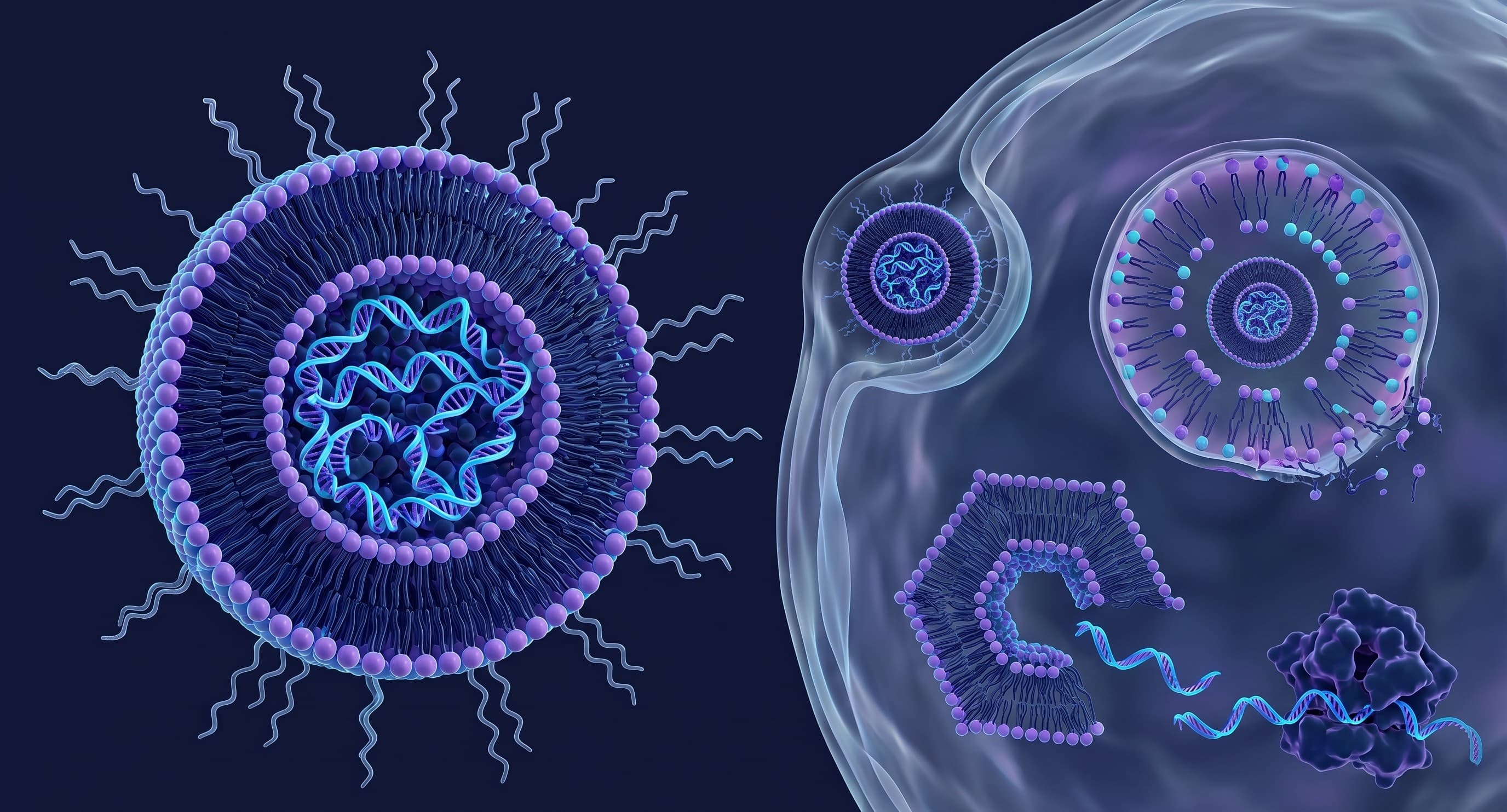
## The Biophysical Challenge of mRNA Delivery: Lipid Nanoparticle Architecture
The clinical translation of messenger RNA (mRNA) therapeutics and vaccines depends entirely on supramolecular formulation science. Unprotected, single-stranded mRNA is an exceptionally fragile, polyanionic macromolecule (molecular weight typically exceeding 300 to 1,000 kDa) that cannot spontaneously cross the hydrophobic interior of cellular plasma membranes. In systemic circulation, naked mRNA is rapidly degraded within minutes by ubiquitous extracellular ribonucleases (RNases) and cleared by the reticuloendothelial system.
To overcome these biological barriers, pharmaceutical science engineered lipid nanoparticles (LNPs)--spherical nanostructures typically 60 to 100 nm in diameter consisting of four distinct lipid components organized around a dense core of electrostatically condensed nucleic acid:
1. Ionizable Cationic Lipids: Form the functional engine of the nanoparticle, mediating mRNA encapsulation at low pH and facilitating cellular uptake and endosomal membrane disruption. 2. Helper Phospholipids: Such as 1,2-distearoyl-sn-glycero-3-phosphocholine (DSPC), which provide structural bilayer rigidity and promote lamellar phase stability. 3. Cholesterol: Fills interstitial molecular voids between lipid acyl chains, modulating membrane fluidity, particle integrity, and systemic stability. 4. Polyethylene Glycol (PEG)-Lipids: Such as PEG-DMG, which form a protective hydrophilic steric corona on the nanoparticle exterior, preventing particle aggregation, minimizing serum protein opsonization, and extending circulation half-life.
Among these four constituents, the ionizable cationic lipid is universally recognized as the decisive determinant of delivery potency, endosomal release efficiency, and systemic biocompatibility.
## Ionizable Cationic Lipids: The Molecular Engine of Endosomal Escape
Unlike permanently charged quaternary ammonium cationic lipids--which exhibit significant cytotoxicity, hepatic accumulation, and hemolytic membrane damage in vivo--ionizable lipids are specifically engineered with an apparent acid dissociation constant (pKa) precisely tuned between 6.0 and 6.8.
This narrow pKa window enables a vital physiological charge switch: - In Blood Circulation (pH ~7.4): The tertiary amine headgroup is predominantly uncharged (neutral), minimizing non-specific electrostatic interactions with serum proteins and avoiding premature membrane lysis. - Inside Early and Late Endosomes (pH ~5.0 to 6.5): Following clathrin- or macropinocytosis-mediated cellular internalization, the endosomal lumen rapidly acidifies via proton-pumping v-ATPases. Within this acidic compartment, the tertiary amine groups undergo protonation, acquiring a dense net positive charge.
This protonation triggers electrostatic pairing between the cationic ionizable lipids of the LNP and the endogenous anionic phospholipids (primarily phosphatidylserine and phosphatidic acid) in the inner leaflet of the endosomal membrane. This charge neutralization promotes a rapid conformational transition from an ordered lamellar (L-alpha) phase into a non-bilayer, inverted hexagonal (H_II) phase. The resulting inverted hexagonal lipid tubules create transient, localized membrane disruptions that destabilize the endosome, allowing intact mRNA to escape into the cytosol for ribosomal translation.
Because the hydrophobic tail architecture directly governs the packing parameter and membrane fusogenicity of the lipid, the branching pattern, chain length, and presence of biodegradable ester linkages within the alkyl tails represent the core battleground of LNP chemical patents.
## Alnylam's Patent Portfolio and the Strict Doctrine of Lexicography
Alnylam Pharmaceuticals pioneered lipid nanoparticle delivery systems for small interfering RNA (siRNA), including the formulation underpinning Onpattro (patisiran, approved in 2018). In U.S. Patent Nos. 11,246,933 and 11,382,979, Alnylam sought to protect a broad class of biodegradable ionizable lipids for delivering therapeutic nucleic acids.
The asserted claims of the '933 and '979 patents recited lipid formulations comprising an amino lipid where a substituent was defined as a "branched alkyl" group. However, in the patent specification's dedicated "Definitions" section, Alnylam's patent attorneys inserted a highly specific, explicit definition:
"The term 'branched alkyl' refers to an alkyl group in which a carbon atom is (1) bound to at least three other carbon atoms and (2) is not a ring atom of a cyclic group, unless otherwise specified."
Under thirty years of Federal Circuit jurisprudence established in Phillips v. AWH Corp. (415 F.3d 1303) and Thorner v. Sony Computer Entertainment America LLC (669 F.3d 1362), an inventor may act as their own lexicographer to define a claim term in a manner that differs from ordinary usage. However, when a patentee explicitly sets forth a definition with clear intent, the patentee is bound by that definition.
## The Chemical Anatomy of Moderna's SM-102 Lipid
In response to the global COVID-19 pandemic, Moderna, Inc. developed its blockbuster mRNA vaccine, SPIKEVAX (mRNA-1273), formulating the Spike-encoding mRNA within an LNP system powered by a proprietary synthetic ionizable lipid designated SM-102.
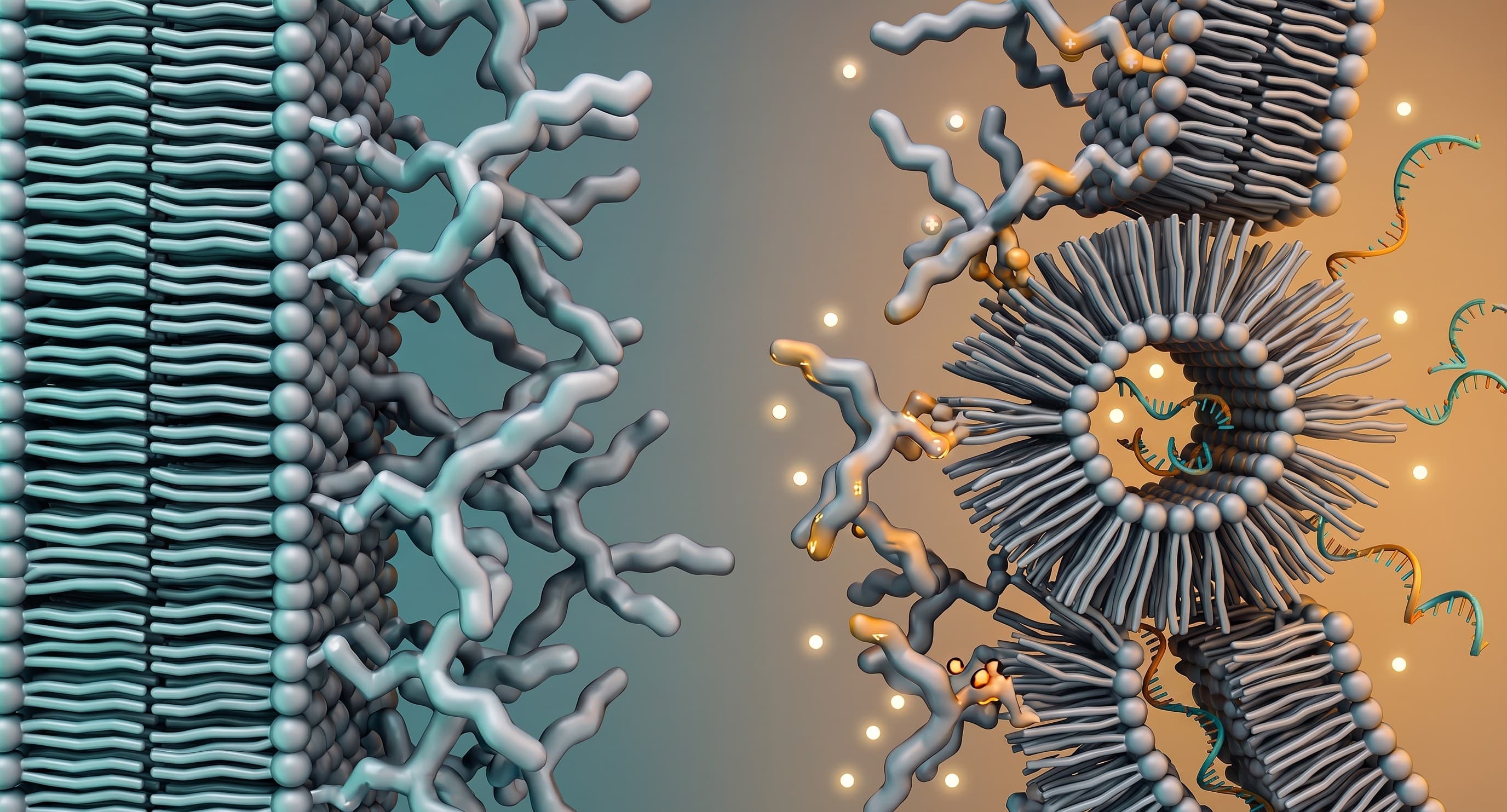
Chemically, SM-102 is designated as: heptadecan-9-yl 8-((2-hydroxyethyl)(6-oxo-6-(undecyloxy)hexyl)amino)octanoate.
SM-102 features a tertiary amine core flanked by a 2-hydroxyethyl group, a primary linear octanoate arm terminating in a branched lipid tail, and a secondary hexyl arm terminating in an undecyl ester. Crucially, the primary hydrophobic tail consists of a 1-octylnonyl group (a heptadecan-9-yl moiety) bonded directly to an ester oxygen: -C(=O)-O-CH(C8H17)2
Alnylam sued Moderna in the U.S. District Court for the District of Delaware, alleging that Moderna's use of SM-102 infringed the '933 and '979 patents because the heptadecan-9-yl tail constitutes a "branched alkyl" group.
## The Branching Carbon Dilemma: Carbon-Carbon versus Carbon-Heteroatom Connectivity
The entire legal dispute turned upon a single fundamental chemical question: How many carbon atoms are bonded to the branching point of the lipid tail?
In synthetic organic chemistry, a hydrocarbon chain that bifurcates at a secondary carbon attached to a heteroatom (such as the oxygen of an ester or the nitrogen of an amine) is routinely referred to by chemists as an "alpha-branched alkyl" group. The branching carbon atom in SM-102 is Carbon-9 of the heptadecyl backbone.
When examining the covalent bonding geometry of this C-9 carbon: 1. It is covalently bonded to an ester oxygen atom (-O-). 2. It is covalently bonded to a hydrogen atom (-H). 3. It is covalently bonded to Carbon-8 of the first aliphatic chain (-CH2-). 4. It is covalently bonded to Carbon-10 of the second aliphatic chain (-CH2-).
Therefore, the branching carbon is bonded to exactly TWO other carbon atoms and ONE oxygen atom.
Under Alnylam's express patent definition, a "branched alkyl" required a carbon atom that is "bound to at least three other carbon atoms." Because Carbon-9 is bonded to only two other carbons, SM-102 literally fails the patent's lexicographic rule.
Alnylam vigorously contested this conclusion, advancing several chemical arguments: - First, Alnylam argued that the introductory proviso "unless otherwise specified" allowed the court to look to claim context. - Second, Alnylam pointed to claim embodiments where the branched alkyl was directly connected to an ester oxygen. Alnylam argued that requiring three carbon-carbon bonds at an alpha-position attached to oxygen would require a quaternary carbon center (a tertiary alcohol derivative), which would be synthetically difficult, sterically hindered, and would exclude preferred embodiments disclosed in the specification. - Third, Alnylam presented expert testimony from practicing organic chemists asserting that any person of ordinary skill in the art (POSA) understands that an alkyl chain branching into two sub-chains is a "branched alkyl," regardless of whether the branch point attaches to a heteroatom.
## The Federal Circuit's Decision: Patentees Cannot Escape Their Own Definitions
On June 4, 2025, the U.S. Court of Appeals for the Federal Circuit issued a unanimous precedential opinion authored by Circuit Judge Richard G. Taranto (joined by Circuit Judges Raymond T. Chen and Todd M. Hughes), affirming the District Court's claim construction and judgment of non-infringement in favor of Moderna.
Judge Taranto held that Alnylam's explicit definition in the specification governed the inquiry: - Formal Lexicography: The definition appeared in a section explicitly labeled "Definitions," framed in quotation marks, and used classic definitional terminology ("refers to"). This established beyond doubt that Alnylam intended to serve as its own lexicographer. - Demanding Standard for Departure: The court emphasized that departing from an express definition requires an equally clear and unmistakable statement elsewhere in the patent. Merely reciting a claim limitation in a chemical formula does not "otherwise specify" an alternative definition. - Disclaimed or Narrowed Embodiments: The Federal Circuit reaffirmed that when a patentee selects a definition that happens to be narrower than what was needed to cover certain disclosed embodiments, the court cannot rewrite the definition. The public, competitors, and generic developers are entitled to rely upon the plain boundaries set forth by the patentee during examination.
Because Moderna's SM-102 lipid contained a branching carbon bonded to only two carbon atoms and one heteroatom, it fell completely outside Alnylam's self-imposed claim scope.
## Implications for Small-Molecule and Lipid Nanotechnology Patent Drafting
The Federal Circuit's decision in Alnylam v. Moderna serves as a masterclass in the hazards of boilerplate definitions in chemical patent drafting:
1. Rigorous Graph-Theoretic Scrutiny: In organic and polymer chemistry, drafting attorneys frequently insert generic definitions of terms like "alkyl," "heteroalkyl," or "branched alkyl" without calculating their precise topological application across all claimed substituent positions. A definition requiring bonding to "at least three other carbon atoms" works seamlessly for internal tertiary carbons in an alkane chain, but inadvertently excludes secondary alkyl groups branching at an ester or ether oxygen linkage. 2. Lexicography Cuts Both Ways: While lexicography allows an applicant to establish broad or unconventional meanings, it equally binds the patentee to unintended exclusions. Courts will not salvage patent claims from careless lexicography by invoking general chemical intuition. 3. Freedom-to-Operate for Competitors: For generic manufacturers and competing biotechnology innovators, the ruling demonstrates that non-infringement often lives in the meticulous gap between standard chemical nomenclature and a patentee's clumsy intrinsic definitions.
By holding Alnylam to the precise words of its own definitions section, the Federal Circuit reinforced that in patent law, precision in the file wrapper outweighs post-hoc chemical arguments every time.
What we do
See if this applies to one of your matters
We run genus/species (Markush) claim coverage analysis, Section 3(d) compliance screening, and prior-art structural triage on real chemical structures: not keyword search. If a case like this one is live for you, we'll run a free sample on a compound of your choosing.