
Alphapharm Ring-Walked a Pyridine Methyl to Form Pioglitazone. The Federal Circuit Held Severe Weight Gain in the Prior Art Taught Away.
By Prashant Kotian, PhD Researcher (Chemistry), ICT Mumbai
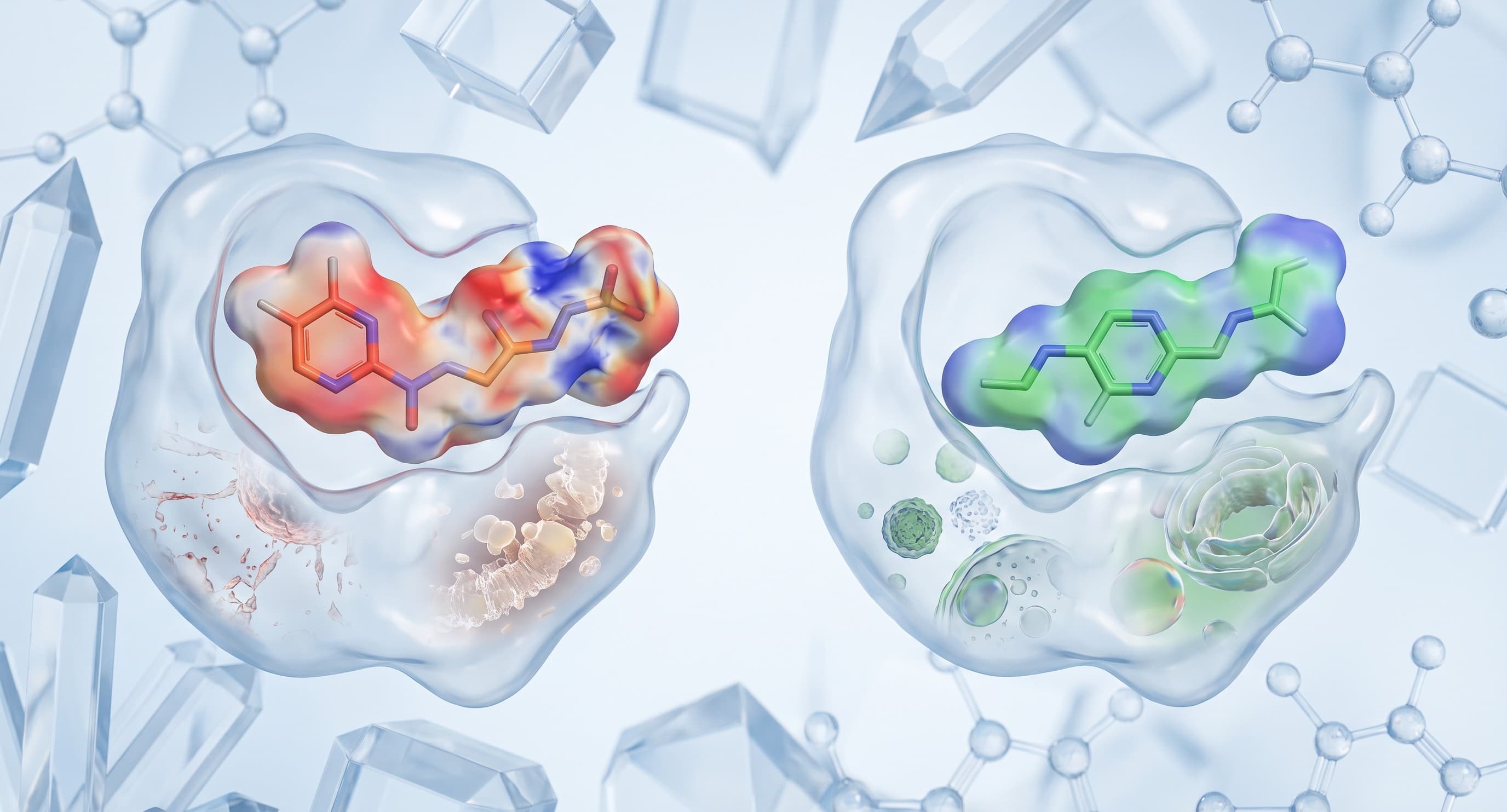
In pharmaceutical patent litigation, generic challengers frequently attempt to invalidate small-molecule patents by deconstructing the commercial drug into a series of ostensibly simple structural modifications from an earlier published molecule. Under 35 U.S.C. 103, however, structural similarity alone cannot establish obviousness. In the landmark case Takeda Chemical Industries, Ltd. v. Alphapharm Pty., Ltd. (492 F.3d 1350, Fed. Cir. 2007), the U.S. Court of Appeals for the Federal Circuit solidified the foundational two-step framework governing chemical obviousness, rejecting an attempt to invalidate pioglitazone hydrochloride (Actos, U.S. Patent No. 4,687,777) through retrospective "ring walking."
Pioglitazone is an orally active antidiabetic agent belonging to the thiazolidinedione (glitazone) therapeutic class. Mechanistically, it functions as a potent and selective agonist of peroxisome proliferator-activated receptor gamma (PPAR-gamma), a nuclear receptor that regulates carbohydrate and lipid metabolism. At the molecular level, pioglitazone features a central 1,3-thiazolidine-2,4-dione polar headgroup tethered through a methylene bridge to a phenoxyethyl linker, terminating in an aromatic pyridine heterocycle. Crucially, the pyridine ring carries an ethyl substituent positioned precisely at the 5-position: 5-[[4-[2-(5-ethylpyridin-2-yl)ethoxy]phenyl]methyl]-1,3-thiazolidine-2,4-dione.
Seeking to introduce generic pioglitazone prior to patent expiry, generic challenger Alphapharm filed an Abbreviated New Drug Application (ANDA) with a Paragraph IV certification asserting that the asserted claims of the 777 patent were invalid for obviousness. Alphapharm pointed to prior art disclosures authored by Takeda researcher Dr. Takashi Sohda, specifically U.S. Patent No. 4,287,200 (Sohda I) and a 1982 paper published in Chemical and Pharmaceutical Bulletin (Chem. Pharm. Bull. 30: 3580-3600, 1982). Among the hundreds of thiazolidinediones disclosed across those references, Alphapharm singled out a specific analog dubbed "Compound b" (compound 14 in the 1982 reference).
Compound b was undeniably close in overall structure to pioglitazone, sharing the identical phenoxyethyl thiazolidinedione core and a pyridyl ring. However, its substitution pattern diverged in two distinct respects: Compound b bore a methyl substituent rather than an ethyl group, and that substituent was located at the 6-position of the pyridine ring (6-methyl-2-pyridyl) rather than the 5-position (5-ethyl-2-pyridyl). To assemble pioglitazone from Compound b, Alphapharm argued that a person of ordinary skill in the art would have undertaken two simultaneous chemical steps: first, "ring walking" the methyl group from position 6 to position 5 on the pyridine ring, and second, homologating the methyl group into an ethyl group. Alphapharm asserted that because Compound b exhibited potent blood-glucose-lowering activity in diabetic rodent models, selecting it as a lead and making these conventional modifications was prima facie obvious.
Presiding over the bench trial in the U.S. District Court for the Southern District of New York, Judge Denise Cote rejected Alphapharm's obviousness defense in its entirety. Judge Cote found that Alphapharm had relied on impermissible hindsight reconstruction and had failed to prove by clear and convincing evidence that a skilled artisan would have selected Compound b as a lead compound. The district court went further, determining that Alphapharm's Paragraph IV certification was baseless and filed in bad faith, ultimately declaring the case exceptional under 35 U.S.C. 285 and awarding Takeda over $16 million in attorney and expert fees.

On appeal, the Federal Circuit affirmed Judge Cote's validity determination in an opinion authored by Circuit Judge Alan D. Lourie. The court formalized the two-step inquiry required to prove obviousness of a chemical compound: first, the court must determine whether a chemist of ordinary skill in the art would have selected the asserted prior art compounds as "lead compounds"--defined as natural starting points for further development efforts based on their promising overall properties; and second, whether the prior art would have provided a reason or motivation to modify that lead compound to reach the claimed invention, with a reasonable expectation of success.
Applying this framework, Judge Lourie held that Alphapharm's challenge collapsed at the very first hurdle: Compound b was not a compound that a skilled artisan would ever have selected as a lead candidate. While Sohda's 1982 publication demonstrated that Compound b possessed strong blood-sugar-lowering efficacy, the same reference published critical pharmacological data showing that Compound b caused acute toxicological liabilities in rats: a 34% increase in body weight and significant accumulation of brown adipose tissue (brown fat) weight.
From a medicinal chemistry perspective, this disclosure was disqualifying. In therapeutics designed to manage type 2 diabetes--a chronic metabolic condition where the patient population already battles obesity, insulin resistance, and cardiovascular liabilities--a compound causing a 34% weight surge and adipose tissue proliferation was an immediate failure. As Judge Lourie observed, these severe adverse properties directly taught away from selecting Compound b. A medicinal chemist evaluating Sohda's hundred-molecule library would have bypassed Compound b in favor of alternative disclosed thiazolidinediones (such as compound a, compound c, or compound 6) that demonstrated comparable glucose-lowering activity without inducing body weight gain or brown fat expansion.
The Federal Circuit further held that even if an artisan had chosen Compound b as a lead, Alphapharm completely failed the second prong of the analysis. The prior art provided zero teaching, suggestion, or motivation to alter the 6-methyl-2-pyridyl substitution pattern to a 5-ethyl-2-pyridyl moiety. Moving a substituent around a heteroaromatic ring ("ring walking") alters electron density, dipole moments, and spatial steric clashes with receptor binding pockets. Alphapharm pointed to no structure-activity relationship (SAR) data indicating that shifting the alkyl substituent from the 6-position to the 5-position would cure the brown fat and weight gain liabilities while preserving PPAR-gamma agonism. Homologating methyl to ethyl across a repositioned site was an exercise in 20/20 hindsight.
The Federal Circuit's ruling in Takeda came shortly after the Supreme Court's landmark decision in KSR International Co. v. Teleflex Inc. Generic challengers argued that KSR's flexible "obvious to try" standard relaxed the burden on challengers and permitted piecing together chemical modifications. Judge Lourie expressly clarified that KSR did not upend chemical patent law: "obvious to try" applies only when there is a finite number of identified, predictable solutions. Where a prior art library contains hundreds of candidate compounds, and where selecting one compound requires ignoring clear toxicological red flags and performing non-directed structural substitutions, obvious-to-try cannot be invoked to bypass the lead compound requirement.
For generic pharmaceutical developers and patent attorneys, Takeda v. Alphapharm remains the golden benchmark of small-molecule jurisprudence. It establishes that chemical obviousness cannot be proven by retroactively tracing the shortest structural path between a prior art reference and a commercial drug. Originators can effectively shield their core substance patents when the prior art prototype exhibits therapeutic liabilities that teach away, and when the claimed molecular architecture represents a non-obvious departure that delivers superior, clean efficacy.
What we do
See if this applies to one of your matters
We run genus/species (Markush) claim coverage analysis, Section 3(d) compliance screening, and prior-art structural triage on real chemical structures: not keyword search. If a case like this one is live for you, we'll run a free sample on a compound of your choosing.