
AstraZeneca Narrowed Alkaline Salt to Six Cations. The Court Held Hanmi Strontium Escaped.
By Prashant Kotian, PhD Researcher (Chemistry), ICT Mumbai
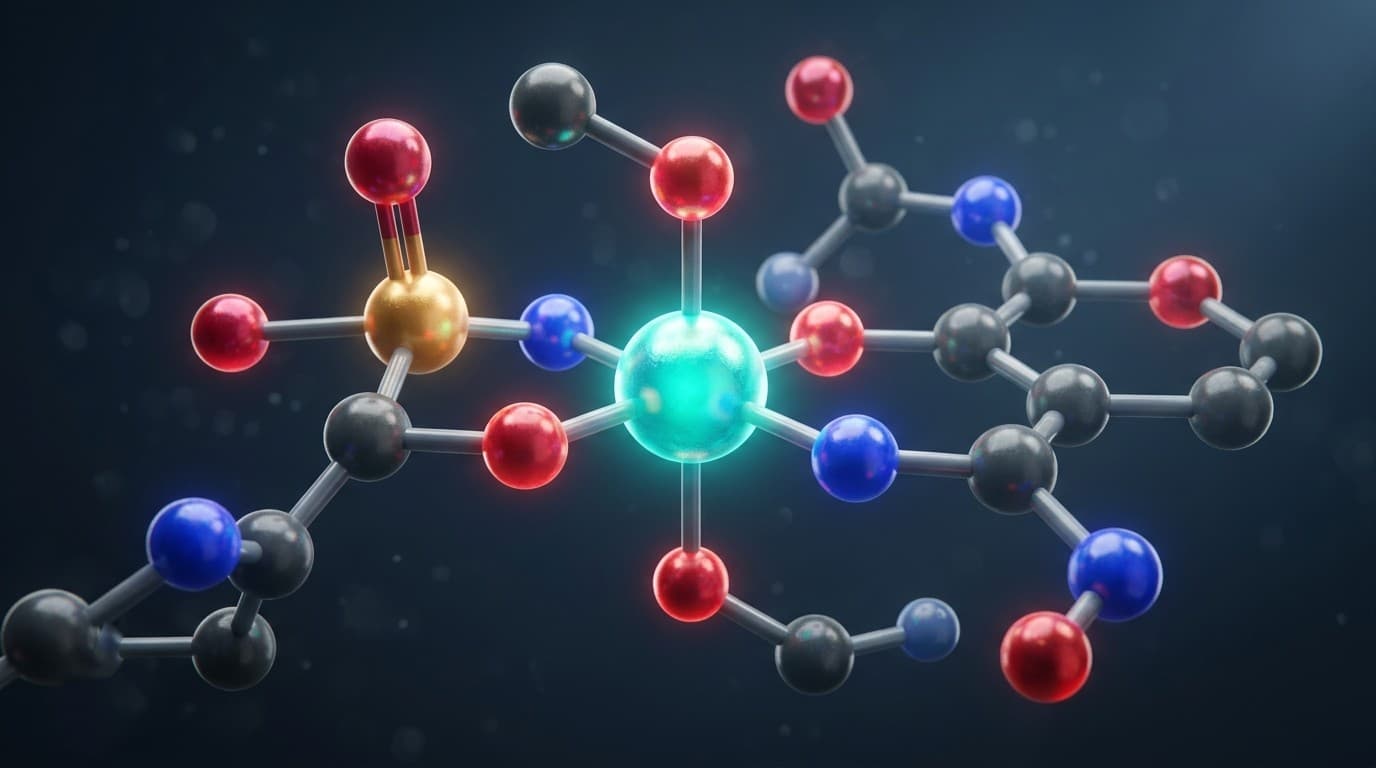
In pharmaceutical intellectual property, the boundary between an exemplary genus disclosure and a binding claim disclaimer represents one of the most perilous drafting traps. Innovator companies routinely attempt to assert broad chemical terms during litigation while relying on narrow, highly optimized embodiment rosters drafted decades earlier. In AstraZeneca AB v. Hanmi USA, Inc., 554 Fed. Appx. 912 (Fed. Cir. 2013), affirming Civil Action No. 11-760 (D.N.J.), Circuit Judge Richard G. Taranto, writing for a panel that included Circuit Judges Timothy B. Dyk and Kimberly A. Moore, demonstrated how restrictive intrinsic drafting neutralizes patent enforcement against non-infringing salt redesigns.
1. THE ESOMEPRAZOLE SALT LANDSCAPE AND PATENT MONOPOLY: AstraZeneca commercialized the blockbuster proton pump inhibitor Nexium, whose active pharmaceutical ingredient is esomeprazole magnesium, the optically pure (S)-enantiomer of omeprazole. In the United States District Court for the District of New Jersey, AstraZeneca asserted two primary patents against generic challenger Hanmi Pharmaceutical and marketing partner Amneal Pharmaceuticals: U.S. Patent No. 5,714,504 (the '504 patent) and U.S. Patent No. 5,877,192 (the '192 patent).
Independent claim 1 of the '504 patent claimed a pharmaceutical formulation comprising an 'alkaline salt' of the enantiomerically isolated (-)-enantiomer of omeprazole, together with a pharmaceutically acceptable carrier. Independent claim 1 of the '192 patent similarly claimed a 'pharmaceutically acceptable salt' of esomeprazole with optical purity of at least 99.8%.
2. THE CHEMICAL DESIGN-AROUND: ESOMEPRAZOLE STRONTIUM: Rather than submitting an Abbreviated New Drug Application (ANDA) seeking to replicate the commercial magnesium salt, Hanmi pursued an alternative regulatory and synthetic pathway under Section 505(b)(2) of the Federal Food, Drug, and Cosmetic Act. Hanmi synthesized esomeprazole strontium, substituting the group 2 alkaline earth divalent cation strontium (Sr2+) in place of magnesium (Mg2+).
From a solid-state coordination chemistry perspective, replacing magnesium with strontium alters the crystal lattice packing. Magnesium possesses an ionic coordination radius of approximately 72 picometers and forms a tightly coordinated octahedral hexahydrate or crystalline complex. Strontium, situated lower in group 2 of the periodic table, possesses a substantially larger ionic radius of approximately 118 picometers. This expanded ionic volume lowers charge density, modifies counterion-sulfoxide dipole interactions, alters hygroscopicity, and establishes a chemically distinct crystalline solid state while delivering equivalent systemic exposure of the free esomeprazole base.
3. THE DISAVOWAL TRAP IN THE SPECIFICATION: During Markman claim construction before District Judge Joel A. Pisano, AstraZeneca argued that 'alkaline salt' should receive its broad ordinary chemical meaning: any basic salt formed with an alkaline metal or alkaline substance suitable for pharmaceutical formulation. Under this expansive definition, strontium, being an alkaline earth metal, would literally infringe.
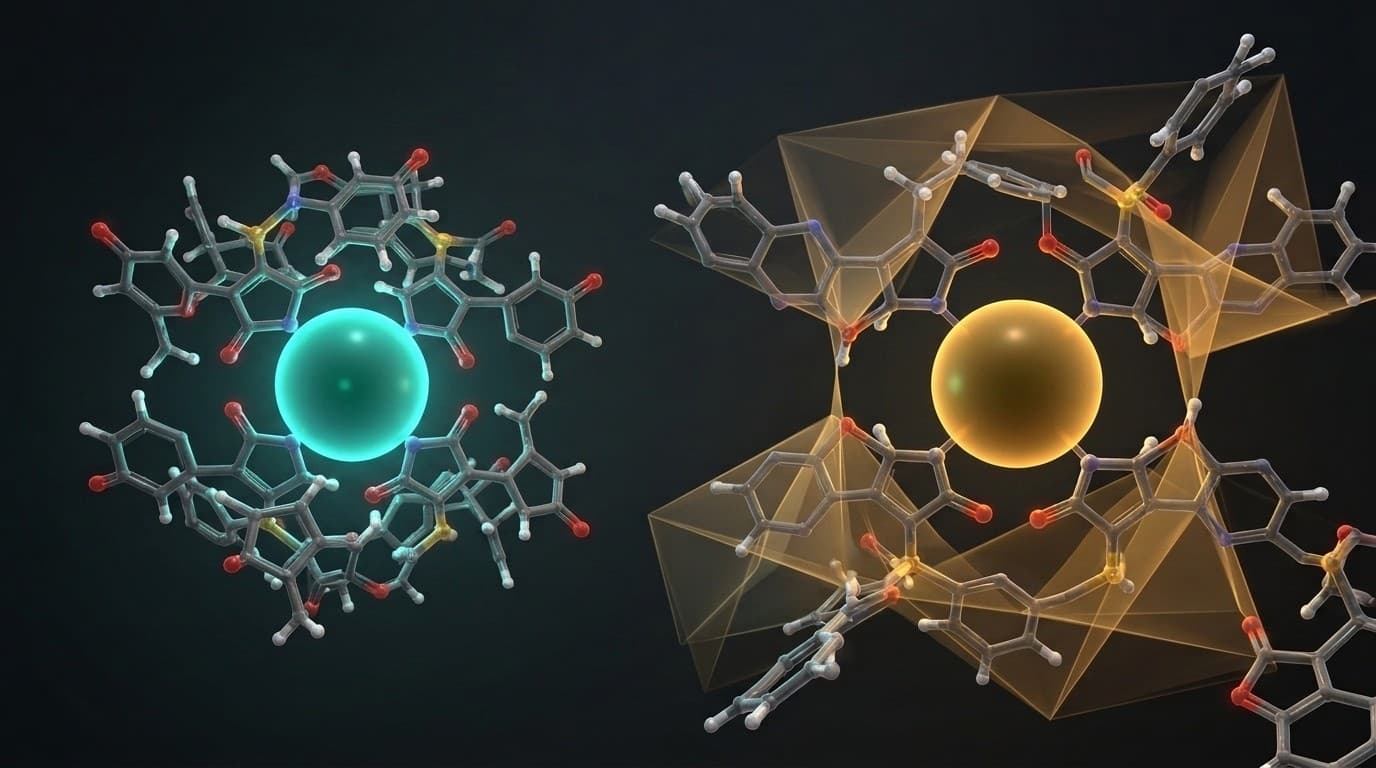
Hanmi countered that the patentee had acted as its own lexicographer or unmistakably disclaimed the broader genus. The intrinsic specification repeatedly and exclusively defined the inventive salts through an exhaustive enumeration: 'The alkaline salts of the (-)-enantiomer of omeprazole... are prepared from the alkaline salts of the following cations: Na+, Mg2+, Li+, K+, Ca2+, or N+(R)4 where R is an alkyl group having 1-4 carbon atoms.'
Critically, the patent drafted this definition across both the abstract and the summary of the invention without standard open-ended legal phrasing such as 'including but not limited to' or 'for example.'
4. CLAIM DIFFERENTIATION CANNOT OVERRIDE INTRINSIC DISCLAIMER: AstraZeneca sought shelter under the doctrine of claim differentiation. Dependent claim 5 of the '504 patent explicitly recited the exact six cations listed in the specification. AstraZeneca argued that construing independent claim 1 to cover only those six cations rendered dependent claim 5 redundant and superfluous, violating established canon of claim construction.
The Federal Circuit firmly rejected AstraZeneca's reliance on claim differentiation. Writing for the unanimous court, Judge Taranto reiterated that while claim differentiation provides a useful analytical presumption, it cannot enlarge claim scope beyond what the specification clearly and unmistakably defines. When a specification unequivocally characterizes the scope of the invention by enumerating a closed roster of species, that characterization acts as an enforceable disclaimer. The court affirmed that AstraZeneca had confined its claims to salts formed with the six recited cations.
5. THE NON-INFRINGEMENT JUDGMENT AND 505(b)(2) COMMERCIAL ENTRY: Because strontium was absent from the specification's closed catalogue of cations, Hanmi's esomeprazole strontium did not literally infringe either the '504 or the '192 patent. AstraZeneca had also stipulated to non-infringement under the doctrine of equivalents. The Federal Circuit accordingly affirmed Judge Pisano's final judgment of non-infringement.
This landmark decision cleared the path for Hanmi and Amneal to obtain final FDA approval for esomeprazole strontium delayed-release capsules, providing the market with a legitimate alternative prior to the expiration of AstraZeneca's primary Nexium patent estate.
For pharmaceutical patent practitioners and generic development teams, AstraZeneca v. Hanmi remains an essential lesson in chemical drafting precision: broad claim language cannot survive an unhedged, closed enumeration in the specification.
What we do
See if this applies to one of your matters
We run genus/species (Markush) claim coverage analysis, Section 3(d) compliance screening, and prior-art structural triage on real chemical structures: not keyword search. If a case like this one is live for you, we'll run a free sample on a compound of your choosing.