
Bayer Tried to Patent Clinical Trial Success. The Federal Circuit Said Proof Does Not Change the Chemistry.
By Prashant Kotian, PhD Researcher (Chemistry), ICT Mumbai
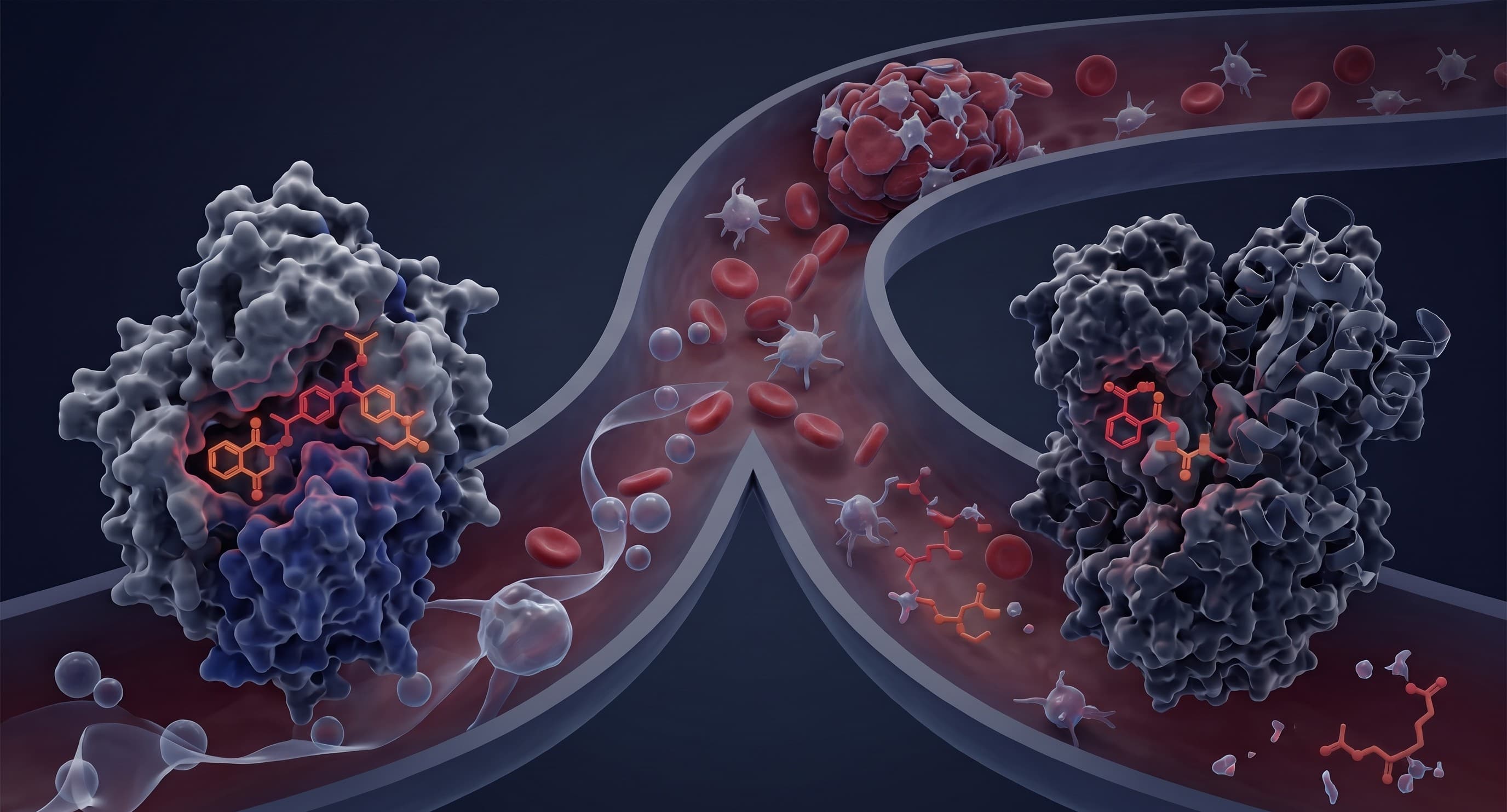
Can a pharmaceutical innovator take a dosing regimen already disclosed in clinical trial protocols and patent it after the trial succeeds simply by reciting that the regimen is "clinically proven effective"?
In a precedential decision authored by Chief Judge Kimberly A. Moore, the U.S. Court of Appeals for the Federal Circuit delivered an unequivocal answer: no. In Bayer Pharma Aktiengesellschaft v. Mylan Pharmaceuticals Inc. (Appeal No. 2023-2434, decided September 23, 2025), the court established that clinical trial efficacy proof does not alter or transform the physical administration of a drug. Adding an accolade or a recitation of clinical validation to an otherwise obvious or anticipated regimen is a "functionally unrelated limitation" that cannot breathe patentability into the claims.
At the same time, the decision offers a crucial lifeline to formulation chemists: while Bayer's method-of-use claims fell, its claims directed to a "first product comprising rivaroxaban and aspirin"--properly construed as a single fixed-dose combination tablet--survived and were remanded for a fresh obviousness evaluation.
### The Chemistry of Dual-Pathway Antithrombotic Inhibition
The patent at issue, U.S. Patent No. 10,828,310 ('the '310 patent'), titled "Prevention and treatment of thromboembolic disorders," covers Bayer's cardiovascular combination therapy pairing rivaroxaban (marketed as Xarelto) with low-dose aspirin.
Atherosclerotic cardiovascular disease in patients with coronary artery disease (CAD) and peripheral artery disease (PAD) is driven by two interdependent pathological pathways: platelet activation and coagulation cascade thrombin generation. Bayer sought to optimize antithrombotic therapy through dual-pathway inhibition:
1. Rivaroxaban: An oral, direct Factor Xa inhibitor chemically designated as 5-chloro-N-({(5S)-2-oxo-3-[4-(3-oxomorpholin-4-yl)phenyl]-1,3-oxazolidin-5-yl}methyl)thiophene-2-carboxamide. Rivaroxaban binds selectively and competitively to the S1 and S4 subpockets of the active catalytic center of serine protease Factor Xa. By blocking free Factor Xa, clot-bound Factor Xa, and Factor Xa assembled into the prothrombinase complex, rivaroxaban arrests the conversion of prothrombin to thrombin, preventing fibrin mesh formation.
2. Aspirin (Acetylsalicylic Acid): A cyclooxygenase-1 (COX-1) inhibitor that irreversibly acetylates serine residue 529 in the catalytic channel of platelet COX-1. This covalent modification blocks access of arachidonic acid to the cyclooxygenase active site, preventing the synthesis of prostaglandin H2 and its downstream metabolite thromboxane A2 (TXA2)--a primary agonist of platelet aggregation and vasoconstriction.
In the landmark COMPASS Phase III trial (27,395 patients across 33 countries), Bayer evaluated whether adding low-dose rivaroxaban (2.5 mg twice daily) to aspirin (100 mg once daily) provided superior cardiovascular protection compared to aspirin alone. The trial was halted early for overwhelming efficacy: the combination reduced the composite risk of cardiovascular death, stroke, or myocardial infarction by 24% (hazard ratio 0.76).
### The Prior Art Trap: Protocol Disclosures Before Patent Allowance
Following the success of the COMPASS trial, Bayer prosecuted the '310 patent to protect this regimen. Claim 1 recited: "A method of reducing the risk of myocardial infarction, stroke or cardiovascular death in a human patient with coronary artery disease and/or peripheral artery disease, comprising administering to the human patient rivaroxaban and aspirin in amounts that are clinically proven effective in reducing the risk of myocardial infarction, stroke or cardiovascular death... wherein rivaroxaban is administered in an amount of 2.5 mg twice daily and aspirin is administered in an amount of 75-100 mg daily."
However, Bayer encountered a familiar Hatch-Waxman prior art trap. Years before the COMPASS trial results were analyzed and claimed, researchers had published detailed summaries of the study protocol: - Foley et al. (2016) published an article in Vascular Medicine summarizing the ongoing COMPASS study, disclosing the exact therapeutic population (CAD/PAD) and the precise dosing regimen: 2.5 mg rivaroxaban twice daily and 100 mg aspirin once daily. - Plosker (2014) published a review in Drugs detailing the earlier ATLAS ACS 2-TIMI 51 trial, which evaluated rivaroxaban 2.5 mg twice daily co-administered with 75-100 mg aspirin in acute coronary syndrome.
Generic challengers Mylan Pharmaceuticals Inc., Teva Pharmaceuticals USA, Inc., and InvaGen Pharmaceuticals Inc. (a U.S. subsidiary of Cipla Ltd.) filed petitions for inter partes review (IPR) challenging claims 1-8 of the '310 patent. Appellees argued that claims 1-2 were anticipated by Foley, and claims 1-8 were obvious over Foley in view of Plosker.
The Patent Trial and Appeal Board (PTAB) agreed with the generic filers, holding the claims unpatentable. The Board concluded that "clinically proven effective" was either non-limiting preamble-like puffery, or inherently anticipated because administering the exact doses taught by Foley necessarily produced the clinical efficacy later confirmed by COMPASS.
### Federal Circuit: Proof Does Not Transform Physical Chemistry
On appeal, Bayer argued that "clinically proven effective" was an active, limiting claim element requiring empirical proof of efficacy from randomized clinical trials--data that Foley (which merely disclosed an uncompleted trial protocol) did not possess.
The Federal Circuit, through Chief Judge Moore, sidestepped the debate over whether the phrase was grammatically limiting. Instead, the court applied the doctrine of functionally unrelated limitations established in King Pharmaceuticals, Inc. v. Eon Labs, Inc., 616 F.3d 1267 (Fed. Cir. 2010).

In King Pharmaceuticals, the patentee had attempted to patent an otherwise anticipated method of administering metaxalone with food by adding a limitation requiring "informing the patient" about the food effect. The court in King held that an instructional limitation cannot render a known method patentable unless it possesses a "new and unobvious functional relationship" with the method of treatment.
Chief Judge Moore recognized the exact same flaw in Bayer's claims: "Just as it would be troubling if one could patent a long-practiced method of treatment simply by adding an instructional limitation or a limitation referencing a subsequent accolade (e.g., 'Best Drug of 2026')... we find it equally troubling that one could claw back from the public domain an anticipated method of treatment merely by adding a limitation that the method subsequently performed well in a clinical trial."
The court emphasized that clinical proof "in no way transforms the process of taking the drug[s] at the amounts and frequencies expressly recited in the claims." Irrespective of whether the regimen has been proven in a formal clinical trial, the physical chemical interaction, the receptor binding kinetics, and the biological administration remain identical. Because the phrase lacked any functional relationship to the therapeutic administration, claims 1-4 were unpatentable as a matter of law.
### Distinguishing Allergan v. Sandoz
Bayer urged the court to follow Allergan Sales, LLC v. Sandoz, Inc., 935 F.3d 1370 (Fed. Cir. 2019), where the Federal Circuit had held that "wherein" clauses reciting specific safety and efficacy profiles were material to patentability.
Chief Judge Moore rejected the comparison. In Allergan, the claims were drafted in an open format reciting administration of an undefined "single composition" containing brimonidine and timolol, with the "wherein" clauses serving as functional parameters that defined and narrowed the composition itself.
In Bayer's '310 patent, by contrast, the claims already explicitly specified the exact milligram dosages and frequencies: 2.5 mg rivaroxaban twice daily and 75-100 mg aspirin daily. The phrase "clinically proven effective" added no structural or quantitative limitation to those dosages.
The court also dispatched Bayer's argument that clinical efficacy represented an "unexpected result" under secondary considerations of non-obviousness. Relying on Volvo Penta and In re Kao, Chief Judge Moore held that because "clinically proven effective" is a functionally unrelated limitation, Bayer's clinical evidence had no legal nexus to any novel aspect of the claims.
### The Formulation Rescue: Single Fixed-Dose Tablet vs. Co-Administration
While Bayer lost its broad treatment claims, it secured a major victory on formulation claim construction for claims 5-8.
Claim 5 recited once-daily administration of "a first product comprising rivaroxaban and aspirin" (2.5 mg rivaroxaban and 75-100 mg aspirin) and "a second product comprising rivaroxaban" (2.5 mg rivaroxaban).
The PTAB had construed "first product" broadly to encompass taking separate rivaroxaban and aspirin tablets simultaneously or sequentially, concluding that "product" could refer to a blister pack or co-packaged kit.
The Federal Circuit vacated this construction, finding it contradicted both the plain claim language and the specification: 1. The claim recites "administration of a first product," not administration of individual components inside a package. 2. The specification explicitly contrasted two distinct formulation approaches: "combination therapy may be administered using separate dosage forms for rivaroxaban and aspirin, or using a combination dosage form containing both rivaroxaban and aspirin." 3. The claim's phrasing--"a first product comprising rivaroxaban and aspirin"--directly mirrored the specification's description of a single combination dosage form.
By rewriting "first product" to require a single fixed-dose combination (FDC) tablet containing both active ingredients, the Federal Circuit vacated the unpatentability finding for claims 5-8. Formulating a stable fixed-dose tablet containing an acid-sensitive oxazolidinone (rivaroxaban) alongside an acidic acetylsalicylic acid core presents distinct formulation challenges--often requiring multilayer barrier coatings, micro-encapsulation, or specialized buffering excipients to prevent hydrolytic degradation.
Because the generic petitioners bore the burden of proving obviousness under the correct construction, the Federal Circuit remanded claims 5-8 to the PTAB to determine whether prior art taught or suggested a single consolidated combination tablet.
### Strategic Takeaways for the Generic and Innovator Industry
1. Clinical Trial Protocol Disclosures Are Fatal Prior Art: Innovators who publish Phase II or Phase III study protocols in medical journals or public clinical registries before securing patent coverage cannot reclaim those dosing regimens by later appending efficacy verbiage to the claims. 2. Accolades and Clinical Certifications Do Not Count: Drafting claims with limitations such as "clinically proven effective," "FDA-approved," or "statistically significant reduction" fails under 35 U.S.C. 102/103. The physical method of administering the chemical entity controls the patentability inquiry. 3. Formulation Science Remains the Decisive Moat: The contrast between claims 1-4 and claims 5-8 illustrates where durable pharmaceutical IP resides. While method-of-use claims reciting bare dosage schedules are highly vulnerable to trial protocol prior art, fixed-dose combination formulations and complex solid-state dosage forms demand specialized chemical proof of obviousness that generic challengers must independently establish.
What we do
See if this applies to one of your matters
We run genus/species (Markush) claim coverage analysis, Section 3(d) compliance screening, and prior-art structural triage on real chemical structures: not keyword search. If a case like this one is live for you, we'll run a free sample on a compound of your choosing.