
BMS Added an Exocyclic Methylene to Entecavir. The Federal Circuit Held Prior Art Lead Compounds Cannot Be Disqualified by Post-Filing Toxicity.
By Prashant Kotian, PhD Researcher (Chemistry), ICT Mumbai
# Daily News Article - 2026-10-05 (Researched and Ready for Image Generation & Publishing)
## Case Bristol-Myers Squibb Co. v. Teva Pharmaceuticals USA, Inc. United States Court of Appeals for the Federal Circuit Appeal No. 2013-1306 (752 F.3d 967). Decided June 12, 2014. AFFIRMED (District Court judgment finding claim 8 of U.S. Patent No. 5,206,244 invalid for obviousness under 35 U.S.C. 103 affirmed; unexpected results and secondary considerations rejected). Coram: Chief Judge Sharon Prost, Circuit Judge S. Jay Plager, and Circuit Judge Raymond T. Chen (opinion authored by Circuit Judge Chen). Appealed from: U.S. District Court for the District of Delaware (Judge Gregory M. Sleet, Civil Action No. 10-cv-00805-GMS).
## Selection process, real candidates researched and rejected this session Candidate search evaluated recent and landmark pharmaceutical patent decisions involving chemical structure, lead compound selection, obviousness under Section 103, written description, or Hatch-Waxman disputes: - Aventis v. Lupin (ramipril stereoisomer obviousness) - covered on 2026-10-02. - Merck v. Hospira (ertapenem bicarbonate carbamate formulation obviousness) - covered on 2026-10-01. - Eagle v. Slayback (bendamustine ethanol disclosure-dedication) - covered on 2026-09-30. - Novartis v. Accord (fingolimod negative limitation "no loading dose", 35 U.S.C. 112 written description) - covered on 2026-09-29. - UCB v. Actavis (rotigotine Form II crystallization, PVP solid dispersion) - covered on 2026-09-28. - Melinta v. Nexus (minocycline magnesium chelation overcoming hemolysis) - covered on 2026-09-27. - Intra-Cellular v. Controller of Patents (lumateperone deuteration Section 3(d)) - covered on 2026-09-26. - Novo Nordisk v. Dr. Reddy's & OneSource (semaglutide export injunction) - covered on 2026-09-25. - Alnylam v. Moderna (mRNA LNP branched alkyl lexicography) - covered on 2026-09-24. - Bayer v. Mylan (Xarelto rivaroxaban/aspirin clinical trial accolades) - covered on 2026-09-23. - Novartis v. MSN (Entresto amorphous vs crystalline Form-S) - covered on 2026-09-21. - Allergan v. MSN (eluxadoline ODP and Section 112 written description) - covered on 2026-09-20. - Salix v. Norwich (rifaximin polymorph obviousness) - covered on 2026-09-19. - Otsuka v. Sandoz (aripiprazole lead compound analysis) - evaluated; affirmed non-obviousness based on lack of motivation for carbostyril modification, but lacks the deep doctrinal tension over post-filing unexpected results present in BMS v. Teva. - Incyte v. Sun Pharma (ruxolitinib deuteration preliminary injunction) - evaluated; active, ongoing federal litigation with unresolved preliminary injunction remand, excluded under standing editorial policy against taking positions on active disputes.
Bristol-Myers Squibb Co. v. Teva Pharmaceuticals USA, Inc. was selected because it is the seminal Federal Circuit decision defining the temporal boundaries of the two-part lead compound framework under 35 U.S.C. 103. The decision established three foundational doctrines in chemical patent jurisprudence: (1) whether a skilled artisan would select a prior art compound as a lead compound must be judged strictly based on what was known in the art at the priority date, barring patentees from using post-filing discoveries of toxicity to retroactively disqualify a lead compound; (2) appending an exocyclic methylene moiety to a saturated carbocyclic nucleoside core represents a predictable structural modification motivated by known structure-activity relationships; and (3) unexpected results cannot overcome a strong prima facie case of obviousness where the asserted patent specification fails to disclose the specific therapeutic utility (hepatitis B inhibition) and the comparative data does not benchmark against the closest prior art across the full scope of the asserted claims.
## Real chemistry finding Entecavir (marketed by Bristol-Myers Squibb as Baraclude) is an orally administered, highly potent carbocyclic guanosine nucleoside analog reverse transcriptase inhibitor indicated for the treatment of chronic hepatitis B virus (HBV) infection.
Chemically designated as 2-amino-1,9-dihydro-9-[(1S,3R,4S)-4-hydroxy-3-(hydroxymethyl)-2-methylidenecyclopentyl]-6H-purin-6-one, entecavir is a cyclopentyl carbocyclic nucleoside containing: 1. A guanine purine heterocyclic nucleobase attached via a beta-glycosidic bond mimic at C1'; 2. A cyclopentane ring replacing the natural ribofuranose or deoxyribofuranose oxygen-containing oxolane heterocycle; 3. A chiral secondary hydroxyl group (-OH) at C4'; 4. A primary hydroxymethyl group (-CH2OH) at C3'; and 5. A distinctive exocyclic methylene group (=CH2, a carbon-carbon double bond) appended at C5' (position 2 of the cyclopentyl ring).
Enzymatic and Pharmacological Mechanism: In vivo, entecavir undergoes sequential intracellular phosphorylation by cellular kinases to its active 5'-triphosphate metabolite, entecavir triphosphate (ETV-TP). ETV-TP competitively inhibits hepatitis B virus reverse transcriptase (HBV DNA polymerase) across all three essential catalytic stages: - Priming of the HBV reverse transcriptase; - Reverse transcription of the negative-strand genomic DNA from the pregenomic RNA template; and - Synthesis of the positive-strand HBV DNA.
The incorporation of the carbocyclic cyclopentyl framework imparts complete chemical and metabolic resistance against purine nucleoside phosphorylase (PNP) and pyrimidine phosphorylase enzymes, which normally cleave standard ribofuranosyl glycosidic bonds. Furthermore, the rigid exocyclic methylene moiety introduces precise spatial conformational constraints on the carbocyclic ring, optimizing van der Waals and hydrogen-bonding alignment within the polymerase active site while presenting a remarkably high genetic barrier to viral resistance.
The Patent Dispute and Prior Art Structural Landscape: BMS obtained U.S. Patent No. 5,206,244 ('the '244 patent') with an effective priority date of October 1990. Claim 8 claimed the specific compound entecavir. In Hatch-Waxman litigation against ANDA applicant Teva, Teva asserted that claim 8 was invalid for obviousness under 35 U.S.C. 103 over carbocyclic 2'-deoxyguanosine (2'-CDG) and a prior art patent to Madhavan (EP 0349242).
Structurally, 2'-CDG is identical to entecavir except that 2'-CDG has a saturated cyclopentyl ring at the C5' position (having two hydrogen atoms), whereas entecavir has an unsaturated exocyclic carbon-carbon double bond (=CH2) at that identical position. The structural difference between 2'-CDG and entecavir is literally a single exocyclic carbon and two double-bond electrons.
In the prior art as of October 1990, 2'-CDG was widely published by Shealy, Montgomery, and Price as an exceptionally promising antiviral candidate exhibiting nanomolar inhibitory potency against herpes simplex virus types 1 and 2 (HSV-1 and HSV-2), cytomegalovirus (CMV), and varicella zoster virus (VZV). It possessed high therapeutic indices and was recognized throughout medicinal chemistry literature as a primary candidate for structural optimization.
The Legal Battle: Retroactive Lead Compound Disqualification: To defeat Teva's obviousness challenge, BMS argued that a person of ordinary skill in the art (POSITA) would not have selected 2'-CDG as a lead compound because subsequent clinical development revealed that 2'-CDG caused delayed systemic and mitochondrial toxicity in animal models, leading to organ failure and death. BMS maintained that this toxicity "taught away" from 2'-CDG.
District Judge Gregory M. Sleet and the Federal Circuit panel firmly rejected BMS's hindsight defense: 1. Lead Compound Selection Standard: Obviousness must be determined through the eyes of a POSITA as of the priority date (October 1990). Because the scientific literature regarding 2'-CDG's delayed toxicity was not published until years after BMS's priority date, that post-filing information could not retroactively disqualify 2'-CDG as a lead compound. At the time of invention, a POSITA would have viewed 2'-CDG as a prime starting point. 2. Motivation to Modify with Exocyclic Methylene: Prior art references, prominently including Madhavan, expressly taught that introducing an exocyclic methylene group onto carbocyclic nucleoside cyclopentyl rings maintained antiviral activity while enhancing metabolic stability. The modification was therefore a routine, predictable structural variation. 3. Rejection of Unexpected Results: BMS presented extensive post-filing evidence demonstrating that entecavir exhibited extraordinary, unexpected potency against hepatitis B virus (hundreds of times superior to 2'-CDG) while being completely free of the lethal toxicity that plagued 2'-CDG. The Federal Circuit held that unexpected results cannot rescue a claim when the patent specification never disclosed or suggested that the claimed compounds possessed anti-hepatitis B activity (the '244 patent disclosed only broad in vitro activity against herpes viruses), and BMS failed to prove unexpected superiority across the closest structural analogs.
The Federal Circuit affirmed the complete invalidation of Claim 8, opening the multi-hundred-million-dollar hepatitis B antiviral market to generic competition.
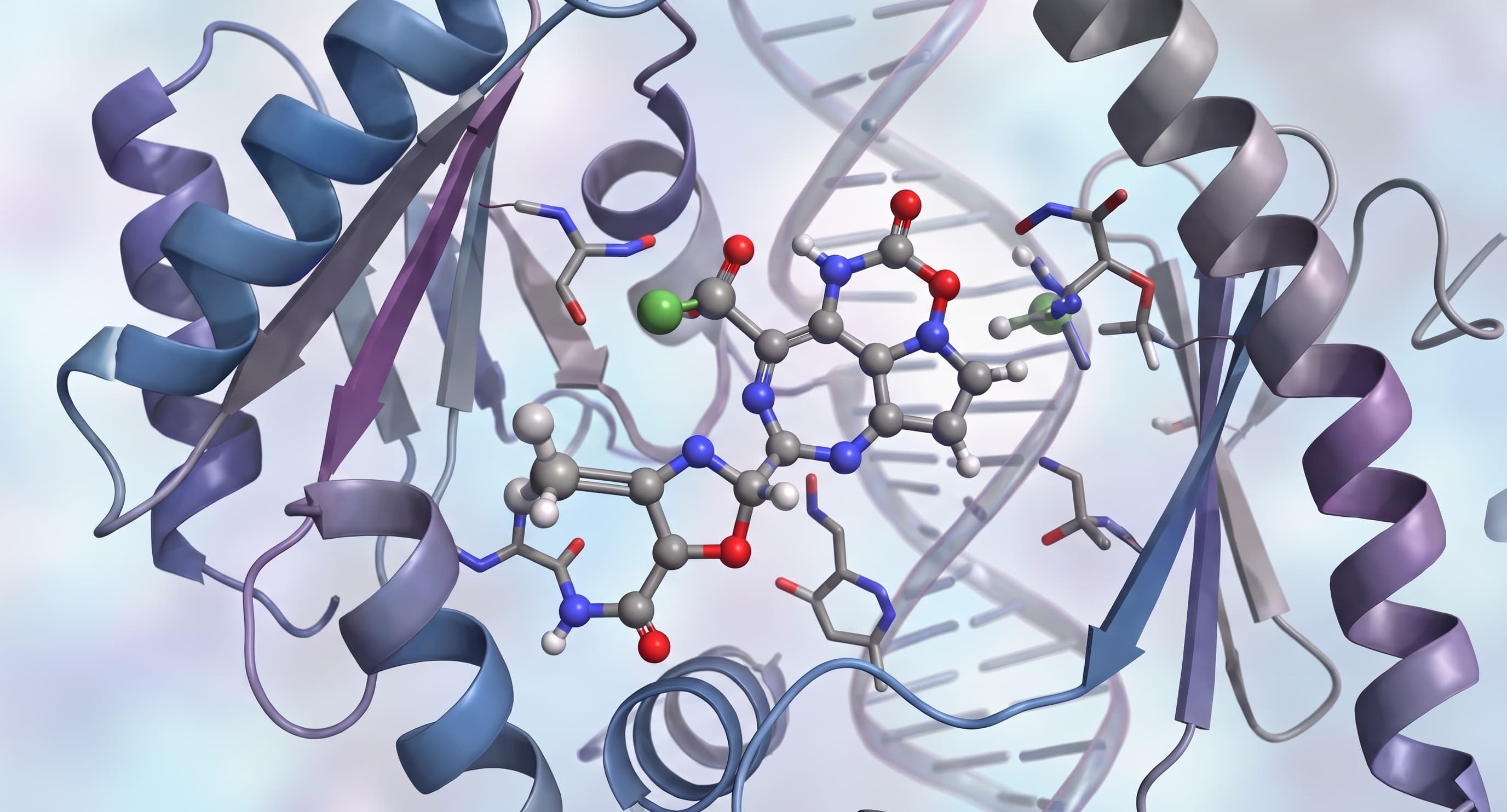
## Images Plan Hero Focus Prompt: A 3D scientific visualization illustrating antiviral medicinal chemistry and nucleoside analog structural design. Visualizing a complex cyclopentyl carbocyclic nucleoside analog coordinating stereospecifically within the catalytic pocket of a viral reverse transcriptase polymerase enzyme. Emphasize the distinct exocyclic carbon-carbon double bond methylene group projecting from the cyclopentyl ring, creating rigid spatial alignment and hydrophobic fit within the active site cleft. Clean scientific biomedical illustration, photorealistic molecular ribbons and atomic surface rendering, professional studio lighting, ABSOLUTELY ZERO TEXT OR TYPOGRAPHY, no letters, no words, no numbers, no courtroom or legal imagery, no gavels, no scales, no people.
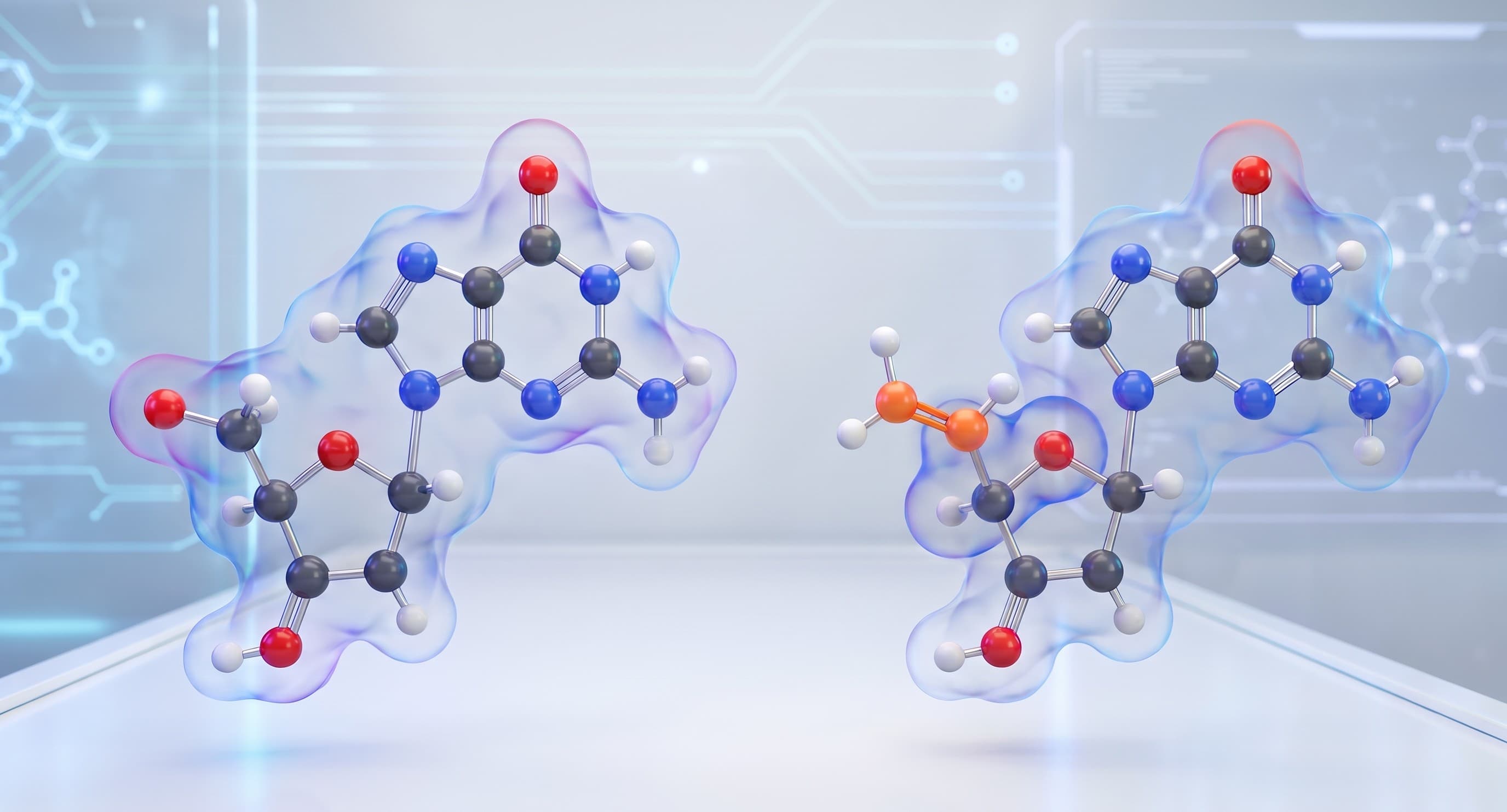
Inline Focus Prompt: A detailed molecular cutaway and structural chemistry comparison. Illustrating the spatial conformations of a saturated cyclopentyl carbocyclic nucleoside core contrasted with an exocyclic methylene substituted carbocyclic nucleoside, highlighting the altered ring pucker, electron density delocalization, and steric positioning of 3-prime and 4-prime hydroxyl groups. Clean laboratory molecular model aesthetic, vibrant atomic coloration, high-resolution scientific visualization, ABSOLUTELY ZERO TEXT OR TYPOGRAPHY, no letters, no words, no numbers, no courtroom or legal symbols, no people.
Target Paths: - Hero: `public/patent-analytics/news/bms-added-exocyclic-methylene-to-entecavir-the-federal-circuit-held-prior-art-l.jpg` - Inline: `public/patent-analytics/news/bms-added-exocyclic-methylene-to-entecavir-the-federal-circuit-held-prior-art-l-inline.jpg`
Target Slug: `bms-added-exocyclic-methylene-to-entecavir-the-federal-circuit-held-prior-art-l`
Target Live URL: `https://patent-analytics.thechemsolver.com/news/bms-added-exocyclic-methylene-to-entecavir-the-federal-circuit-held-prior-art-l`
## LinkedIn Draft (Post from the Page, not personal profile)
Can an innovator defeat a chemical obviousness challenge by proving that a prior art lead compound was later discovered to be lethally toxic?
In Bristol-Myers Squibb Co. v. Teva Pharmaceuticals USA, Inc. (752 F.3d 967), the Federal Circuit delivered a definitive answer: No. In an opinion authored by Circuit Judge Raymond T. Chen, the court affirmed that claim 8 of BMS's U.S. Patent No. 5,206,244--covering the blockbuster hepatitis B drug entecavir (Baraclude)--was invalid for obviousness under 35 U.S.C. 103 over carbocyclic 2'-deoxyguanosine (2'-CDG).
The Structural Chemistry: Entecavir is a carbocyclic nucleoside analog that inhibits hepatitis B virus reverse transcriptase. Its molecular skeleton differs from the prior art antiviral lead compound 2'-CDG by exactly one structural feature: an exocyclic methylene group (=CH2) appended at the C5' position of the cyclopentyl ring.
The Patentee's Argument: BMS argued that 2'-CDG could not serve as a lead compound because subsequent animal studies revealed that 2'-CDG caused delayed systemic and mitochondrial toxicity that killed test subjects. BMS argued that this devastating toxicity "taught away" from selecting 2'-CDG. Furthermore, BMS presented extensive post-filing evidence showing that entecavir exhibited extraordinary, unexpected potency against HBV without the lethal toxicity of 2'-CDG.
The Legal Ruling: The Federal Circuit dismantled BMS's defense on three core grounds:
1. Temporal Integrity of the Lead Compound Analysis: Obviousness must be assessed at the time of the invention. Because the toxicity of 2'-CDG was not published until years after BMS's priority date, a POSITA at the filing date would have viewed 2'-CDG as a highly potent, promising lead compound. Patentees cannot rely on hindsight discoveries to erase a lead compound from the prior art.
2. Predictable Structural Modification: The prior art (including Madhavan) taught that substituting an exocyclic methylene group on carbocyclic nucleoside rings maintained antiviral activity while enhancing metabolic stability against nucleoside phosphorylases. Adding a methylene group to 2'-CDG was a routine, predictable optimization.
3. The Limits of Post-Filing Unexpected Results: BMS's unexpected results defense failed because the patent specification disclosed only general in vitro activity against herpes viruses, never mentioning hepatitis B virus. Patentees cannot rely on undisclosed therapeutic activities and post-filing accolades to salvage claims that are otherwise structurally obvious.
The decision stands as a cornerstone precedent for Hatch-Waxman generic litigation, establishing that chemical obviousness is anchored strictly to the prior art available on the filing date.
Full scientific and legal breakdown: https://patent-analytics.thechemsolver.com/news/bms-added-exocyclic-methylene-to-entecavir-the-federal-circuit-held-prior-art-l
#PatentLaw #Pharma #MedicinalChemistry #LeadCompound #HatchWaxman #Generics #FederalCircuit #Entecavir #Baraclude
What we do
See if this applies to one of your matters
We run genus/species (Markush) claim coverage analysis, Section 3(d) compliance screening, and prior-art structural triage on real chemical structures: not keyword search. If a case like this one is live for you, we'll run a free sample on a compound of your choosing.