
Duke Disclosed a Prostaglandin Forest. It Never Pointed to the Amide Tree.
By Prashant Kotian, PhD Researcher (Chemistry), ICT Mumbai
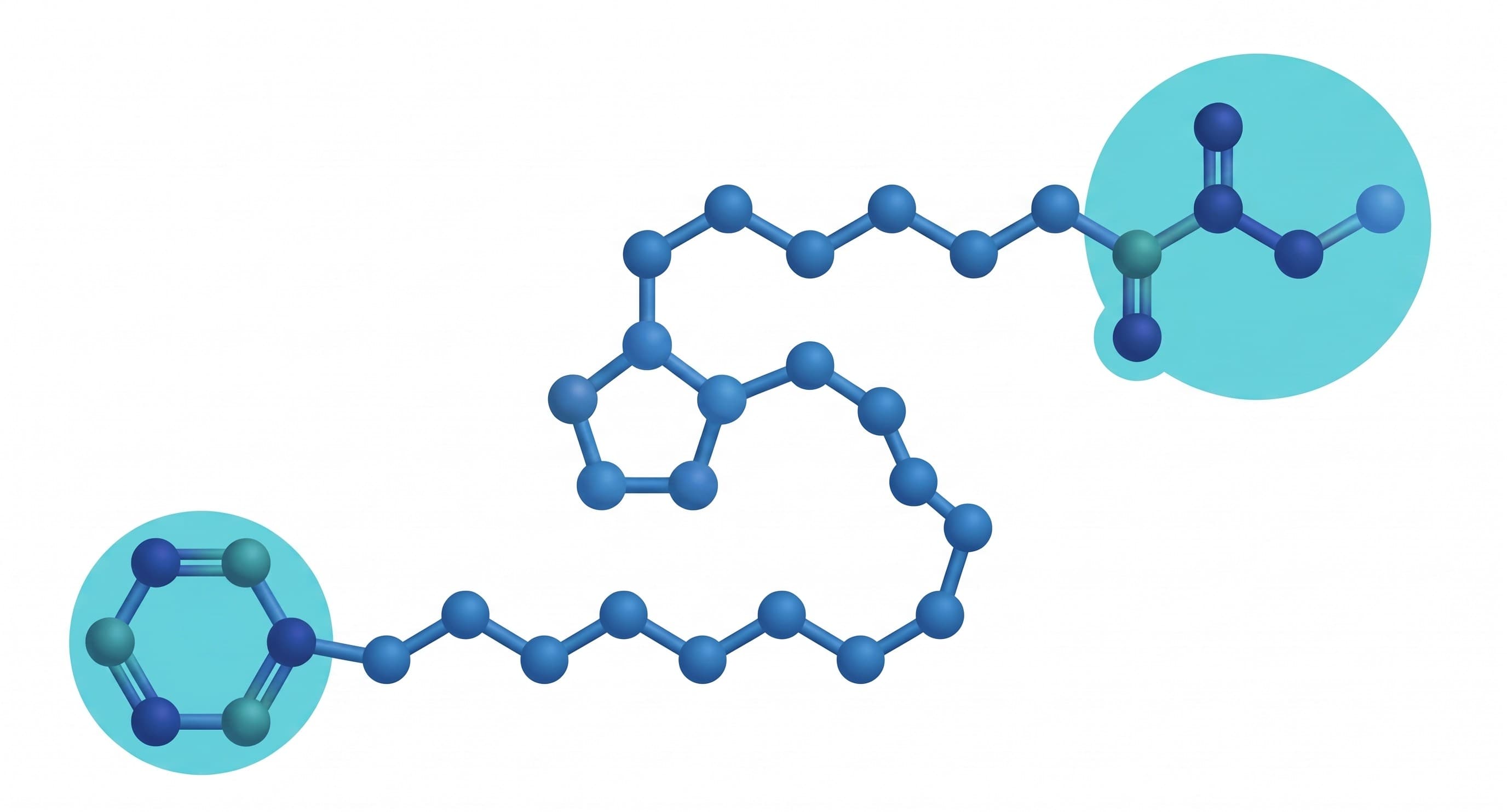
When patent drafters attempt to stake out broad chemical territory, they frequently construct elaborate combinatorial frameworks: a foundational carbon skeleton adorned with sprawling menus of substituents at every conceivable position. For decades, patentees have hoped that by mentioning a general scaffold and listing functional groups in broad groupings, they could later reach into that disclosure, pluck out whichever specific molecule proved commercially valuable, and claim priority back to the original filing date.
In Duke University and Allergan Sales, LLC v. Sandoz Inc. (Fed. Cir. No. 2024-1078, decided November 18, 2025), the U.S. Court of Appeals for the Federal Circuit delivered an unequivocal repudiation of that drafting strategy. Overturning a $39 million jury verdict awarded to Duke and Allergan in the District of Colorado, a unanimous panel held that asserted claim 30 of U.S. Patent No. 9,579,270 was invalid as a matter of law for lack of adequate written description under 35 U.S.C. 112(a).
The product at the center of the dispute was Allergan's Latisse, a 0.03% bimatoprost ophthalmic solution approved by the FDA to stimulate eyelash hair growth. Sandoz developed a generic bimatoprost formulation and sought regulatory approval. When Duke and Allergan sued, Sandoz stipulated that its proposed product met the structural terms of claim 30, betting its entire defense on patent invalidity. The jury sided with the patent owner, finding the claim valid and awarding $39 million in damages. Sandoz moved for judgment as a matter of law, was denied by the district court, and appealed.
The core chemical question on appeal turned on the anatomy of prostaglandin molecules. Prostaglandins are lipid compounds built upon a characteristic 20-carbon skeleton: a five-membered cyclopentyl ring flanked by two adjacent carbon chains that project in a hairpin curve. One arm, the alpha chain, terminates at carbon-1 (the C1 position, also designated R1 or the action end). The other arm, the omega chain, extends outward and terminates at what the patent termed the Z position.
Natural prostaglandin F2-alpha (PGF2a) possesses a terminal carboxylic acid at C1 and an aliphatic hydrocarbon tail. Bimatoprost, by contrast, is a synthetic prostamide derivative: its C1 position carries an N-ethyl amide rather than a carboxylic acid, and its omega chain terminates in an aromatic phenyl ring.
Claim 30, which depended from claims 17, 24, and 25, was directed to a method of growing hair by topically applying a prostaglandin F analog where R1 was selected from an amide group (specifically C(O)NHR3, with R3 as alkyl) and Z was phenyl.
Allergan defended the validity of claim 30 by arguing that the '270 patent specification provided clear structural boundaries. First, Allergan contended that the characteristic prostaglandin hairpin skeleton was disclosed as a unifying backbone across all embodiments. Second, Allergan asserted that the specification disclosed only "13 options" for the C1 action end, one of which was the claimed amide. According to Allergan, choosing an amide from a curated list of thirteen possibilities and combining it with a phenyl-terminated omega chain was well within the possession of the inventors at filing.
The Federal Circuit, in an opinion written by Circuit Judge Stark (joined by Judges Dyk and Stoll), systematically dismantled that argument.

First, the court addressed the prostaglandin hairpin skeleton. Far from serving as a narrow structural guide, the hairpin backbone is common to billions of theoretical and synthesized chemical compounds. Relying on a generic carbon frame shared across an entire biochemical superfamily does nothing to identify which specific subclass of compounds the inventors actually possessed.
Second, the court examined Allergan's assertion that the specification offered merely "13 options" for the C1 position. That characterization, Judge Stark wrote, was flatly contradicted by the patent text. The specification taught that R1 could be selected from: 1. C(O)OH 2. C(O)NHOH 3. C(O)OR3 4. CH2OH 5. S(O)2R3 6. C(O)NHR3 7. C(O)NHS(O)2R4 8. tetrazole 9. a cationic salt moiety 10. a pharmaceutically acceptable amine comprising 2 to 13 carbons 11. a pharmaceutically acceptable ester comprising 2 to 13 carbons 12. a biometabolizable amine comprising 2 to 13 carbons 13. a biometabolizable ester comprising 2 to 13 carbons
As the court pointed out, only four of these thirteen items (the carboxylic acid, hydroxamic acid, primary alcohol, and tetrazole) were singular, discrete chemical entities. The remaining nine options were vast structural categories, each containing numerous branching possibilities. For instance, selecting option 10 (pharmaceutically acceptable amine) or option 11 (ester) required an artisan to choose among thousands of aliphatic, aromatic, branched, or substituted carbon chains spanning 2 to 13 carbon atoms.
Rather than a simple menu of thirteen items, the C1 disclosure resembled a path with thirteen main branches, nine of which split into dense thickets of secondary, tertiary, and quaternary choices.
Relying on foundational CCPA and Federal Circuit precedent, including In re Ruschig, Purdue Pharma v. Faulding, and Regents of the University of California, the court reiterated the classic forestry principle of patent law: a patentee cannot disclose an entire forest in the original application, and then later pick out a single tree and declare, "here is my invention." To claim a subgenus carved out of a massive generic universe, the specification must provide sufficient "blaze marks" directing the person of ordinary skill to that specific tree.
Here, the '270 specification contained no blaze marks pointing toward the subgenus of claim 30. Even worse for Duke and Allergan, the only blaze marks that the specification did provide pointed directly away from amides. The patent text explicitly identified carboxylic acids and esters as the "preferred" embodiments for C1, with no stated preference whatsoever for alkylamides.
Allergan attempted to rescue its position by pointing to four working synthetic examples in the specification that produced amide-containing molecules. But the Federal Circuit held that four disparate synthetic routes scattered across a lengthy specification could not redirect a skilled artisan who had already been instructed by the text that carboxylic acids and esters were the preferred structures.
Even under the exacting standard required to overturn a jury verdict of no invalidity, the Federal Circuit concluded that no reasonable juror could have found the written description adequate. The judgment of the district court was reversed, and the $39 million damages verdict was extinguished.
For generic manufacturers and patent practitioners, the Duke v. Sandoz decision provides a powerful reaffirmation of chemical claim discipline. Disclosing a generic molecular skeleton and generating permutations through open-ended substituent menus does not confer patent rights over unhighlighted subgenera. If a patent specification does not blaze a clear, unequivocal trail directly to the claimed chemical combination, a later attempt to monopolize that subgenus will fail under Section 112.
What we do
See if this applies to one of your matters
We run genus/species (Markush) claim coverage analysis, Section 3(d) compliance screening, and prior-art structural triage on real chemical structures: not keyword search. If a case like this one is live for you, we'll run a free sample on a compound of your choosing.