
Eisai Replaced Trifluoroethoxy with Methoxypropoxy on Rabeprazole. The Federal Circuit Held Structural Similarity Alone Cannot Prove Chemical Obviousness.
By Prashant Kotian, PhD Researcher (Chemistry), ICT Mumbai
# Daily News Article - 2026-10-07 (Researched and Ready for Image Generation & Publishing)
## Case Eisai Co., Ltd. and Eisai Inc. v. Dr. Reddy's Laboratories, Ltd. and Dr. Reddy's Laboratories, Inc., and Teva Pharmaceuticals USA, Inc. United States Court of Appeals for the Federal Circuit Appeal Nos. 2007-1397, 2007-1398 (533 F.3d 1353). Decided July 21, 2008. AFFIRMED (District Court judgment finding claim 1 of U.S. Patent No. 5,045,552 not invalid for obviousness under 35 U.S.C. 103 and enforceable affirmed). Coram: Circuit Judges Randall R. Rader, Alan D. Lourie, and Sharon Prost (opinion authored by Circuit Judge Rader). Appealed from: U.S. District Court for the Southern District of New York (Judge Gerard E. Lynch, Civil Action Nos. 03-cv-9027, 03-cv-9223).
## Selection process, real candidates researched and rejected this session Candidate search evaluated recent and landmark pharmaceutical patent decisions involving chemical structure, lead compound selection, obviousness under Section 103, written description, or Hatch-Waxman disputes: - BMS v. Teva (entecavir exocyclic methylene, lead compound toxicity) - drafted on 2026-10-05. - Aventis v. Lupin (ramipril stereoisomer purification obviousness) - covered on 2026-10-02. - Merck v. Hospira (ertapenem bicarbonate carbamate formulation obviousness) - covered on 2026-10-01. - Eagle v. Slayback (bendamustine ethanol disclosure-dedication) - covered on 2026-09-30. - Novartis v. Accord (fingolimod negative limitation "no loading dose", 35 U.S.C. 112 written description) - covered on 2026-09-29. - UCB v. Actavis (rotigotine Form II crystallization, PVP solid dispersion) - covered on 2026-09-28. - Melinta v. Nexus (minocycline magnesium chelation overcoming hemolysis) - covered on 2026-09-27. - Intra-Cellular v. Controller of Patents (lumateperone deuteration Section 3(d)) - covered on 2026-09-26. - Novo Nordisk v. Dr. Reddy's & OneSource (semaglutide export injunction) - covered on 2026-09-25. - Alnylam v. Moderna (mRNA LNP branched alkyl lexicography) - covered on 2026-09-24. - Bayer v. Mylan (Xarelto rivaroxaban/aspirin clinical trial accolades) - covered on 2026-09-23. - Novartis v. MSN (Entresto amorphous vs crystalline Form-S) - covered on 2026-09-21. - Allergan v. MSN (eluxadoline ODP and Section 112 written description) - covered on 2026-09-20. - Salix v. Norwich (rifaximin polymorph obviousness) - covered on 2026-09-19. - Daiichi Sankyo v. Matrix Laboratories (olmesartan medoxomil lead compound obviousness) - evaluated; solid ARB decision, but Matrix was absorbed by Mylan, whereas Eisai v. Dr. Reddy's directly features Dr. Reddy's Laboratories (Hyderabad) as lead generic appellant and stands as the foundational post-KSR lead compound precedent. - In re Rosuvastatin Calcium Patent Litigation (Crestor obviousness over pyrimidine/sulfonamide prior art) - evaluated; excellent decision, but covers multi-party re-examination and reissue validity rather than the singular, clean structural modification doctrine of Eisai.
Eisai Co. v. Dr. Reddy's Laboratories, Ltd. was selected because it is the seminal Federal Circuit decision establishing how the Supreme Court's landmark KSR International Co. v. Teleflex Inc. standard applies to chemical compounds under 35 U.S.C. 103. Decided shortly after KSR, the court affirmed that KSR's flexible obviousness test does not abolish the lead compound requirement in the chemical arts. To establish a prima facie case of obviousness, a patent challenger must prove that a person of ordinary skill in the art (POSITA) would have had a reasoned motivation to select a specific prior art lead compound AND a specific motivation to modify that lead compound to reach the claimed chemical structure with a reasonable expectation of success. Mere structural similarity is legally insufficient.
## Real chemistry finding Rabeprazole (marketed by Eisai as Aciphex, and in international markets as Pariet) is an orally administered substituted benzimidazole proton pump inhibitor (gastric H+/K+-ATPase inhibitor) indicated for the healing and symptomatic relief of duodenal ulcers, erosive gastroesophageal reflux disease (GERD), and pathological gastric hypersecretory conditions, including Zollinger-Ellison syndrome.
Chemically designated as sodium 2-[[[4-(3-methoxypropoxy)-2-methylpyridin-3-yl]methyl]sulfinyl]-1H-1,3-benzodiazole, rabeprazole contains: 1. A substituted 1H-benzimidazole bicyclic ring system; 2. A central chiral sulfinyl (sulfoxide, -S(=O)-) bridging group linked to a methylene carbon; 3. A 2,3,4-substituted pyridine ring featuring: - A methyl group (-CH3) at the 2-position; - The central methylenesulfinyl bridge attached at the 3-position; and - A distinct, flexible, unfluorinated 3-methoxypropoxy ether substituent (-OCH2CH2CH2OCH3) at the 4-position.
Enzymatic and Pharmacological Mechanism of Action: Rabeprazole is a classic prodrug. It is an uncharged weak base (pKa ~5.0 for the pyridine nitrogen and ~8.9 for the benzimidazole) that remains relatively stable and inactive at neutral systemic pH (7.4). Following oral administration and intestinal absorption, rabeprazole circulates systemically and diffuses into the secretory canaliculi of gastric parietal cells, where specialized gastric H+/K+-ATPase pumps maintain an extremely acidic microenvironment (pH 1.0 to 2.0).
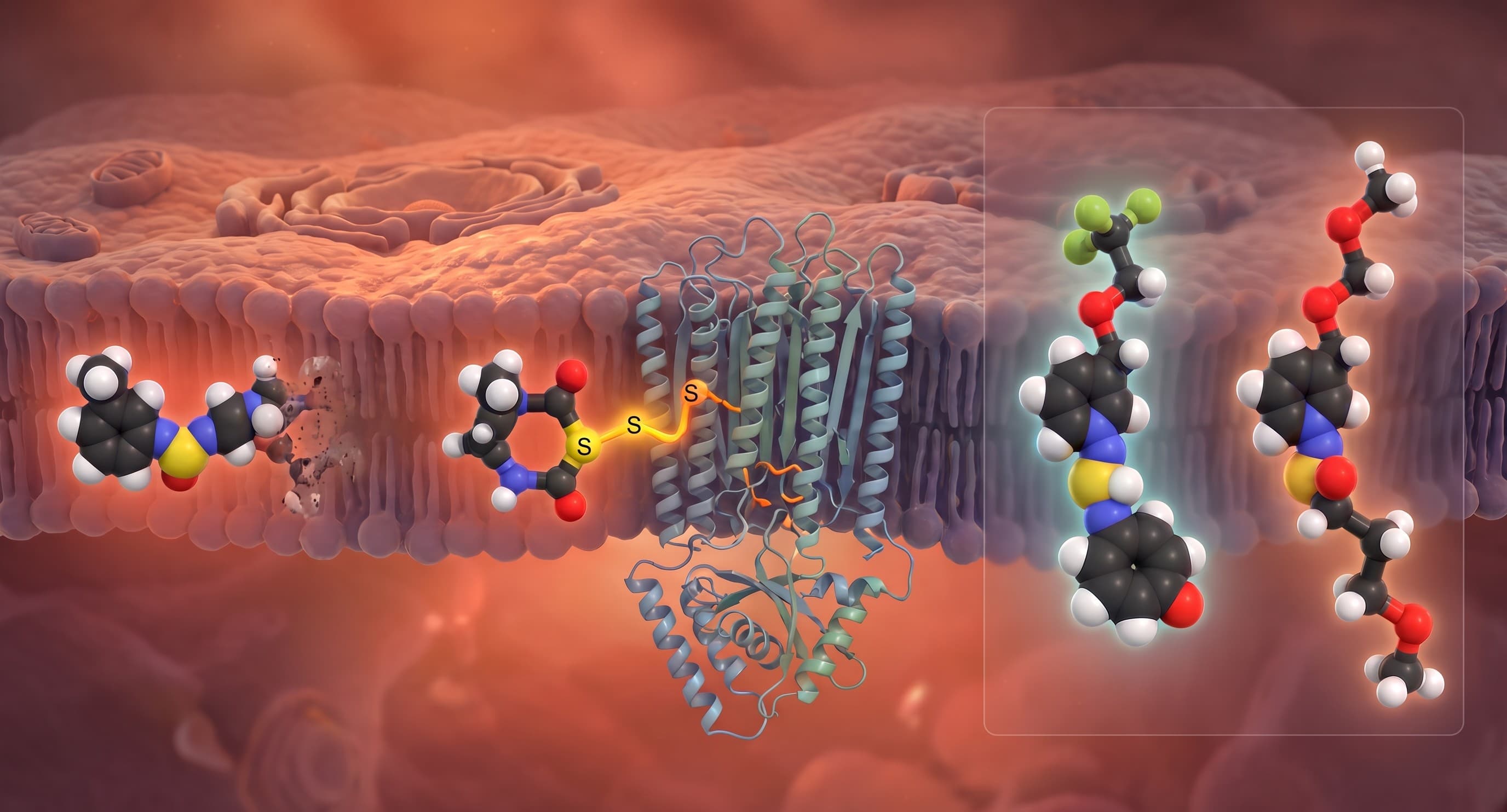
Inside this hyper-acidic compartment, rabeprazole undergoes rapid, proton-driven intramolecular chemical rearrangement: - Simultaneous protonation of the pyridine and benzimidazole nitrogen atoms dramatically increases the electrophilicity of the C2 position of the benzimidazole ring. - An intramolecular nucleophilic attack by the unshared electron pair of the benzimidazole nitrogen onto the C2 carbon creates an uncharged spirocyclic intermediate. - The spirocyclic intermediate rapidly collapses and rearranges into an active, permanent-electrophile tetracyclic sulfenamide (or sulfenic acid) species. - This reactive sulfenamide species mounts an irreversible covalent attack on accessible sulfhydryl (-SH) thiol groups of cysteine residues on the luminal alpha-subunit of the gastric H+/K+-ATPase proton pump, primarily Cys813 and Cys892. - The resulting covalent disulfide (-S-S-) adduct permanently inactivates the enzyme, arresting gastric acid secretion until newly synthesized ATPase molecules are transported to the apical canalicular membrane.
The Patent Dispute and Prior Art Structural Landscape: Eisai obtained U.S. Patent No. 5,045,552 ('the '552 patent', priority date April 1987). Claim 1 claimed rabeprazole and its pharmaceutically acceptable salts. Generic challengers Dr. Reddy's Laboratories (Hyderabad) and Teva Pharmaceuticals USA filed Abbreviated New Drug Applications (ANDAs) containing Paragraph IV certifications seeking FDA approval to market generic rabeprazole sodium prior to patent expiration.
Dr. Reddy's asserted that claim 1 was invalid for obviousness under 35 U.S.C. 103 over two primary prior art references: 1. Lansoprazole (Prevacid): A widely known, potent proton pump inhibitor disclosed in prior art patents and literature; and 2. Compound 40: A substituted benzimidazole compound disclosed in European Patent Application EP 0174726 (Byk Gulden).
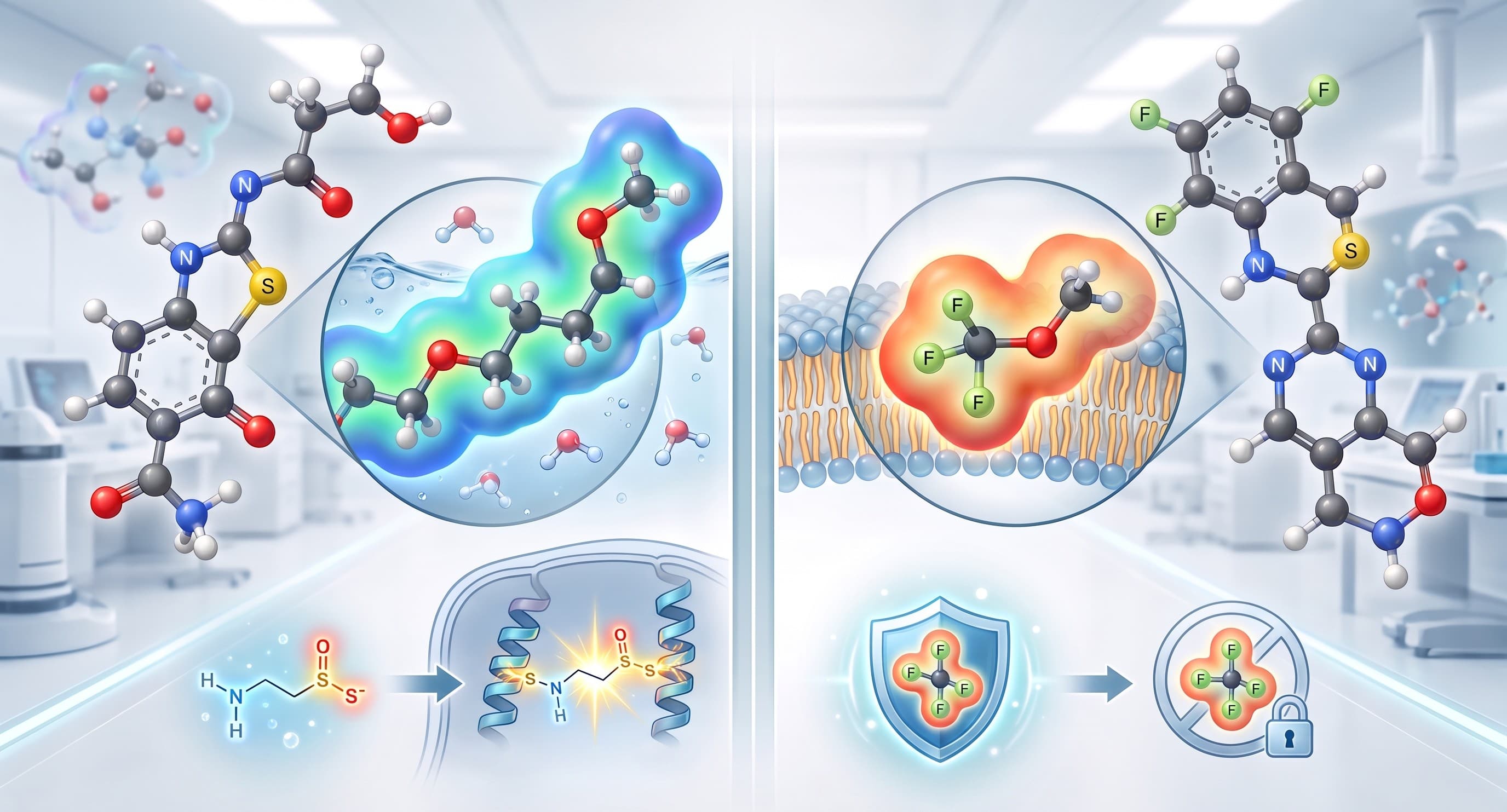
The Core Medicinal Chemistry Comparison: Lansoprazole and rabeprazole share an identical 2-(2-pyridylmethylsulfinyl)benzimidazole core with a 2-methyl group on the pyridine ring. They differ exclusively at the 4-position of the pyridine ring: - Lansoprazole possesses a 2,2,2-trifluoroethoxy group: -OCH2CF3. - Rabeprazole possesses a 3-methoxypropoxy group: -OCH2CH2CH2OCH3.
Dr. Reddy's argued that lansoprazole was an obvious lead compound because of its known proton pump inhibition, and that replacing the trifluoroethoxy group with a methoxypropoxy group represented an obvious structural modification to a POSITA.
The Legal and Scientific Ruling: Circuit Judge Randall R. Rader, writing for the unanimous Federal Circuit panel, affirmed Judge Gerard E. Lynch's finding that claim 1 was non-obvious, delivering the definitive framework for post-KSR chemical obviousness:
1. Post-KSR Lead Compound Doctrine: The court rejected the assertion that KSR eliminated the lead compound analysis. In chemical cases, an obviousness inquiry begins by determining whether a POSITA would have selected a specific prior art compound as a "lead compound"--a natural starting point for further structural development based on its desirable pharmacological profile. Furthermore, the patent challenger must prove that the skilled artisan had a reason or motivation to modify that specific lead compound in the exact manner that produces the claimed compound, with a reasonable expectation of success.
2. Structure-Activity Relationships and Lipophilicity: Crucially, the Federal Circuit examined the real medicinal chemistry of the substituents. The prior art (including Brändström and European publications) explicitly taught that the 4-position trifluoroethoxy substituent (-OCH2CF3) in lansoprazole was an engineered, lipophilic moiety that conferred high anti-ulcer activity. In gastric proton pump inhibitors, lipophilicity directly governs the rate of membrane penetration into parietal cell canaliculi and gastric tissue accumulation. Dr. Reddy's failed to identify any teaching or suggestion in the prior art to strip away the fluorines and replace this lipophilic trifluoroethoxy group with an unfluorinated, hydrophilic, flexible aliphatic ether (-OCH2CH2CH2OCH3). To the contrary, a POSITA evaluating the prior art structure-activity relationships would have expected that replacing the fluorinated group with a non-fluorinated methoxypropoxy group would diminish lipophilicity and impair anti-ulcer potency. Because the prior art pointed toward maintaining lipophilicity, modifying lansoprazole to yield rabeprazole was not obvious.
3. Rejection of Compound 40 as a Lead Compound: Regarding Byk Gulden's Compound 40 (which possessed a 3-methoxypropoxy group on the pyridine ring but lacked a 2-methyl substituent), the court held that Dr. Reddy's failed to establish that a POSITA would have chosen Compound 40 as a lead compound. The Byk Gulden reference disclosed a large class of compounds, ranked other compounds as far more potent than Compound 40, and provided zero gastric acid inhibition data for Compound 40. A skilled artisan would not have selected an uncharacterized, inferior compound as a starting lead.
By tying obviousness strictly to verified structure-activity relationships and physicochemical properties (lipophilicity and functional group electronics), the Federal Circuit protected rabeprazole and established a lasting doctrine that insulates innovative chemical scaffolds against superficial hindsight attacks.
## Images Plan Hero Focus Prompt: A 3D scientific biomedical visualization illustrating gastric parietal cell enzymology and proton pump inhibitor medicinal chemistry. Visualizing a substituted benzimidazole prodrug molecule binding stereospecifically into the catalytic cleft of the gastric H+/K+-ATPase alpha-subunit enzyme in an acidic canalicular environment. Highlighting the molecular alignment of the pyridine ring with a distinctive, flexible 3-methoxypropoxy aliphatic ether side chain projecting into a specialized binding pocket, while a reactive sulfenamide sulfur center coordinates adjacent to active-site cysteine sulfhydryl residues. Clean scientific biomedical illustration, photorealistic molecular ribbons and atomic surface rendering, cool cyan and deep navy color scheme, professional studio lighting, ABSOLUTELY ZERO TEXT OR TYPOGRAPHY, no letters, no words, no numbers, no courtroom or legal imagery, no gavels, no scales, no people.
Inline Focus Prompt: A detailed molecular cutaway and structural chemistry comparison. Illustrating the atomic-level difference between a fluorinated 4-trifluoroethoxy pyridine substituent and an extended unfluorinated 3-methoxypropoxy aliphatic ether substituent on a benzimidazole sulfinyl scaffold. Visualizing the contrasting electron density, electrostatic potential maps, and spatial flexibility of the non-fluorinated oxygen-ether chain compared to the rigid, electron-withdrawing trifluoromethyl terminal group. Clean laboratory molecular model aesthetic, vibrant atomic coloration, high-resolution scientific visualization, ABSOLUTELY ZERO TEXT OR TYPOGRAPHY, no letters, no words, no numbers, no courtroom or legal symbols, no people.
Target Paths: - Hero: `public/patent-analytics/news/eisai-replaced-trifluoroethoxy-with-methoxypropoxy-on-rabeprazole-the-federal-c.jpg` - Inline: `public/patent-analytics/news/eisai-replaced-trifluoroethoxy-with-methoxypropoxy-on-rabeprazole-the-federal-c-inline.jpg`
Target Slug: `eisai-replaced-trifluoroethoxy-with-methoxypropoxy-on-rabeprazole-the-federal-c`
Target Live URL: `https://patent-analytics.thechemsolver.com/news/eisai-replaced-trifluoroethoxy-with-methoxypropoxy-on-rabeprazole-the-federal-c`
## LinkedIn Draft (Post from the Page, not personal profile)
Can generic challengers invalidate a pharmaceutical patent by showing that the innovator merely swapped one ether substituent on a known lead compound?
In Eisai Co., Ltd. v. Dr. Reddy's Laboratories, Ltd. (533 F.3d 1353), the Federal Circuit delivered a landmark decision that remains the foundation of chemical obviousness under 35 U.S.C. 103. In an opinion authored by Circuit Judge Randall R. Rader, the court affirmed that claim 1 of Eisai's U.S. Patent No. 5,045,552--covering rabeprazole sodium (Aciphex)--was valid and non-obvious over the prior art proton pump inhibitor lansoprazole (Prevacid).
The Medicinal Chemistry: Rabeprazole and lansoprazole share an identical 2-(2-pyridylmethylsulfinyl)benzimidazole core with a 2-methyl substituent on the pyridine ring. The two molecules differ by exactly one substituent at the 4-position of the pyridine ring: - Lansoprazole carries a fluorinated 2,2,2-trifluoroethoxy group (-OCH2CF3). - Rabeprazole carries an unfluorinated 3-methoxypropoxy group (-OCH2CH2CH2OCH3).
The Challenger's Argument: Dr. Reddy's Laboratories and Teva argued that following the Supreme Court's KSR ruling, obviousness should be evaluated flexibly. Because lansoprazole was a celebrated, potent anti-ulcer agent, Dr. Reddy's asserted that selecting lansoprazole as a lead compound and modifying its 4-position alkoxy substituent was routine medicinal chemistry.
The Federal Circuit's Holding: Judge Rader rejected this argument, establishing three core tenets of chemical patent law:
1. KSR Preserves the Lead Compound Framework: KSR's flexible approach does not mean that every structural analog is obvious. In the chemical arts, obviousness requires identifying a reasoned basis for selecting a prior art compound as a lead compound AND demonstrating a specific motivation to modify that lead compound to achieve the claimed structure with a reasonable expectation of success.
2. Structure-Activity Relationships Control: The court examined the physical chemistry of the substituents. The prior art explicitly taught that the fluorinated trifluoroethoxy group in lansoprazole was specifically engineered to confer high lipophilicity, which directly correlated with anti-ulcer activity. A skilled artisan had no motivation to strip the fluorines and replace them with a longer, unfluorinated, hydrophilic methoxypropoxy chain, as doing so would have been expected to reduce lipophilicity and diminish potency.
3. Uncharacterized Prior Art Is Not a Lead: The court also rejected Byk Gulden's Compound 40 as an alternative lead compound, holding that skilled artisans do not select unpromising, uncharacterized prior art molecules that lack documented pharmacological efficacy.
Eisai v. Dr. Reddy's established that structural similarity alone is never enough to prove chemical obviousness. Patent challengers must ground their obviousness theories in documented structure-activity relationships and predictable chemical behavior.
Full case analysis and molecular breakdown: https://patent-analytics.thechemsolver.com/news/eisai-replaced-trifluoroethoxy-with-methoxypropoxy-on-rabeprazole-the-federal-c
#PatentLaw #Pharma #HatchWaxman #Obviousness #MedicinalChemistry #FederalCircuit #Rabeprazole #DrReddys #ProtonPumpInhibitor
What we do
See if this applies to one of your matters
We run genus/species (Markush) claim coverage analysis, Section 3(d) compliance screening, and prior-art structural triage on real chemical structures: not keyword search. If a case like this one is live for you, we'll run a free sample on a compound of your choosing.