
Eli Lilly Selected Olanzapine from a Vast Genus. The Court Held a Markush Formula Does Not Disclose Every Species.
By Prashant Kotian, PhD Researcher (Chemistry), ICT Mumbai
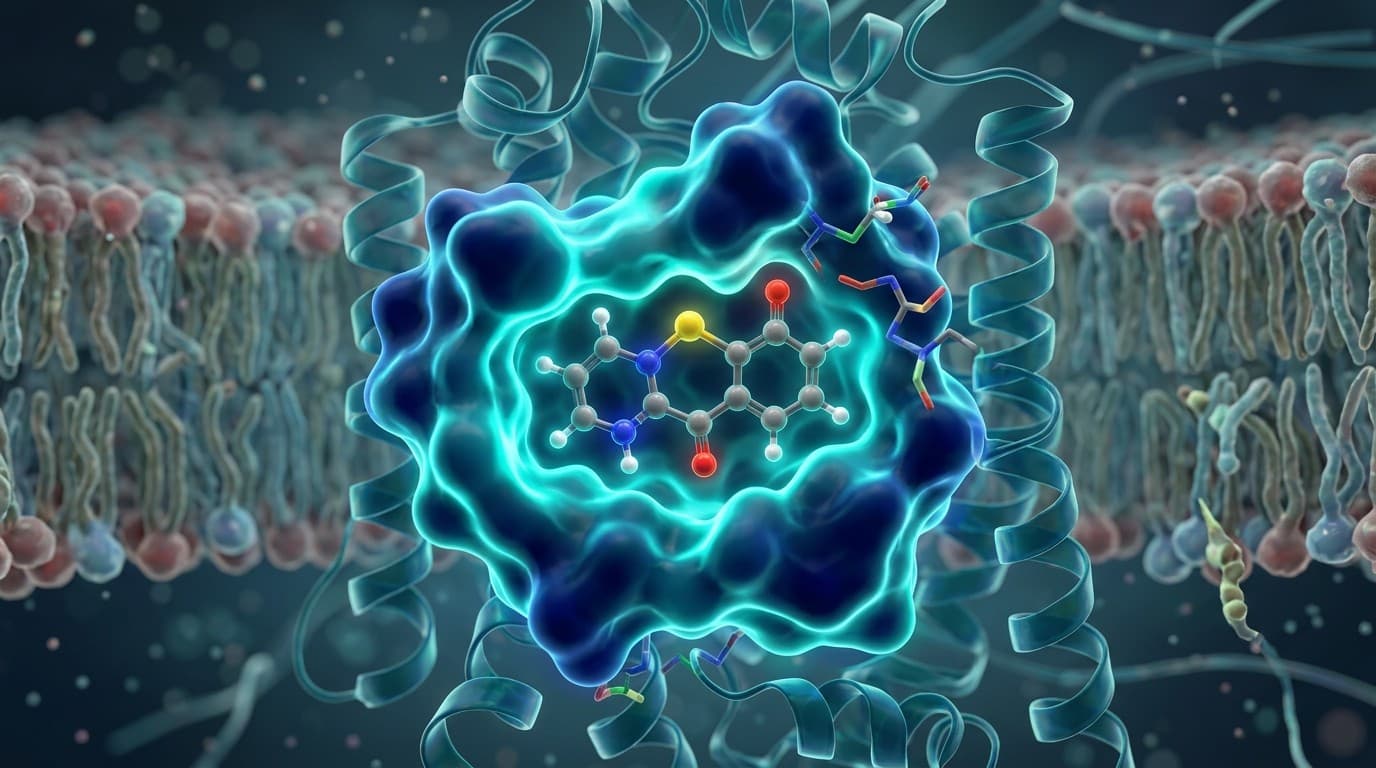
## The Chemical Dilemma: Clozapine Efficacy Without Agranulocytosis
In neuropsychiatric drug development, the discovery of atypical antipsychotics represented a clinical breakthrough overshadowed by a severe toxicological threat. Clozapine (a dibenzodiazepine derivative) successfully alleviated the positive and negative symptoms of schizophrenia without inducing extrapyramidal motor side effects. However, clozapine therapy carried a 1% to 2% incidence of life-threatening agranulocytosis--severe, drug-induced depletion of circulating neutrophils--mandating arduous hematological monitoring and severely restricting widespread use.
Medicinal chemists sought to preserve clozapine's distinctive neuroreceptor binding profile--potent antagonism of serotonin 5-HT2A receptors coupled with balanced dopamine D2 receptor modulation--while chemically modifying the heterocyclic core to eliminate hematological toxicity.
Eli Lilly focused synthetic efforts on the thienobenzodiazepine ring system. By fusing a sulfur-containing five-membered thiophene ring to the central seven-membered diazepine ring in place of one of clozapine's benzene rings, researchers sought an optimized spatial conformation for receptor docking.
## The Prior Art Forest: The Expansive Markush Genus of EP 0 028 134
In 1980, Eli Lilly filed European Patent Application EP 0 028 134 ("the '134 patent"), disclosing a foundational family of 10-(4-methylpiperazin-1-yl)-4H-thieno[2,3-b][1,5]benzodiazepines. The '134 specification contained a broad Markush formula defining substituents across both the thiophene ring (R1, R2) and the fused benzene ring (R3, R4, R5, R6).
Mathematically and chemically, this broad Formula I embraced millions, if not billions, of theoretically possible individual chemical structures. Out of this vast chemical space, Lilly synthesized and characterized approximately 50 concrete chemical species. Among those compounds, Lilly identified one molecule as its primary clinical candidate: **ethyl flumezapine** (7-fluoro-2-ethyl-4-(4-methyl-1-piperazinyl)-10H-thieno[2,3-b][1,5]benzodiazepine).
Ethyl flumezapine exhibited extraordinary potency in preclinical behavioral screens. However, during extended subchronic toxicity evaluations in beagle dogs, the drug caused severe toxic liabilities: 1. Marked and persistent elevations in hepatic transaminases (ALT, AST), indicative of acute hepatocellular necrosis. 2. Profound hypercholesterolemia and lipid abnormalities.
Because of this organ-specific toxicity, ethyl flumezapine's clinical development was terminated. The entire thienobenzodiazepine class appeared tainted by prohibitive hepatic and metabolic liabilities.
## The Discovery and Structural Isolation of Olanzapine
Rather than abandoning the scaffold, Lilly's medicinal chemistry team conducted systematic structure-activity relationship (SAR) investigations to isolate the structural drivers of this toxicity.
They observed that halogenation on the benzo ring (specifically the 7-fluoro substituent) and alkyl chain length on the thiophene ring played decisive roles in metabolic clearance and cytotoxic burden. By systematically deleting the 7-fluoro atom--restoring an unsubstituted phenyl ring--and placing a compact methyl substituent at position 2 of the thiophene ring, Lilly synthesized **olanzapine** (2-methyl-4-(4-methyl-1-piperazinyl)-10H-thieno[2,3-b][1,5]benzodiazepine; marketed as Zyprexa).
The pharmacological and toxicological profile of olanzapine proved unexpectedly clean: - **Receptor Selectivity:** Potent antagonism at 5-HT2A, 5-HT2C, D2, and D4 receptors, yielding powerful antipsychotic efficacy without cataleptic liability. - **Freedom from Agranulocytosis:** Unlike clozapine, olanzapine did not trigger neutrophil depletion or bone marrow suppression. - **Toxicological Safety:** In direct beagle dog toxicology studies, olanzapine produced zero hepatic necrosis and zero elevation of serum cholesterol--completely overcoming the fatal toxic liabilities that destroyed ethyl flumezapine.
Lilly filed a dedicated selection patent application claiming olanzapine specifically, which granted as European Patent (UK) No. 0 454 436 ("the '436 patent").
## The Generic Challenge: Dr. Reddy's Attack on the Selection Patent
Years later, Indian generic giant Dr. Reddy's Laboratories (UK) Ltd sought to clear the market for generic olanzapine formulations by initiating revocation proceedings against Lilly's '436 patent in the UK High Court of Justice.
Dr. Reddy's advanced a two-pronged patent law attack:
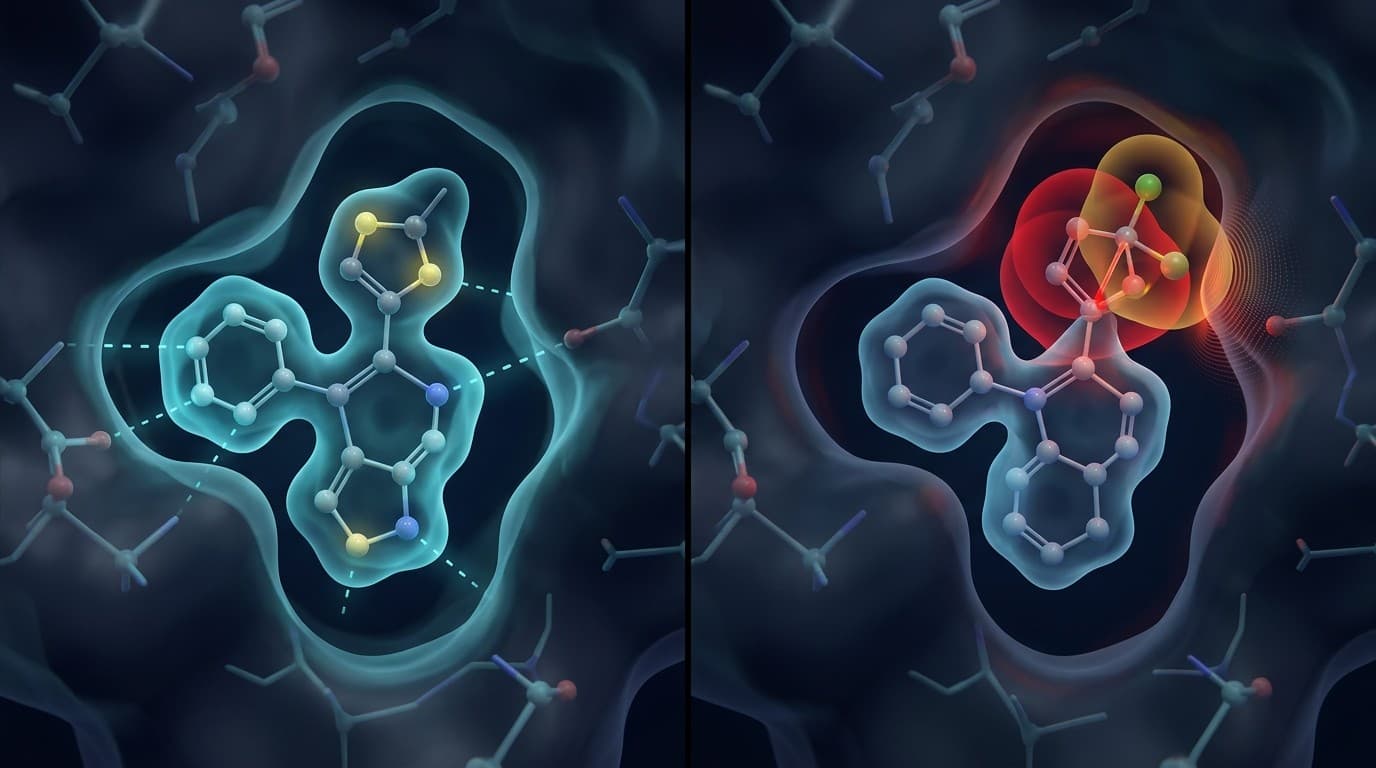
### 1. Lack of Novelty (Anticipation Under Section 1(1)(a) of the Patents Act 1977) Dr. Reddy's argued that olanzapine lacked novelty because it fell squarely within the literal scope of the broad Markush genus claimed in Lilly's prior EP '134 patent. Because a skilled chemist reading EP '134 could, in theory, generate olanzapine by selecting the unsubstituted benzene option and the 2-methyl thiophene option from the Markush lists, Dr. Reddy's contended that EP '134 had already placed olanzapine into the public domain.
### 2. Lack of Inventive Step (Obviousness Under Section 1(1)(b)) In the alternative, Dr. Reddy's argued that if olanzapine was deemed novel, selecting it from the known genus of EP '134 was obvious. Dr. Reddy's contended that a skilled medicinal chemist seeking an improved antipsychotic would routinely make and test compounds within the disclosed '134 class, rendering the selection arbitrary or an obvious trial with a reasonable expectation of success.
The UK High Court (Mr. Justice Floyd) dismissed Dr. Reddy's claims, upholding Lilly's patent. Dr. Reddy's appealed to the Court of Appeal.
## The Landmark Judgment of Lord Justice Jacob
On December 18, 2009, the Court of Appeal of England and Wales issued its precedential judgment (*Dr. Reddy's Laboratories (UK) Ltd v. Eli Lilly and Company Ltd*, [2009] EWCA Civ 1362). Authored by renowned patent jurist Lord Justice Robin Jacob and joined by Master of the Rolls Sir David Neuberger and Lord Justice Richards, the opinion established foundational principles governing chemical selection patents.
### Genus Does Not Anticipate Species Without an Individualized Description Lord Justice Jacob addressed Dr. Reddy's novelty challenge head-on, firmly rejecting the proposition that a generic chemical formula anticipates every compound within its boundaries:
> "A general formula does not disclose all the compounds which fall within it. An old and colourful way of putting the point is to say that you cannot say that you have disclosed a particular tree if you have merely described the forest."
The court held that for a prior art document to destroy the novelty of a chemical species, it must contain an **individualized description** of that specific molecule--such as its exact chemical name, explicit two-dimensional structural formula, or a dedicated working synthetic example. Because EP '134 only provided broad generic variable lists without ever individualizing olanzapine, olanzapine remained legally novel.
### The Doctrine of Selection Inventions and Technical Contribution Turning to obviousness, the Court of Appeal examined the classic doctrine of selection patents formulated in *I.G. Farbenindustrie AG's Patents* (1930) 47 RPC 289 and modernized under European Patent Convention (EPC) case law.
Lord Justice Jacob held that selecting a single compound from a broad, previously disclosed genus is non-obvious if: 1. The selection is based on some substantial advantage gained or defect avoided; 2. The entire selected entity exhibits that advantage; and 3. The advantage is not one that would have been predictable across the genus.
Dr. Reddy's argued that the selection of olanzapine was merely an arbitrary choice among millions of possibilities. But the court rejected this argument: Lilly demonstrated through extensive comparative toxicology that olanzapine did not cause the hepatic transaminase spikes or the severe hypercholesterolemia observed with ethyl flumezapine, nor did it cause clozapine's agranulocytosis.
Because nothing in the prior art or the broad '134 specification suggested that eliminating the benzene fluorine and appending a 2-methyl thiophene would resolve these severe biological liabilities, olanzapine represented a non-obvious technical contribution. The Court of Appeal unanimously dismissed Dr. Reddy's appeal.
## The US Counterpart: Dog Toxicity Teaches Away Under 35 U.S.C. 103
The UK ruling mirrored the outcome of parallel Hatch-Waxman litigation in the United States. In *Eli Lilly and Co. v. Zenith Goldline Pharmaceuticals, Inc., Teva Pharmaceuticals USA, Inc., and Dr. Reddy's Laboratories, Ltd.*, 471 F.3d 1369 (Fed. Cir. 2006), generic challengers argued that Lilly's U.S. Patent No. 5,229,382 was obvious over clozapine and ethyl flumezapine.
The U.S. Court of Appeals for the Federal Circuit affirmed the district court's finding of validity under 35 U.S.C. 103. The Federal Circuit held that: - A generic challenger must establish that a person of ordinary skill in the art (POSA) would have selected the prior art molecule as a starting lead compound. - Ethyl flumezapine's profound dog hepatotoxicity and cholesterol elevations actively **taught away** from using that compound or the fluorinated thienobenzodiazepine family as a starting point. - Structural similarity alone cannot support a prima facie obviousness rejection without a reasoned motivation to select the prior art molecule and modify it with a reasonable expectation of success.
## Strategic Implications for Generic Formulation and R&D Teams
The olanzapine jurisprudence across both the UK Court of Appeal and the US Federal Circuit provides critical, enduring lessons for chemical patent practice:
1. **The Limit of Prior Art Genus Anticipation:** A prior patent claiming a broad Markush formula does not automatically constitute prior art anticipation against a subsequent species patent unless the prior art provides an individualized description of that exact chemical structure. 2. **Comparative Toxicology as Secondary Evidence:** When defending a selection patent against an obviousness attack, demonstrating that the selected species overcomes an unpredicted toxicity present in prior art lead candidates is one of the strongest defenses in medicinal chemistry. 3. **Teaching Away from Failed Leads:** Innovators who document the failure mechanisms of preclinical leads (such as liver enzyme elevations or lipid disturbances) can effectively demonstrate that the prior art taught away from their final commercial molecule, foreclosing generic obviousness attacks based on retrospective structural overlap.
What we do
See if this applies to one of your matters
We run genus/species (Markush) claim coverage analysis, Section 3(d) compliance screening, and prior-art structural triage on real chemical structures: not keyword search. If a case like this one is live for you, we'll run a free sample on a compound of your choosing.