
Galderma Claimed Bioequivalence Was Infringement. The Federal Circuit Said Lupin's Pellets Differed.
By Prashant Kotian, PhD Researcher (Chemistry), ICT Mumbai
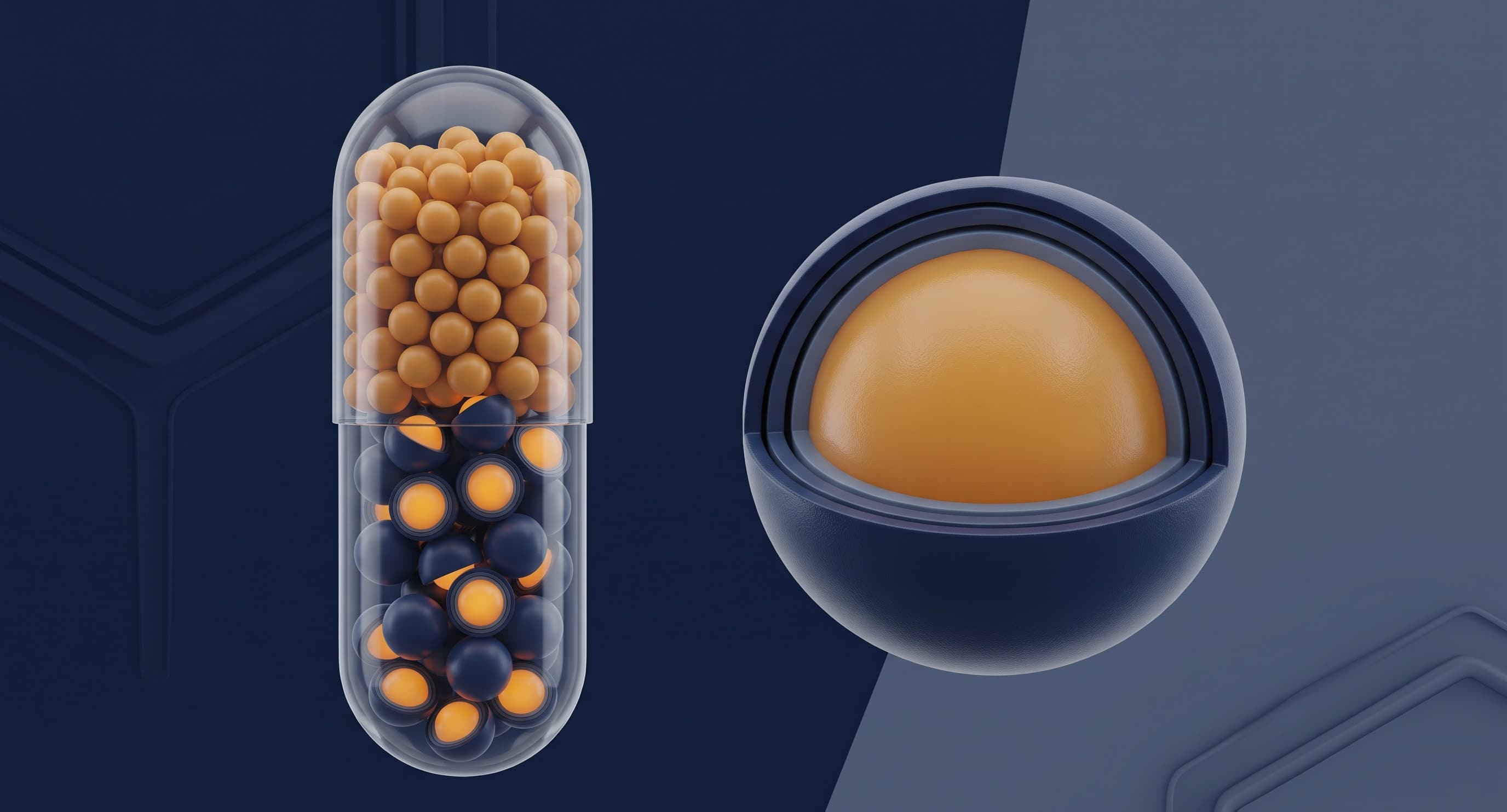
When a generic drug developer designs around an innovator's formulation patent by shifting the ratio of immediate-release and delayed-release pellets inside an oral capsule, can the brand manufacturer enforce its patent under the doctrine of equivalents simply by demonstrating that the two drugs are bioequivalent in human plasma?
In *Galderma Laboratories, L.P. v. Lupin Inc.*, Fed. Cir. No. 2024-1664 (precedential, decided December 6, 2024), the U.S. Court of Appeals for the Federal Circuit delivered an essential ruling on the boundary between pharmaceutical patent law and FDA regulatory science. Authoring the opinion for a unanimous panel including Circuit Judges Richard Linn and Sharon Prost, Chief Judge Kimberly A. Moore affirmed that regulatory bioequivalence does not per se establish patent infringement under the doctrine of equivalents, and that artificial *in vitro* dissolution testing cannot substitute for physiological *in vivo* gastrointestinal reality.
### The Formulation Challenge: Sub-Antimicrobial Doxycycline
Doxycycline is a well-known semisynthetic broad-spectrum tetracycline antibiotic. Beyond its direct antibacterial activity against ribosomes, doxycycline exhibits potent anti-inflammatory properties by inhibiting matrix metalloproteinases (specifically collagenases such as MMP-8 and MMP-9) and suppressing pro-inflammatory cytokines.
To treat inflammatory lesions (papules and pustules) of rosacea without exerting selective pressure on systemic microflora or inducing bacterial antibiotic resistance, Galderma developed Oracea (40 mg doxycycline capsules). Commercial Oracea is formulated to deliver a sub-antimicrobial dose that maintains steady-state plasma concentrations between 0.1 ug/mL and 0.8 ug/mL--safely below the 1.0 ug/mL minimum inhibitory concentration (MIC) required for systemic antimicrobial action.
To achieve this tight kinetic window, Galderma patented a multiparticulate capsule architecture. In U.S. Patent Nos. 7,749,532 ('the '532 patent') and 8,206,740 ('the '740 patent'), both titled "Once daily formulation of tetracyclines," Galderma claimed an oral capsule formulation consisting of: 1. Approximately 30 mg of immediate-release (IR) doxycycline beads; and 2. Approximately 10 mg of delayed-release (DR) doxycycline beads coated with an enteric polymer designed to resist gastric acid and dissolve only at intestinal pH (pH >= 5.5).
This 30 mg / 10 mg dual-pulse release profile was designed to provide an immediate burst to reach therapeutic anti-inflammatory levels quickly, followed by a secondary pulse downstream in the duodenum to sustain therapeutic levels across a full 24-hour dosing interval.
### Lupin's 22 mg / 18 mg Design-Around
Seeking to commercialize a generic version of Oracea, Indian generic manufacturer Lupin Ltd. and its U.S. subsidiary Lupin Inc. (Mumbai) filed an Abbreviated New Drug Application (ANDA) with the FDA. Rather than copying Galderma's 30 mg IR / 10 mg DR bead ratio, Lupin formulated its generic 40 mg capsule with: - Approximately 22 mg of immediate-release (IR) pellets; and - Approximately 18 mg of delayed-release (DR) pellets.
By altering the solid-state bead loading to a 22 mg / 18 mg split, Lupin sought to steer clear of the literal boundaries of Galderma's claims, which explicitly recited "approximately 30 mg" of IR and "approximately 10 mg" of DR.
Galderma sued Lupin in the U.S. District Court for the District of Delaware (Judge Stephanos Bibas, sitting by designation), alleging that Lupin's ANDA infringed the '532 and '740 patents both literally and under the doctrine of equivalents.
### The "Leaky Coating" Theory and Flawed Dissolution Testing
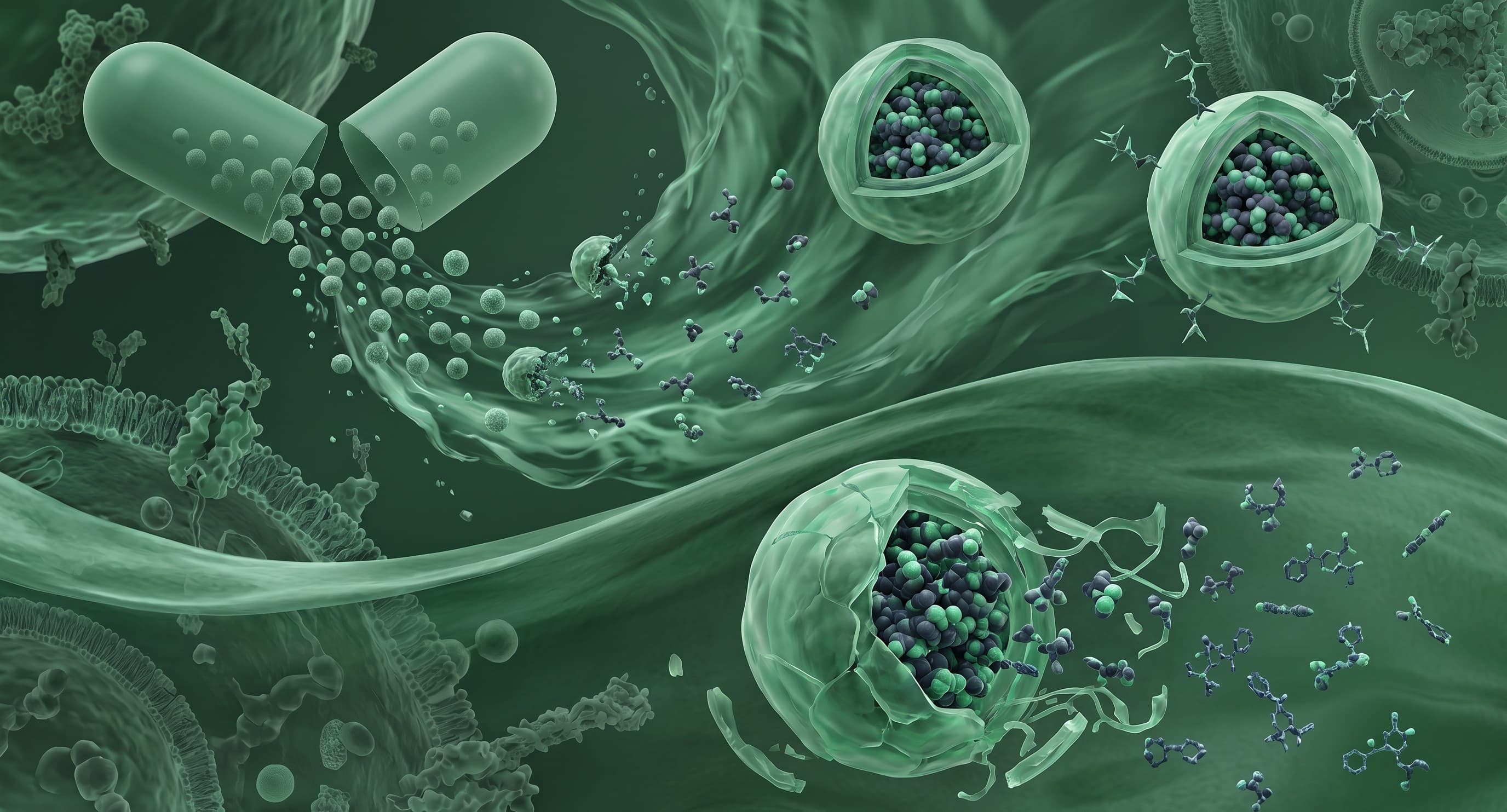
Lacking literal correspondence on the face of Lupin's ANDA specification, Galderma constructed an ingenious literal infringement theory: it asserted that Lupin's 18 mg DR pellets possessed a "weak" or "leaky" enteric coating. According to Galderma's expert, during gastric transit, approximately 8 mg of doxycycline leaked out of the enteric pellets into the stomach prior to reaching the intestine. Under this theory, Lupin's 22 mg IR pellets combined with 8 mg of "leaked" DR drug to deliver an effective 30 mg immediate release in the stomach, leaving approximately 10 mg to release downstream--purportedly satisfying the patent's 30 mg IR / 10 mg DR claim limitations *in vivo*.
To support this theory, Galderma relied on a two-stage *in vitro* dissolution assay: 1. Pellets were submerged in 0.1 N hydrochloric acid (pH 1.1) for 120 minutes to model the stomach; and 2. The medium was then buffered to pH 4.5 with acetate to assess intermediate dissolution.
Following a three-day bench trial, Judge Bibas rejected Galderma's theory. The district court found that Galderma's dissolution test bore no relationship to human physiology. In a fasted human stomach--the condition under which Oracea is administered--gastric pH ranges between 1.0 and 2.0, where Lupin's enteric coat remained fully intact. Raising the *in vitro* pH to 4.5 did not mimic fasted gastric conditions, nor did prolonged agitation reflect actual gastric emptying kinetics. Because Galderma failed to prove that Lupin's enteric pellets actually leaked 8 mg of drug under physiological conditions, the claim of literal infringement failed.
### Bioequivalence Does Not Equal Doctrine of Equivalents
On appeal, Galderma focused heavily on the doctrine of equivalents. Galderma argued that because the FDA approved Lupin's generic product as bioequivalent to Oracea--demonstrating equivalent human plasma Cmax and AUC curves within the standard 80% to 125% confidence interval--the accused product necessarily achieved the same overall result. Under the classic *Graver Tank* tripartite test (Function, Way, Result), Galderma contended that bioequivalence established the "result" prong and justified an infringement finding.
The Federal Circuit firmly rejected this conflation of regulatory science and patent law. Writing for the court, Chief Judge Moore held that bioequivalence does not per se establish patent infringement under the doctrine of equivalents:
1. **The "Way" Prong Controls:** The doctrine of equivalents requires proof not merely that an accused product achieves the same overall therapeutic outcome or pharmacokinetic profile (the "result"), but that it performs substantially the same function in substantially the same *way*. 2. **Release Architecture Is the Mechanism:** The asserted claims recited a specific multiparticulate delivery architecture: releasing ~30 mg immediately and ~10 mg downstream. Lupin's generic capsule released a substantially smaller initial pulse (22 mg) and a substantially larger delayed pulse (18 mg). That is a fundamentally different physical and biopharmaceutical mechanism of action, even if the overall systemic area under the plasma concentration-time curve (AUC) appears comparable in a regulatory submission. 3. **Limitation-Specific Equivalents:** The court reiterated that the doctrine of equivalents is applied to individual claim limitations, not to the invention as a whole. Equating a 22 mg / 18 mg pellet blend with a 30 mg / 10 mg limitation would effectively vitiate the specific numerical boundaries chosen by the patentee during prosecution.
### Key Takeaways for Formulation Chemistry and Hatch-Waxman Strategy
The Federal Circuit's precedential ruling in *Galderma v. Lupin* provides critical guideposts for both innovator patent drafters and generic formulation scientists:
- **Bioequivalence Is Not an Infringement Shortcut:** Innovators cannot rely on an ANDA filer's FDA bioequivalence studies to satisfy their burden of proof under the doctrine of equivalents. Bioequivalence establishes clinical comparability under regulatory statutes; patent infringement requires proving identical or insubstantially different mechanism-of-action steps under 35 U.S.C. 271. - **Formulation Design-Arounds Remain Viable:** Where an innovator claims specific numerical amounts or ratios of formulation components (such as IR and DR micro-particulates), generic chemists who achieve bioequivalence through an alternative quantitative release architecture can successfully defeat doctrine of equivalents assertions. - **Physiological Relevance in Dissolution Testing:** Courts will rigorously scrutinize *in vitro* dissolution assays used to establish patent infringement. If an expert relies on non-physiological pH buffers (such as pH 4.5 for a fasted stomach) or unrealistic exposure intervals that do not track *in vivo* gastrointestinal transit, the testimony will be discarded as speculative conjecture.
By holding Galderma to the precise physical boundaries of its claims, the Federal Circuit affirmed that patent protection in formulation chemistry must be won through the specific engineering of the dosage form, not through broad regulatory assumptions.
What we do
See if this applies to one of your matters
We run genus/species (Markush) claim coverage analysis, Section 3(d) compliance screening, and prior-art structural triage on real chemical structures: not keyword search. If a case like this one is live for you, we'll run a free sample on a compound of your choosing.