
Generics Attacked Rosuvastatin as a Routine Sandoz Tweak. The Federal Circuit Held Sulfonamide Hydrophilicity Defeated Obviousness.
By Prashant Kotian, PhD Researcher (Chemistry), ICT Mumbai
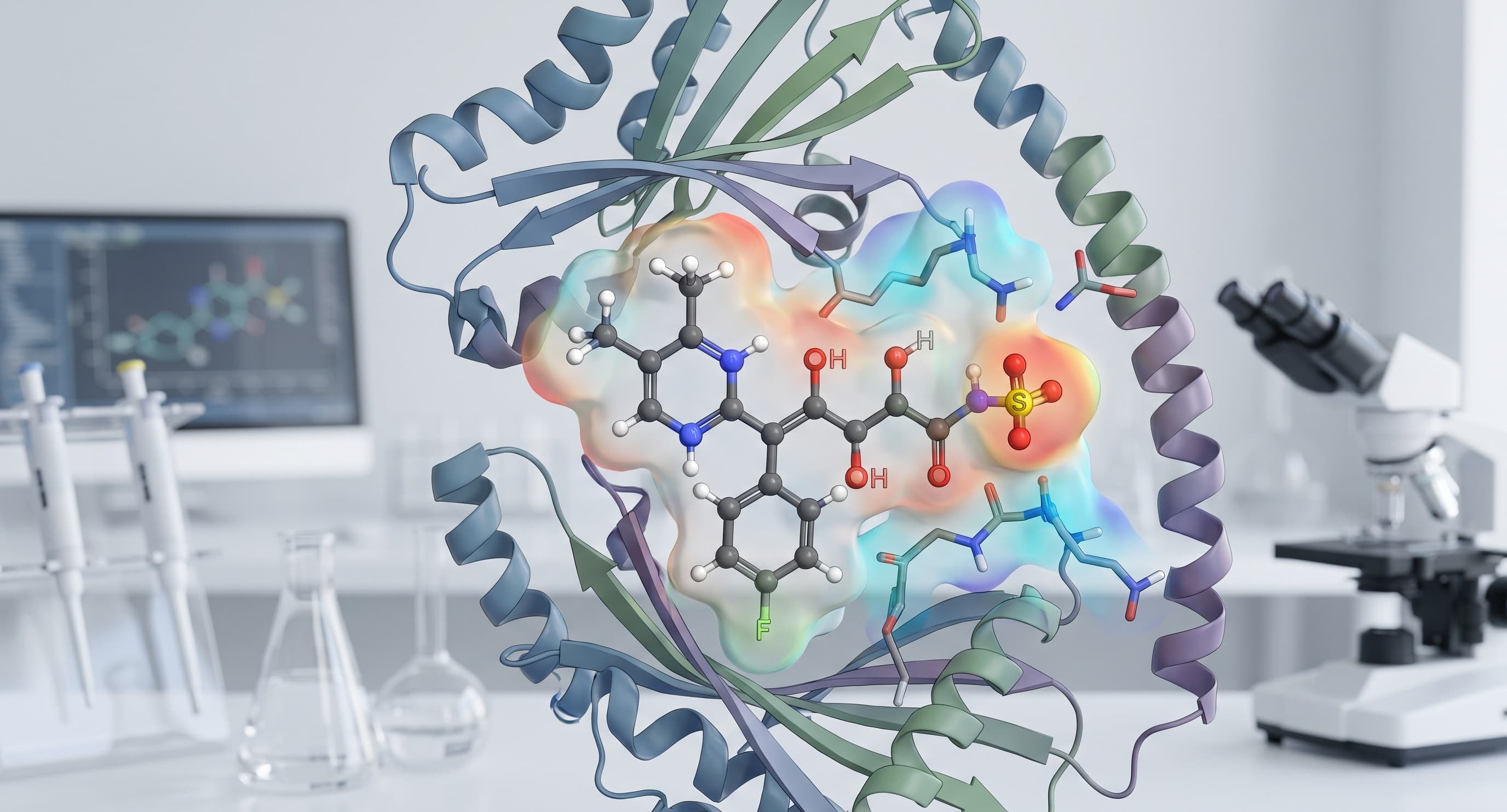
In small-molecule patent litigation, generic challengers routinely attempt to invalidate blockbuster composition-of-matter patents by treating medicinal chemistry as an exercise in molecular retrofitting. By scanning the historical patent library for the closest published scaffold and portraying each chemical substitution as a predictable variation, challengers seek to persuade courts that the commercial molecule was obvious to try. Under 35 U.S.C. 103, however, the Federal Circuit's lead compound framework requires clear and convincing proof that a person of ordinary skill in the art would have selected the asserted prior art molecule as a starting point and would have had a specific, art-guided motivation to alter it with a reasonable expectation of success. In In re Rosuvastatin Calcium Patent Litigation (703 F.3d 511, Fed. Cir. 2012), the Federal Circuit firmly rejected an obviousness challenge brought by eight generic manufacturers, affirming that a prior art design dogma favoring lipophilic substituents taught away from the polar, hydrophilic architecture of rosuvastatin calcium (Crestor).
Rosuvastatin calcium is a potent, synthetic inhibitor of 3-hydroxy-3-methylglutaryl-coenzyme A (HMG-CoA) reductase, the rate-limiting enzyme in hepatic cholesterol biosynthesis. Originally invented by Japanese pharmaceutical innovator Shionogi & Co., Ltd. and exclusively licensed to AstraZeneca, rosuvastatin became one of the most widely prescribed statins globally, achieving peak annual sales exceeding $5 billion. At the molecular level, rosuvastatin features a distinct central pyrimidine heterocyclic core adorned with four precisely arranged pharmacophoric elements: a 4-(4-fluorophenyl) moiety engaging in hydrophobic and aromatic stacking interactions; a 6-isopropyl group filling an adjacent lipophilic enzyme pocket; a (3R,5S)-dihydroxy-(E)-6-heptenoic acid side chain at C5 that mimics the endogenous HMG-CoA substrate; and, most crucially, a polar N-methyl-N-methanesulfonylamino (methanesulfonamide) substituent positioned at the C2 carbon of the pyrimidine ring.
Seeking early market entry under the Hatch-Waxman Act, a coordinated consortium of generic drug manufacturers--including Apotex, Aurobindo Pharma, Glenmark Pharmaceuticals, Sandoz, Sun Pharma, and Teva--filed Abbreviated New Drug Applications (ANDAs) with Paragraph IV certifications against U.S. Patent No. RE37,314. The generic defendants asserted that Claim 6, which claims rosuvastatin calcium, was invalid for obviousness under 35 U.S.C. 103 over a prior art pyrimidine-based statin designated as "Sandoz Compound 1b" (disclosed in European Patent Application EP 0367895 / BMY-45227). Sandoz Compound 1b shared the central pyrimidine scaffold, the 4-fluorophenyl group, and the 6-isopropyl moiety, but diverged at the C2 carbon, where it carried an unsubstituted or alkyl-substituted amino group. The generics argued that a medicinal chemist of ordinary skill would have naturally selected Sandoz Compound 1b as a lead compound and routinely swapped its amino group for a methanesulfonamide moiety to optimize metabolic stability and pharmacokinetics.
Presiding over a rigorous bench trial in the U.S. District Court for the District of Delaware, Chief Judge Gregory M. Sleet rejected the generics' obviousness defense, holding that the challengers had failed to satisfy either prong of the lead compound analysis. On appeal, the Federal Circuit affirmed Judge Sleet's validity determination in an opinion authored by Circuit Judge Haldane Robert Mayer, joined by Circuit Judge Jimmie V. Reyna, with Senior Circuit Judge S. Jay Plager filing a concurring opinion.
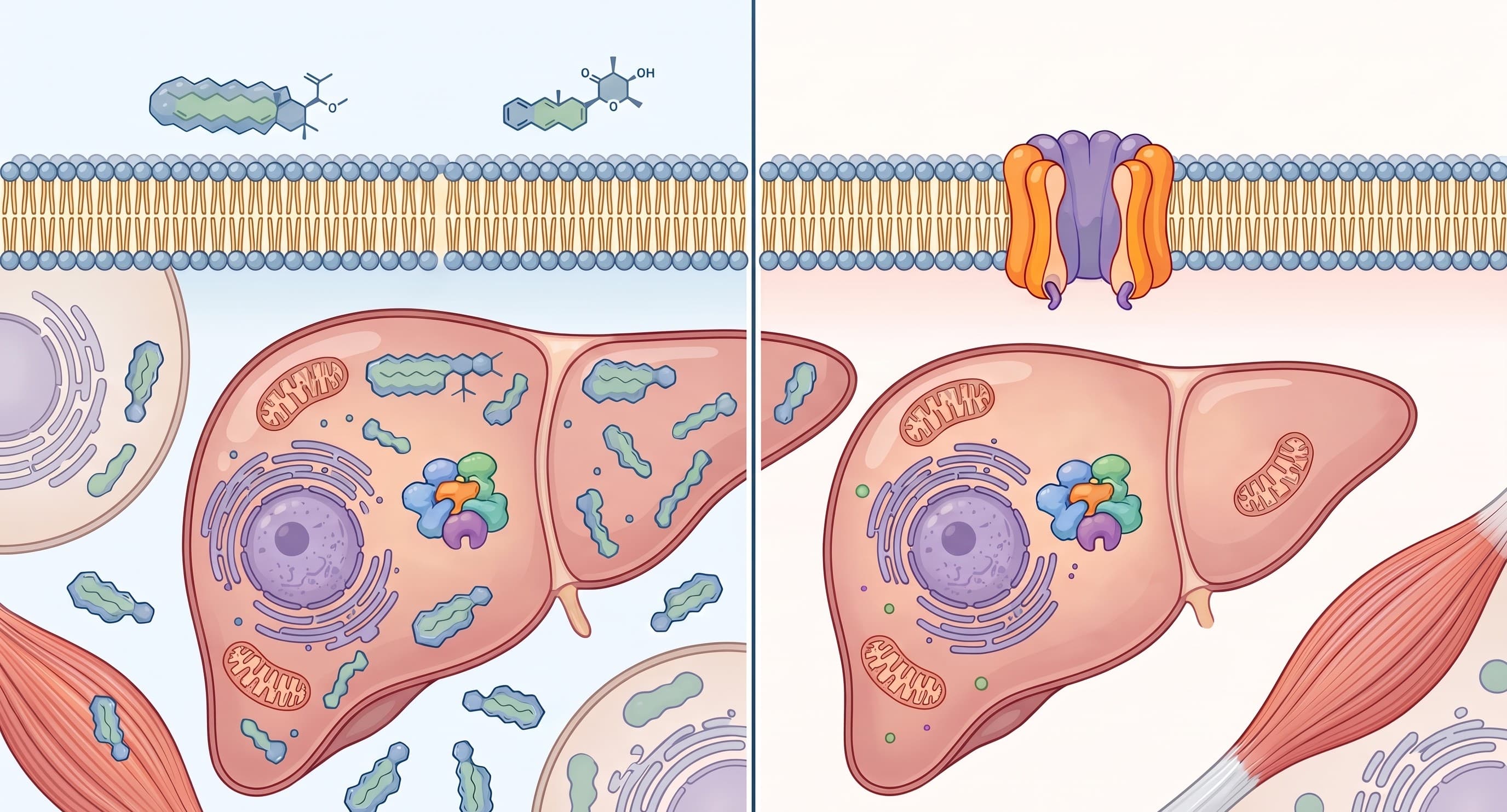
The Federal Circuit held that the defendants' obviousness defense failed at the threshold inquiry: selecting Sandoz Compound 1b as a lead compound. The trial record established that during the critical invention window of the early 1990s, the pharmaceutical industry viewed pyrimidine-based statins with pronounced skepticism. Multiple major pharmaceutical developers, including Sandoz, Bayer, and Bristol-Myers Squibb, had investigated pyrimidine-centered HMG-CoA reductase inhibitors and subsequently abandoned the chemical series due to disappointing in vivo cholesterol-lowering efficacy, erratic oral bioavailability, and severe metabolic liabilities. Furthermore, medicinal chemists evaluating the broader prior art had access to far more promising statin scaffolds, including the clinically validated pyrrole class (which yielded atorvastatin/Lipitor), the indole class (fluvastatin/Lescol), and natural decalin fungal metabolites. Sandoz itself had deprioritized its pyrimidine program. As Judge Mayer affirmed, generic challengers cannot engage in retrospective cherry-picking by plucking an abandoned scaffold out of hundreds of published compounds simply because its two-dimensional skeleton happens to resemble the commercial drug.
Even assuming an artisan would have selected Sandoz Compound 1b as a lead, the Federal Circuit held that the challengers' case collapsed entirely on the second prong: motivation to modify. During the relevant timeframe, the prevailing medicinal chemistry dogma regarding HMG-CoA reductase inhibition taught that increasing lipophilicity at the central heterocycle was essential for anchoring the inhibitor into the predominantly hydrophobic catalytic binding pocket of the enzyme. Leading statin researchers had published structure-activity relationship (SAR) studies demonstrating that bulky, lipophilic alkyl, aryl, or cycloalkyl substitutions directly enhanced inhibitory potency. Sandoz's own patents and publications reinforced this paradigm, teaching that lipophilic groups should be installed at the C2 position.
In stark contrast to this established lipophilicity doctrine, Shionogi's research team introduced a polar, hydrophilic methanesulfonamide substituent at C2. The prior art contained zero teaching or suggestion that appending a strongly polar sulfonyl group to a pyrimidine statin would preserve, let alone dramatically boost, enzymatic affinity. Because the prior art taught away from hydrophilic substitutions at that site, the generic defendants' assertion that swapping an amino group for a sulfonamide was an "obvious to try" modification was defeated by the contrary teachings of the literature.
The Federal Circuit further underscored that rosuvastatin exhibited remarkable unexpected results that powerfully rebutted any lingering inference of obviousness. Beyond achieving picomolar-to-nanomolar potency against HMG-CoA reductase, the hydrophilic sulfonamide moiety conferred high hepatoselectivity upon the molecule. Because cholesterol biosynthesis is concentrated in hepatocytes, rosuvastatin's polar architecture made it an ideal substrate for active hepatic uptake via organic anion transporting polypeptide 1B1 (OATP1B1), while dramatically curtailing passive membrane diffusion into peripheral extrahepatic tissues, such as skeletal muscle. This molecular profile directly addressed the primary toxic liability of the statin class: statin-induced myopathy and life-threatening rhabdomyolysis--a toxic syndrome that ultimately led to the worldwide market withdrawal of the highly lipophilic statin cerivastatin (Baycol).
In re Rosuvastatin Calcium Patent Litigation stands as an enduring pillar of pharmaceutical patent jurisprudence. For originator pharmaceutical firms, the decision demonstrates that core substance patents can withstand aggressive Paragraph IV challenges when innovators make counter-intuitive structural departures that defy prevailing SAR dogmas. For generic developers and patent counsel, the case serves as a vital reminder that 35 U.S.C. 103 requires an affirmative, contemporaneous rationale in the prior art to select a specific lead and perform a specific substitution; retrospective reconstruction that ignores industry skepticism and contrary structural teachings will not withstand judicial scrutiny.
What we do
See if this applies to one of your matters
We run genus/species (Markush) claim coverage analysis, Section 3(d) compliance screening, and prior-art structural triage on real chemical structures: not keyword search. If a case like this one is live for you, we'll run a free sample on a compound of your choosing.