
Intra-Cellular Claimed Deuteration Enhanced Bioavailability. The Delhi High Court Held Pharmacokinetics Is Not Efficacy.
By Prashant Kotian, PhD Researcher (Chemistry), ICT Mumbai
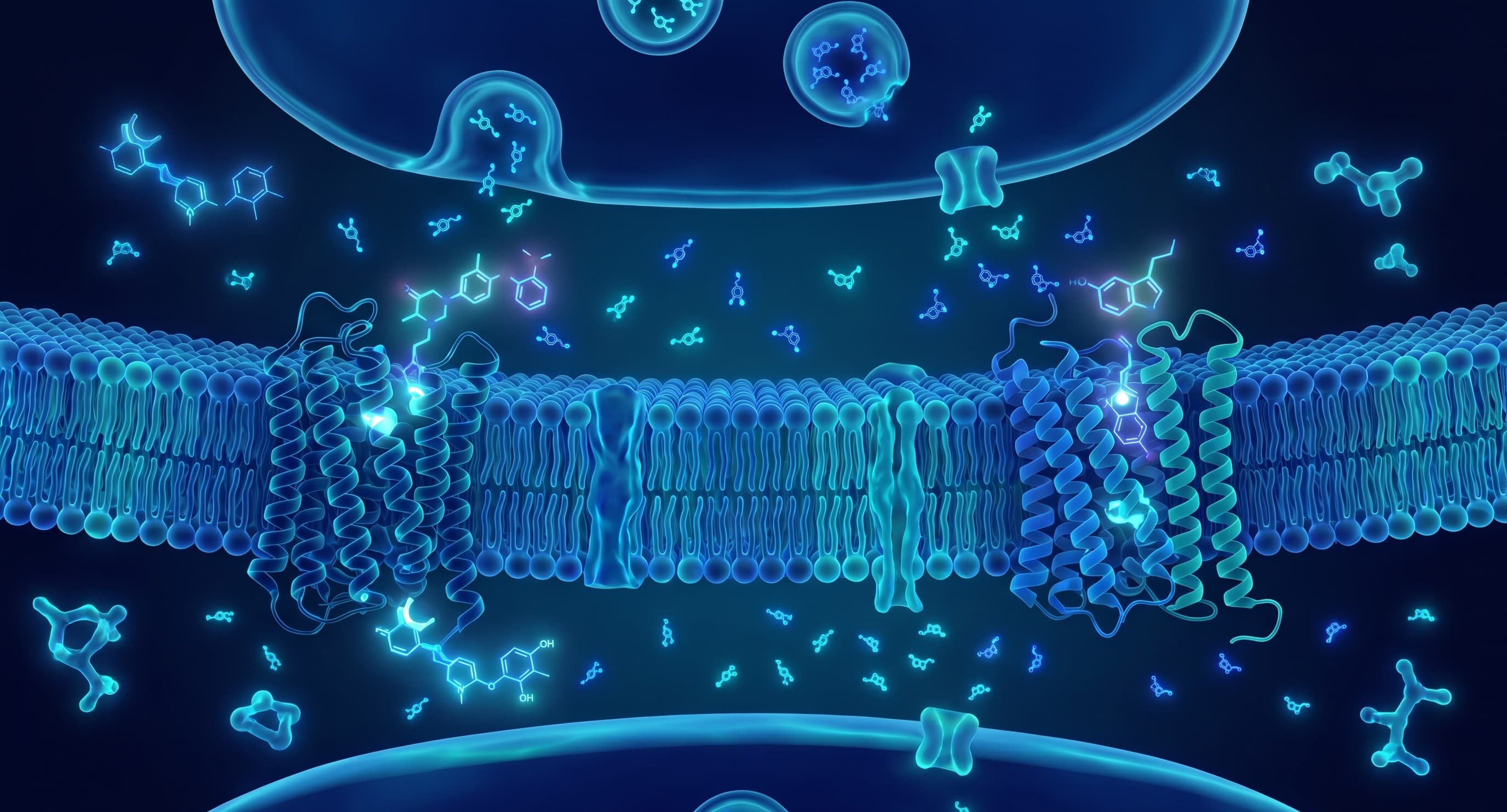
In pharmaceutical lifecycle management, isotopic substitution--specifically replacing hydrogen atoms with deuterium (^2H) on metabolically labile carbon centers--has become a prominent strategy to extend the patent exclusivity of established small molecules. By exploiting the kinetic isotope effect (KIE), medicinal chemists can slow cytochrome P450-mediated enzymatic clearance, thereby increasing plasma half-life and boosting oral bioavailability without altering target receptor pharmacology.
However, in *Intra-Cellular Therapies, Inc. v. The Controller of Patents and Designs* (C.A.(COMM.IPD-PAT) 24/2023, decided July 6, 2026), the Intellectual Property Division of the High Court of Delhi drew a strict statutory boundary. In a significant judgment authored by Hon'ble Mr. Justice Tushar Rao Gedela, the Court upheld the Patent Office's rejection of Indian Patent Application No. 201817033732, establishing two critical precedents: first, that pharmacokinetic enhancements and metabolic stability do not constitute "enhanced therapeutic efficacy" under Section 3(d) of the Indian Patents Act, 1970; and second, that an applicant cannot manufacture novelty for a species claim encompassed within its own earlier genus disclosure by arguing that isotopic substitution represents a series of "multiple selections."
### The Neurochemical Engine: Lumateperone Architecture and Receptor Pharmacology
The molecule at the center of the dispute is lumateperone (development code ITI-007, marketed in the United States as CAPLYTA), an atypical antipsychotic approved for the treatment of schizophrenia and depressive episodes associated with bipolar I and bipolar II disorder.
From a structural perspective, lumateperone is chemically designated as 4-((6bR,10aS)-3-methyl-2,3,6b,9,10,10a-hexahydro-1H,7H-pyrido[3',4':4,5]pyrrolo[1,2,3-de]quinoxalin-8-yl)-1-(4-fluorophenyl)-butan-1-one. The compound integrates a rigid tetracyclic hexahydropyrido-pyrroloquinoxaline framework coupled via an aliphatic butyrophenone spacer to a para-fluorophenyl moiety.
This specialized chemical scaffold enables a distinct pharmacological profile across three central neurotransmitter systems: 1. **High-Affinity Serotonin 5-HT2A Receptor Antagonism**: Lumateperone binds human 5-HT2A receptors with sub-nanomolar affinity (Ki of approximately 0.54 nM), conferring robust antipsychotic efficacy and improving negative symptoms of schizophrenia. 2. **Dopamine Receptor Phosphoprotein Modulation**: At dopamine D2 receptors, lumateperone displays dual functionality--acting as a postsynaptic antagonist while exhibiting presynaptic partial agonism (Ki of approximately 32 nM). This selective mesolimbic modulation suppresses psychotic positive symptoms while mitigating extrapyramidal motor side effects. 3. **Serotonin Reuptake Inhibition**: The molecule inhibits the serotonin transporter (SERT, Ki of approximately 61 nM), providing direct antidepressant and mood-stabilizing activity.
Crucially, lumateperone maintains negligible affinity for histaminergic H1 receptors, muscarinic M1 receptors, and alpha-1 adrenergic receptors. This selectivity spares patients from the debilitating sedation, anticholinergic cognitive impairment, and severe cardiometabolic weight gain characteristic of first-generation neuroleptics and older atypical agents.
### The Metabolic Cleavage Vulnerability and the Kinetic Isotope Effect
Despite its receptor binding advantages, lumateperone suffers from substantial in vivo metabolic clearance when administered orally. Following gastrointestinal absorption, the molecule undergoes extensive hepatic first-pass metabolism mediated primarily by microsomal cytochrome P450 enzymes (predominantly CYP3A4 and CYP2C8).
The primary metabolic pathways involve: - Oxidative scission along the aliphatic carbon atoms of the 4-fluorophenyl-butan-1-one chain; - Ketone reduction yielding secondary alcohol metabolites; and - N-demethylation of the piperazine-like ring nitrogen on the tetracyclic core.
These rapid enzymatic transformations result in high systemic clearance, an elimination half-life that necessitates careful titration, and variable oral bioavailability in clinical populations.
To overcome these metabolic vulnerabilities, Intra-Cellular Therapies pursued a rational deuteration program. In patent application 201817033732 (the national phase entry of PCT/US2017/024629, titled "ORGANIC COMPOUNDS"), the applicant claimed six specific deuterated analogs of lumateperone.
In medicinal chemistry, deuterium substitution relies on fundamental quantum mechanics and transition-state theory. Deuterium (^2H, or D) is a stable, non-radioactive isotope of hydrogen (^1H) containing one proton and one neutron, giving it twice the atomic mass of protium.
Because the reduced mass (mu) of the carbon-deuterium pair is significantly greater than that of a carbon-hydrogen pair:
mu = (m_C * m_D) / (m_C + m_D) > (m_C * m_H) / (m_C + m_H)
the zero-point vibrational frequency of the C-D covalent bond is substantially lower than that of the corresponding C-H bond (approximately 2100 cm^-1 for C-D versus 2900 cm^-1 for C-H). Consequently, the covalent C-D bond resides in a deeper potential energy well and possesses a higher dissociation energy--typically 1.2 to 1.5 kcal/mol greater than a C-H bond.
When an enzymatic reaction, such as hydrogen atom abstraction by the high-valent iron-oxo ferryl intermediate (Compound I) of cytochrome P450, represents the rate-determining step of metabolic transformation, the reaction exhibits a Primary Kinetic Isotope Effect:
KIE = k_H / k_D
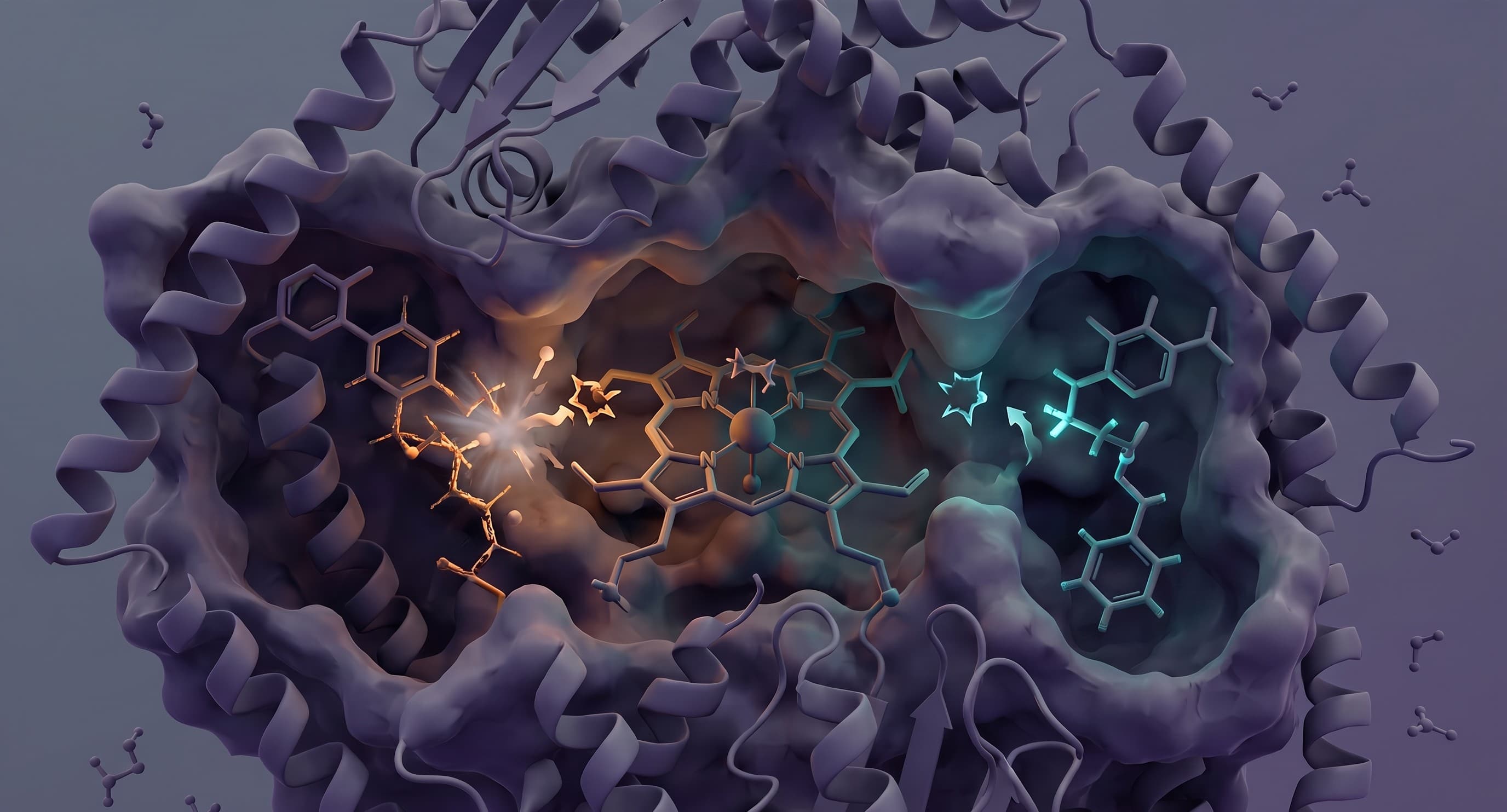
Depending on transition-state symmetry and quantum tunneling contributions, this KIE factor typically ranges from 2 to 7. By installing deuterium atoms at the specific sites of oxidative attack along the butyrophenone chain and tetracyclic ring, Intra-Cellular effectively blunted CYP-mediated oxidation. This slowed hepatic clearance, increased the area under the plasma concentration-time curve (AUC), prolonged terminal elimination half-life, and increased oral bioavailability.
### The Prosecution History and the Controller's Refusal
During prosecution before the Indian Patent Office, the Controller of Patents and Designs issued successive examination reports and hearing notices challenging the application across three statutory pillars: 1. **Lack of Novelty under Section 2(1)(j)**: The Controller found that the claimed compounds lacked novelty in light of Intra-Cellular's own earlier patent disclosure, Indian Patent No. 243282 (corresponding to PCT publication WO 2008/112280), which broadly disclosed the core pyrido-pyrrolo-quinoxaline genus and specifically identified lumateperone. 2. **Lack of Inventive Step under Section 2(1)(ja)**: The Patent Office held that applying deuterium substitution to known drug scaffolds was an established, predictable medicinal chemistry technique taught across prior art literature (including references D4 through D6), rendering the claimed compounds obvious to a person skilled in the art. 3. **Statutory Bar under Section 3(d)**: The Controller ruled that the claimed deuterated compounds represented a "new form of a known substance" (lumateperone), and that Intra-Cellular failed to demonstrate enhanced therapeutic efficacy as strictly mandated by Section 3(d).
Following a final hearing, the Controller issued an order on April 27, 2023, formally rejecting Indian Patent Application No. 201817033732 on all three grounds. Intra-Cellular appealed the refusal to the Delhi High Court under Section 117A of the Patents Act.
### The High Court Analysis: Dismantling the "Multiple Selections" Argument
Before the High Court, Intra-Cellular argued that the Controller erred in finding lack of novelty. The appellant contended that its earlier genus patent (IN 243282) disclosed broad Markush formulas containing vast permutations of substituents, but did not individually or explicitly disclose the six specific deuterated molecules claimed in the instant application.
Intra-Cellular asserted that reaching the claimed deuterated species required "multiple selections" from the earlier genus: - First, selecting the specific tetracyclic core and substitution pattern corresponding to lumateperone; - Second, selecting specific carbon centers on the alkyl chain and heterocyclic ring; and - Third, selecting deuterium over protium at those precise coordinates.
Under European and American selection patent doctrines, applicants often argue that such multiple selections from a broad Markush genus preserve novelty.
Justice Tushar Rao Gedela rejected this contention outright. Aligning with the Delhi High Court's evolving genus-species jurisprudence (*Novartis AG v. Union of India*, *AstraZeneca AB v. Intas Pharmaceuticals Ltd.*, and *F. Hoffmann-La Roche v. Natco Pharma*), the Court held that where a chemical compound falls squarely within the scope of an applicant's own prior genus patent, an applicant cannot manufacture novelty simply by characterizing routine isotopic variations as independent inventive selections.
The Court observed that when an innovator has already claimed and monopolized a chemical genus, subsequent species claims directed to minor modifications of disclosed embodiments lack novelty if they fail to disclose a distinct, non-obvious technical departure from the prior art disclosure.
### The Section 3(d) Mandate: Pharmacokinetics Does Not Equal Therapeutic Efficacy
The core substantive holding of the judgment focused on Section 3(d) of the Indian Patents Act, 1970, which provides:
"The mere discovery of a new form of a known substance which does not result in the enhancement of the known efficacy of that substance... is not an invention within the meaning of this Act."
The Explanation to Section 3(d) explicitly lists salts, esters, ethers, polymorphs, metabolites, pure forms, particle size, isomers, mixtures of isomers, complexes, combinations, and other derivatives of known substances, declaring that all such derivatives shall be considered to be the same substance unless they differ significantly in properties with regard to efficacy.
Intra-Cellular contended that the Controller erred in applying Section 3(d) because: 1. Deuterated compounds are distinct covalent chemical entities rather than mere salts or polymorphs; and 2. The claimed compounds exhibited demonstrated improvements in pharmacokinetic parameters, specifically enhanced metabolic stability, reduced clearance rates, and superior oral bioavailability.
Justice Gedela dismantled both arguments, anchoring the Court's reasoning in the Supreme Court of India's authoritative precedent in *Novartis AG v. Union of India* (2013).
In *Novartis*, the Supreme Court established that in the context of pharmaceutical inventions, the term "efficacy" in Section 3(d) strictly denotes **therapeutic efficacy**--the curative effect or ability of the compound to heal or treat the targeted human disease. The Supreme Court explicitly held that physicochemical improvements, such as enhanced solubility, crystalline stability, or increased bioavailability, are pharmacokinetic attributes that do not, standing alone, equate to enhanced therapeutic efficacy. While improved bioavailability could theoretically contribute to therapeutic efficacy, the patent applicant must provide concrete, comparative clinical or pharmacological evidence demonstrating that the pharmacokinetic difference translates into a statistically significant, superior therapeutic outcome in patient treatment.
Justice Gedela observed that Intra-Cellular provided extensive data showing metabolic stability and altered enzymatic clearance in microsomal assays, but provided zero comparative pharmacological or clinical trial data demonstrating that its deuterated analogs treated schizophrenia, psychosis, or bipolar depression more effectively than the parent compound lumateperone.
Because metabolic half-life extension and enhanced bioavailability are physiological and pharmacokinetic parameters rather than measures of disease remission or symptom reduction, Intra-Cellular failed to satisfy the statutory burden of proof under Section 3(d). Having affirmed the Controller's rejection on lack of novelty and Section 3(d), the High Court found it unnecessary to adjudicate the inventive step objection, dismissing the appeal in its entirety.
### Strategic Lessons for Pharmaceutical Innovators and Generic Manufacturers
The Delhi High Court's decision in *Intra-Cellular Therapies v. Controller of Patents* delivers profound strategic implications for pharmaceutical patenting in India and worldwide:
1. **Deuterated Evergreening Face Strict Statutory Hurdles**: Life sciences innovators cannot rely on kinetic isotope effect modifications as an automatic route to secondary patent protection in India. Deuteration must be accompanied by rigorous, comparative clinical trial evidence establishing enhanced therapeutic efficacy over the un-deuterated active pharmaceutical ingredient (API). 2. **Genus-Species Consistency Remains Paramount**: Innovators who secure broad Markush genus patents will face severe headwinds when attempting to file subsequent species patents on individual analogs or isotopic variations. Indian courts continue to scrutinize the gap between coverage and disclosure, ensuring that broad monopolies cannot be perpetually extended through successive narrow filings. 3. **Clear Runway for Generic CNS Manufacturers**: By denying patentability to secondary deuterated derivatives that lack demonstrable therapeutic superiority, the Indian patent regime safeguards access to affordable psychiatric medications. Once the primary composition-of-matter patent protection for lumateperone expires, domestic generic manufacturers will have clear legal clearance to manufacture and commercialize affordable formulations without encountering secondary patent thickets.
What we do
See if this applies to one of your matters
We run genus/species (Markush) claim coverage analysis, Section 3(d) compliance screening, and prior-art structural triage on real chemical structures: not keyword search. If a case like this one is live for you, we'll run a free sample on a compound of your choosing.