
Ivax and Cipla Attacked Escitalopram. The Federal Circuit Held Resolving a Stubborn Racemate Defeats Obviousness.
By Prashant Kotian, PhD Researcher (Chemistry), ICT Mumbai
When generic challenger Ivax Pharmaceuticals and Indian manufacturing partner Cipla attacked the patent covering escitalopram (Lexapro), they advanced a familiar obviousness argument: because racemic citalopram was already a known commercial antidepressant, and because separating stereoisomers is a routine objective in pharmaceutical development, isolating the active (+)-enantiomer was obvious to try under 35 U.S.C. 103.
In Forest Laboratories, Inc. v. Ivax Pharmaceuticals, Inc. and Cipla Ltd., 501 F.3d 1263 (Fed. Cir. 2007), the U.S. Court of Appeals for the Federal Circuit delivered a definitive ruling rejecting that premise. Authored by Circuit Judge Alan D. Lourie and joined by Circuit Judges Randall R. Rader and Timothy B. Dyk, the decision established that an isolated enantiomer remains patentable over its known racemate when the target molecule resists conventional separation techniques and requires developing a novel, non-obvious synthetic intermediate pathway.
1. THE RACEMIC PRECURSOR AND THE CHIRAL BARRIER Racemic citalopram, chemically designated as (+-)-1-(3-dimethylaminopropyl)-1-(4-fluorophenyl)-1,3-dihydroisobenzofuran-5-carbonitrile, was first synthesized in the 1970s by H. Lundbeck researcher Dr. Klaus Bogeso and patented in U.S. Patent No. 4,136,193. The molecule features an asymmetric quaternary carbon at the C1 position of its bicyclic 1,3-dihydroisobenzofuran core. At this quaternary stereocenter, four distinct groups converge: an aromatic 4-fluorophenyl ring, a flexible 3-(dimethylamino)propyl side chain, a methylene carbon of the furan ring, and an oxygen atom participating in an ether linkage back to the fused benzene ring.
In 1982, a researcher named Donald F. Smith published a scientific paper observing stereoselective pharmacology in related bicyclic antidepressant compounds and noted that citalopram's enantiomers had not yet been investigated. Ivax and Cipla seized upon this reference, contending that Smith provided an explicit motivation that rendered resolving citalopram obvious.
2. THE SYNTHETIC FAILURE OF DIRECT RESOLUTION The fatal flaw in the generic challengers' position was the intractable physical chemistry of racemic citalopram itself. Following the suggestion in the scientific literature, Bogeso set out to separate citalopram into its individual enantiomers. He systematically deployed classical optical resolution methodology, attempting to form diastereomeric salts by reacting the racemic free base with common, commercially available optically active resolving acids, including (+)-camphorsulfonic acid and tartaric acid.
Every single attempt failed. Unlike simple secondary or primary amines, citalopram's dimethylaminopropyl basic center possesses moderate basicity, while the oxygen atom within the 5-membered cyclic ether is sterically hindered and weakly basic. When treated with chiral resolving acids in various solvent systems, the diastereomeric pairs failed to exhibit differential solubility. Instead of precipitating as crystalline salts suitable for fractional crystallization, the mixtures repeatedly separated as intractable oils and amorphous syrups that could not be purified. Furthermore, preparative chiral column chromatography was completely unviable at commercial or laboratory scale during that era.
3. THE DIOL INTERMEDIATE BREAKTHROUGH Faced with total synthetic failure on the finished drug substance, Bogeso was forced to step backward in the synthetic pathway. Rather than attempting to resolve the closed cyclic ether, he explored whether an open-chain synthetic precursor could be resolved prior to ring formation.
The precursor was an uncyclized amino-diol intermediate: 4-(4-dimethylamino-1-(4-fluorophenyl)-1-hydroxybutyl)-3-(hydroxymethyl)benzonitrile. This intermediate contained a tertiary alcohol at the prospective chiral center alongside a primary benzyl alcohol. However, the open-chain diol proved equally stubborn. Standard chiral resolving acids, including camphor-10-sulfonic acid, mandelic acid, and dibenzoyl-L-tartaric acid, failed to form crystalline salts.
Only after a comprehensive, non-routine screening program did Bogeso discover a unique, highly specific resolving agent: di-O,O-p-toluoyl-D-tartaric acid (D-DPTTA). This specific resolving acid formed a stable, crystalline diastereomeric salt selectively with the (-)-diol enantiomer, enabling clean separation by fractional crystallization.
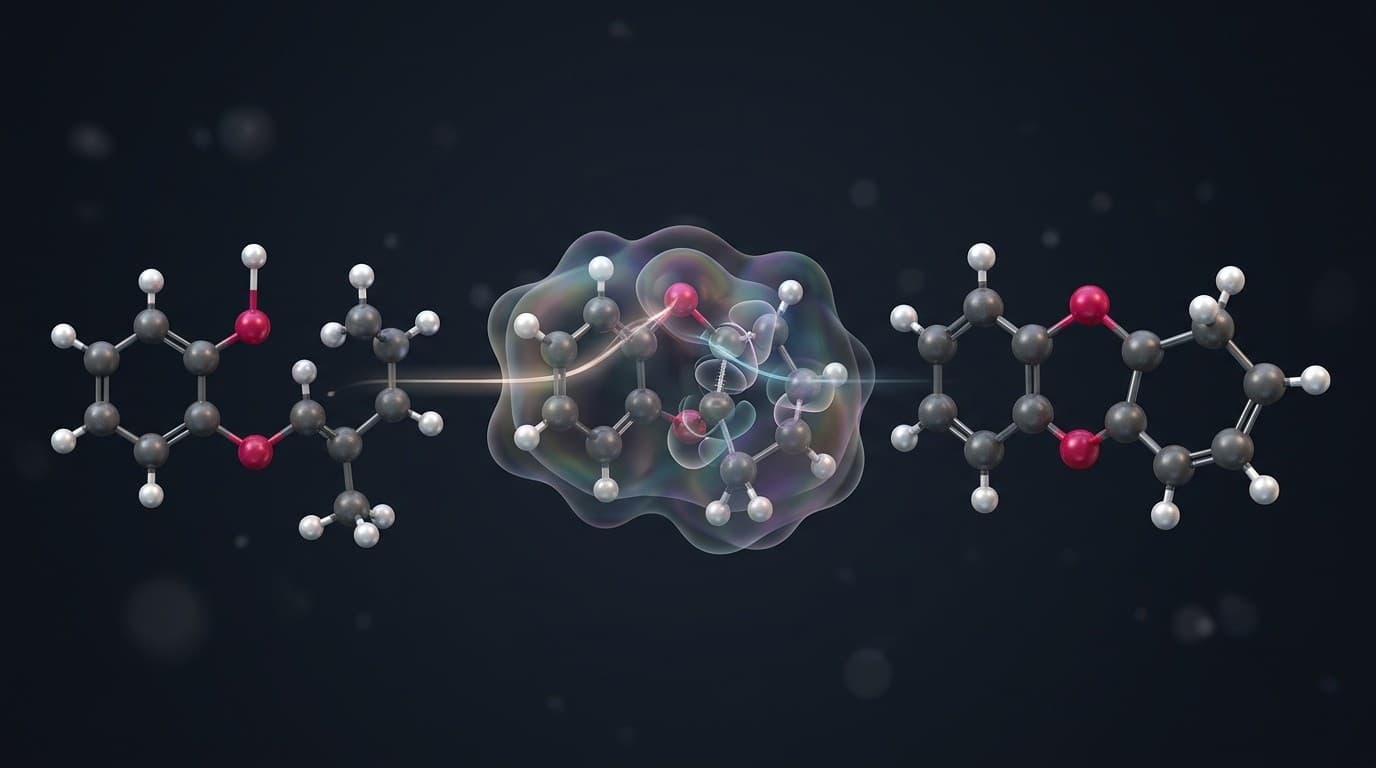
Having isolated the enantiomerically pure (-)-diol, Bogeso confronted a second formidable chemical hurdle: cyclizing the asymmetric intermediate into the bicyclic dihydroisobenzofuran system without inducing racemization at the tertiary chiral center. Direct acid-catalyzed dehydration was known to generate planar carbocation intermediates that would immediately scramble the stereocenter and revert the product to a racemate.
To circumvent this degradation, Bogeso developed a stereospecific ring-closure mechanism. By treating the resolved (-)-diol with methanesulfonyl chloride and triethylamine at low temperature, he selectively mesylated the less hindered primary alcohol into an active leaving group, while preserving the tertiary alcohol intact. Subsequent intramolecular nucleophilic displacement by the tertiary hydroxyl oxygen closed the 5-membered dihydroisobenzofuran ring via an SN2-type displacement, achieving 100 percent preservation of optical configuration. The resulting product was pure (+)-citalopram, subsequently named escitalopram.
4. THE FEDERAL CIRCUIT REJECTS HINDSIGHT OBVIOUSNESS UNDER 35 U.S.C. 103 Reviewing the district court bench trial findings of Judge Joseph J. Farnan, Jr. in the District of Delaware, the Federal Circuit affirmed that claim 1 of reissue patent RE 34,712 (covering substantially pure (+)-citalopram and its non-toxic salts) was non-obvious and valid under 35 U.S.C. 103.
Circuit Judge Lourie held that a general suggestion in the prior art to test the enantiomers of a known racemate does not establish a prima facie case of obviousness where the prior art fails to provide an enabling method to obtain them with a reasonable expectation of success. The court observed that person of ordinary skill in the art in the early 1980s would have attempted standard resolution of citalopram, encountered repeated failure, and had no predictable scientific expectation that retreating to an uncyclized diol intermediate and screening specialized chiral tartaric acid derivatives would overcome the chiral separation barrier.
Pointing to Bogeso's ultimate success as proof of obviousness was textbook hindsight. As Judge Lourie emphasized, patent law does not permit challengers to use the patentee's own successful invention as a retrospective roadmap to invalidate the patent.
5. UNEXPECTED SERT BINDING PHARMACODYNAMICS The Federal Circuit's validity holding was further reinforced by secondary considerations of non-obviousness, particularly unexpected pharmacological properties.
When a racemate consists of an active enantiomer (eutomer) and an inert enantiomer (distomer), a skilled artisan normally expects the pure active enantiomer to exhibit exactly twice the potency of the racemic mixture. In escitalopram, the pharmacological reality was radically different.
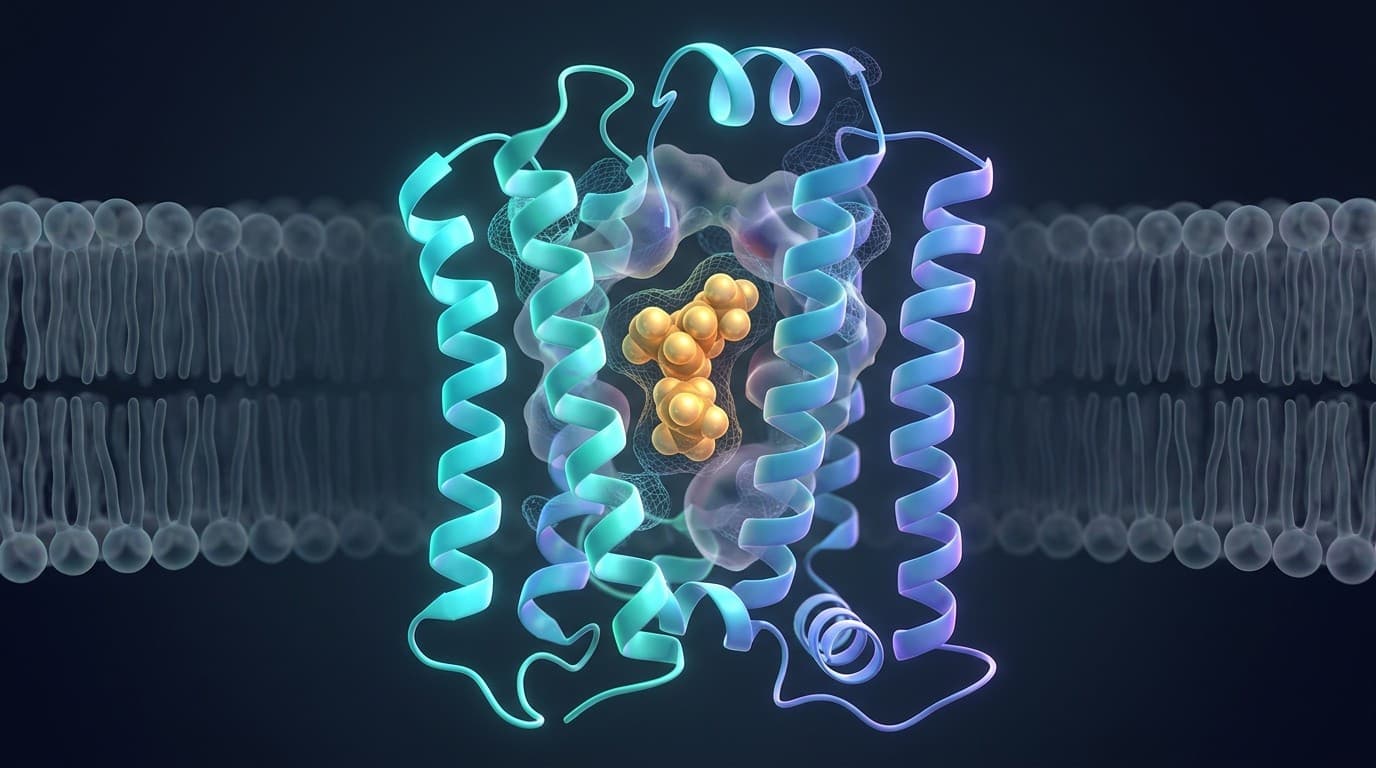
Binding studies at the human serotonin transporter (SERT) revealed that escitalopram bound to the primary high-affinity orthosteric substrate site with an IC50 of approximately 1.1 nM, compared to 28 nM for the (-)-distomer. Crucially, the (-)-enantiomer was not merely inactive: it acted as an allosteric inhibitor at a secondary modulatory site on the SERT protein, negatively altering the conformational kinetics of the transporter and hindering the binding of the active (+)-enantiomer.
Because the (-)-distomer directly counteracted the therapeutic efficacy of the (+)-eutomer in the racemic mixture, isolating pure escitalopram removed this allosteric interference. Clinical trials demonstrated that escitalopram produced superior therapeutic efficacy, faster onset of antidepressant response, and improved remission rates compared to equivalent or double doses of racemic citalopram. This biological interaction represented an unexpected qualitative enhancement that could not have been predicted from prior art knowledge.
6. HATCH-WAXMAN INJUNCTIVE RELIEF EXTENDS TO FOREIGN API PARTNERS A significant procedural holding in Forest v. Ivax addressed the statutory scope of Hatch-Waxman remedies against foreign active pharmaceutical ingredient (API) manufacturers.
Cipla Ltd., based in Mumbai, India, had contracted with Ivax to supply the bulk escitalopram API for Ivax's ANDA filing. Cipla argued on appeal that because it was not the actual ANDA applicant and had not signed the regulatory submission in its own name, the district court exceeded its statutory authority under 35 U.S.C. 271(e)(4)(A) by enjoining Cipla from commercial manufacture, importation, or sale of the generic drug.
The Federal Circuit rejected Cipla's jurisdictional challenge. While 35 U.S.C. 271(e)(4)(A) specifically governs the effective approval date of an ANDA submitted to the FDA, the court held that district courts possess broad equitable authority under 35 U.S.C. 283 to enjoin any party acting in concert or privity with an infringing ANDA applicant. Because Cipla worked hand-in-hand with Ivax to develop and supply the infringing product, enjoining both the domestic ANDA holder and its foreign API supplier was entirely appropriate.
For pharmaceutical patent litigators and generic chemical strategists, Forest Laboratories v. Ivax stands as an enduring authority: an obviousness challenge against an isolated enantiomer cannot rely on generalized stereochemical objectives when the chemical architecture of the racemate forces the inventor to engineer a bespoke synthetic route through unexplored intermediates.
What we do
See if this applies to one of your matters
We run genus/species (Markush) claim coverage analysis, Section 3(d) compliance screening, and prior-art structural triage on real chemical structures: not keyword search. If a case like this one is live for you, we'll run a free sample on a compound of your choosing.