
Lupin Added More Reducing Agent Than Otsuka's Patent Allowed. It Won the Case Anyway.
By Prashant Kotian, PhD Researcher (Chemistry), ICT Mumbai
Otsuka Pharmaceutical Co., Ltd. v. Lupin Ltd., Federal Circuit No. 2024-2297, decided May 21, 2026. Nonprecedential, affirmed in full, on appeal from a bench trial in the District of Delaware.
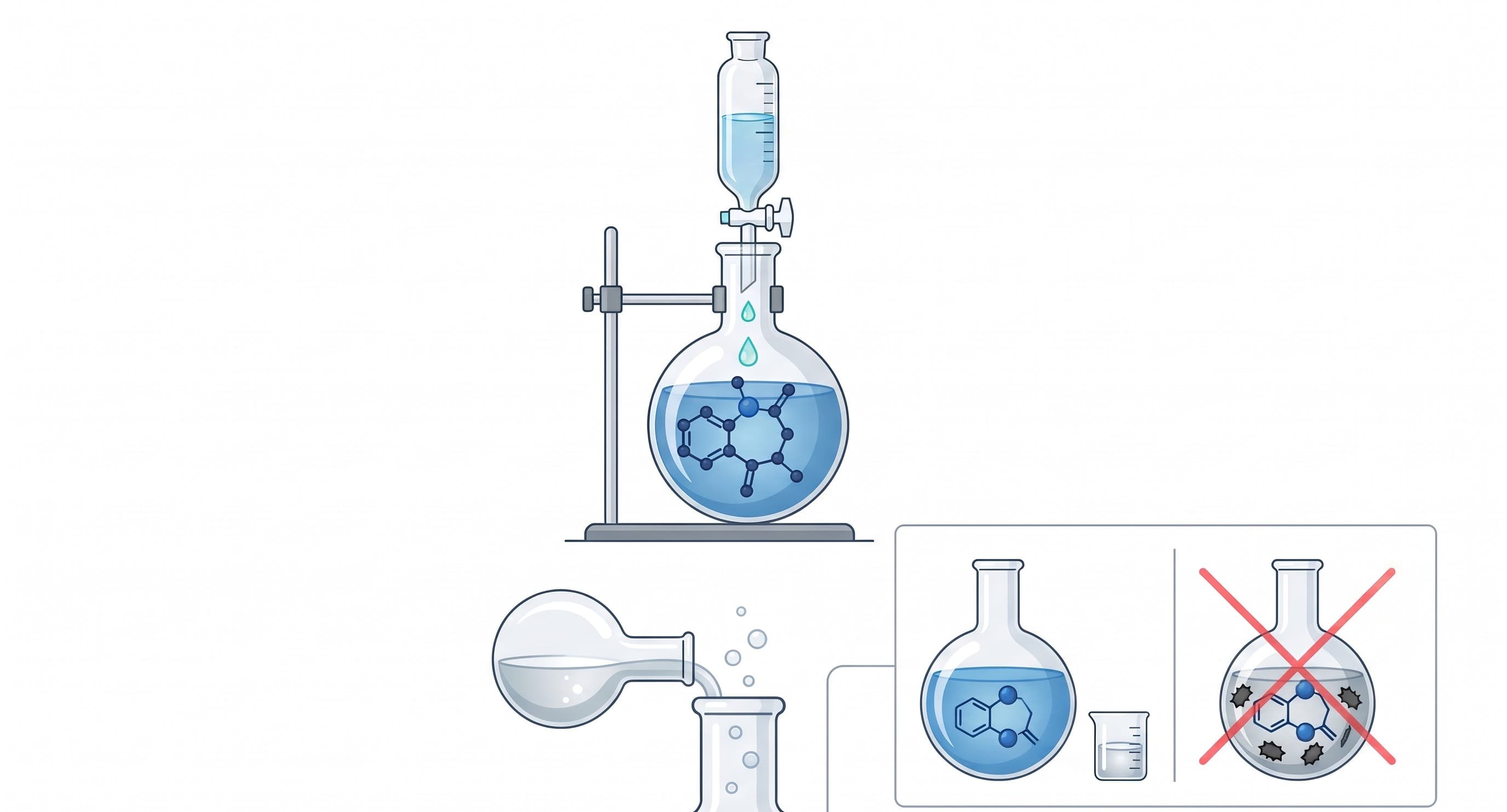
Otsuka's drug is Jynarque, tolvaptan, used to slow kidney function decline in Autosomal Dominant Polycystic Kidney Disease. The two patents at issue, U.S. 8,501,730 and 8,273,735, do not claim tolvaptan itself - they claim a specific fix to how you make it. Earlier synthesis routes left behind a dechlorinated impurity that had to be scrubbed out downstream. Otsuka's chemists found that the impurity tracked directly with how much hydrogenating agent - sodium borohydride, lithium aluminum hydride, zinc borohydride, or diborane - was used to reduce a benzazepine precursor. Use less of it, somewhere between a quarter and a full molar equivalent per mole of precursor, and the impurity problem shrinks. That narrow stoichiometric window became the patented invention.
Lupin's generic process, on paper, looks like it should clear that fence easily: its drug master file specifies at least 1.2 molar equivalents of sodium borohydride - above Otsuka's claimed ceiling of 1. But Lupin does not just pour in 1.2 equivalents and walk away. It adds the reagent, then samples the reaction at 15 minutes and again at 75 minutes. The moment testing shows 0.05 percent or less of the starting precursor remains, Lupin kills the reaction on the spot, quenching it with water and hydrochloric acid, which destroys the unreacted borohydride before it can do anything more.
Otsuka's argument was that this makes the 1.2-equivalent figure a red herring. The claim term amount, Otsuka said, does not mean the total reagent Lupin ever pours into the vessel - it means the amount present while the reaction is actually happening, up to the point the reaction is practically complete. Everything added after the precursor is gone is inert bystander material, not part of the reaction in any chemical sense. Both the district court and the Federal Circuit agreed with that reading. It is a real, defensible chemistry point: once you have consumed the thing you are reducing, adding more reducing agent does not reduce anything.
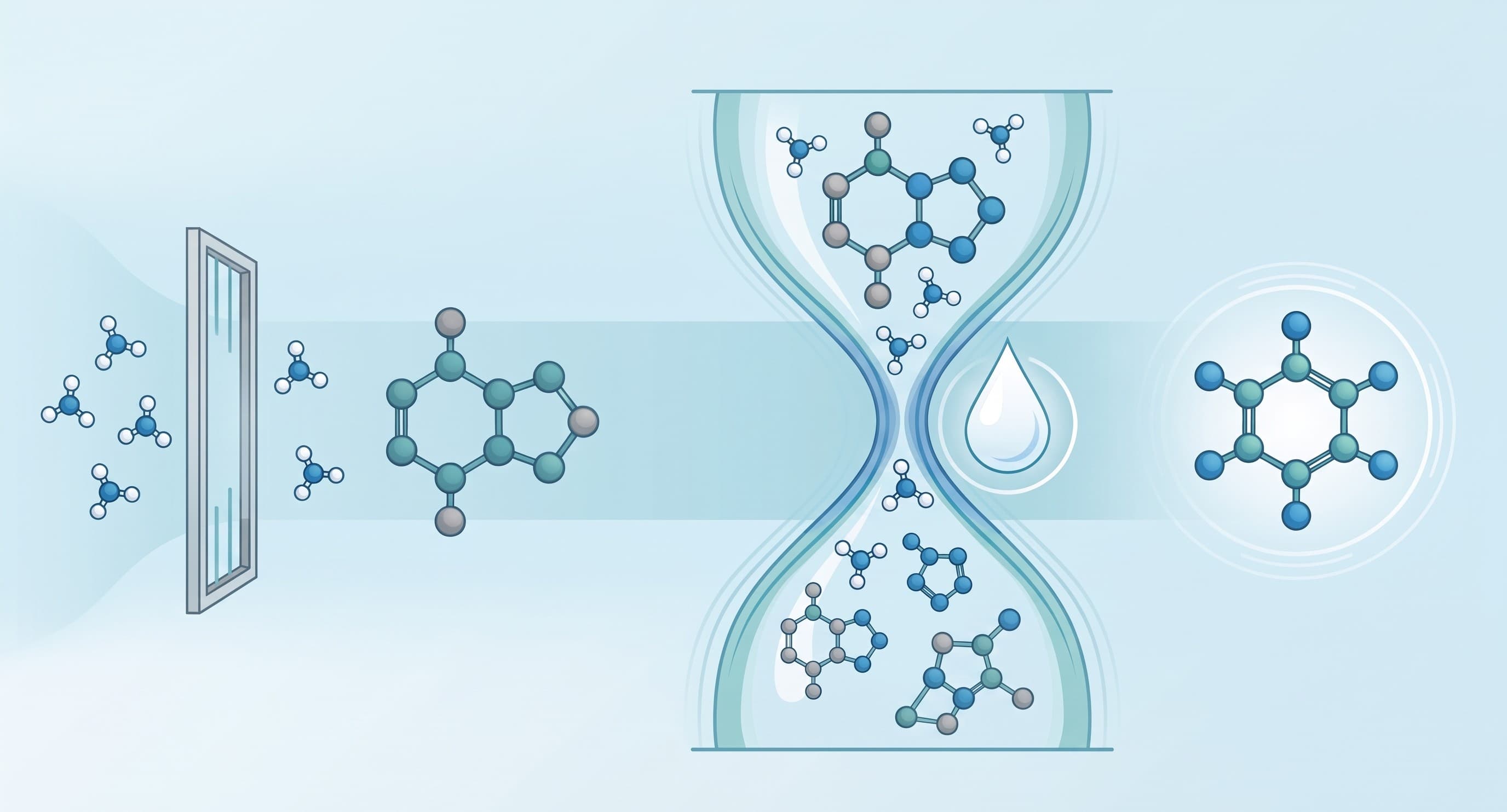
Winning that argument is where Otsuka's case should have gotten easier. Instead, it is where it fell apart. Having established that amount means whatever was present up to practical completion, Otsuka still had to prove, with evidence, that Lupin's actual reaction reaches practical completion before crossing the 1-equivalent line. It could not. Otsuka leaned on two of its own experiments and expert testimony built partly on that data - and the trial court found the underlying data riddled with irregularities serious enough to be unreliable, including one data point where the leftover starting material appeared to increase after the full reagent load had already gone in. For an irreversible reduction reaction, unreacted precursor does not regenerate itself. That is not how the chemistry works, and the courts said as much. Both sides' experts also agreed the two experiments Otsuka relied on were run under different conditions than Lupin's real manufacturing process, so even clean data would not necessarily have transferred over.
The Federal Circuit did not stop at non-infringement. It separately affirmed that the method claims of the '735 patent are invalid as obvious. A chemist starting from a tolvaptan synthesis published in 1999 (Kondo et al.) would have had real reason to trim the hydrogenating agent used in the reduction step, for cost, safety, and yield - and Otsuka's own internal records showed exactly the dose-response relationship the patent claims as its invention: the impurity appeared at 2 molar equivalents of sodium borohydride, but not at 1.5, the amount already disclosed in the 1999 reference. The product-by-process claims of the companion '730 patent survived that same obviousness challenge - the district court found Lupin had not proven those claims invalid - but it did not matter, because those claims were separately found not infringed on the same practical-completion evidence gap.
Lupin, one of India's largest generic pharmaceutical manufacturers and among the top ten generic drug companies in the world, is now clear to market its generic tolvaptan ANDA product. Non-infringement of both patents affirmed. Invalidity of the '735 patent's method claims affirmed. Nothing remanded, nothing left open.
The real lesson here is not really about who was right on amount as a matter of claim drafting - Otsuka's reading of its own claim was arguably the more scientifically honest one. The lesson is that a sound chemistry argument about when a reaction is really finished still has to survive being tested against real experimental data, and data that quietly violates a basic law of reaction stoichiometry - matter reappearing after a one-way reaction has already consumed it - does not survive that test, no matter which side generated it.
What we do
See if this applies to one of your matters
We run genus/species (Markush) claim coverage analysis, Section 3(d) compliance screening, and prior-art structural triage on real chemical structures: not keyword search. If a case like this one is live for you, we'll run a free sample on a compound of your choosing.