
Matrix Targeted Olmesartan's Imidazole Core. The Federal Circuit Held SAR Taught Away.
By Prashant Kotian, PhD Researcher (Chemistry), ICT Mumbai
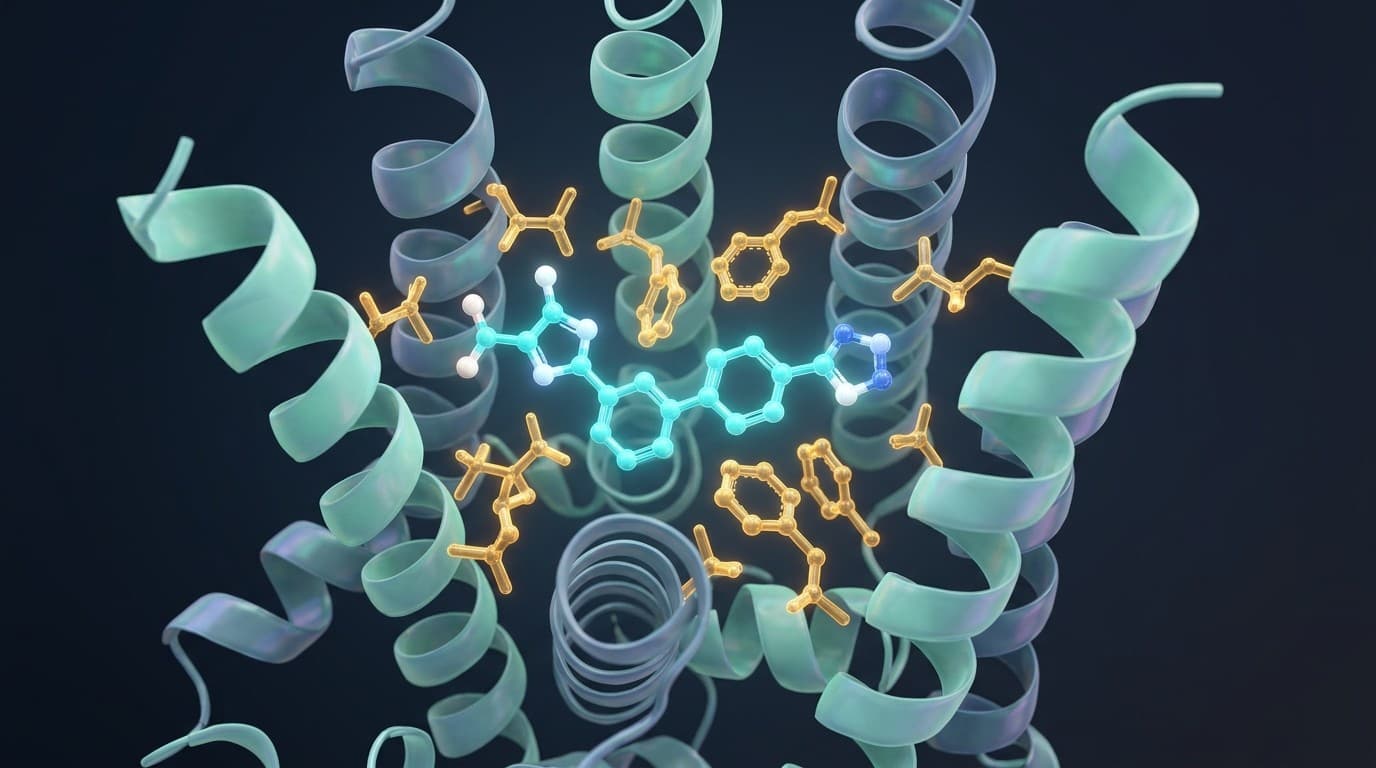
On September 9, 2010, the U.S. Court of Appeals for the Federal Circuit delivered a landmark decision in Daiichi Sankyo Co. v. Matrix Laboratories, Ltd., 619 F.3d 1346 (Fed. Cir. 2010), affirming the validity of claim 13 of U.S. Patent No. 5,616,599. The patent protected olmesartan medoxomil (marketed as Benicar, Benicar HCT, and Azor), Daiichi's blockbuster angiotensin II receptor antagonist (ARB).
The dispute pitted Daiichi against Hyderabad-headquartered generic manufacturer Matrix Laboratories (now part of Viatris/Mylan). Matrix argued that olmesartan medoxomil was an obvious chemical modification under 35 U.S.C. 103 in view of earlier imidazole-based ARB patents held by DuPont. But the chemistry told an entirely different story--one that establishes the rigorous boundaries of lead compound selection and structure-activity relationship (SAR) teaching in pharmaceutical patent law.
The Molecular Architecture of Olmesartan
Olmesartan medoxomil is an orally administered prodrug. Upon gastrointestinal absorption, endogenous aryl esterases rapidly cleave the (5-methyl-2-oxo-1,3-dioxol-4-yl)methyl (medoxomil) promoiety at the imidazole 5-position to liberate the active di-acid metabolite, olmesartan (RNH-6270).
The active compound, 4-(1-hydroxy-1-methylethyl)-2-propyl-1-[[2'-(1H-tetrazol-5-yl)[1,1'-biphenyl]-4-yl]methyl]-1H-imidazole-5-carboxylic acid, features a central 1,2,4,5-tetrasubstituted imidazole core: 1. At the 1-position: A substituted biphenylmethyl group bearing an acidic tetrazole ring, essential for mimicking the C-terminal carboxylate of angiotensin II. 2. At the 2-position: An n-propyl aliphatic chain that inserts into a hydrophobic cleft. 3. At the 5-position: A free carboxylate group that participates in high-affinity ionic bonding within the AT1 receptor. 4. At the 4-position: A tertiary alcohol, specifically a 1-hydroxy-1-methylethyl (hydroxyisopropyl, -C(CH3)2OH) group.
This specific 4-position tertiary alcohol confers olmesartan's distinctive pharmacological profile: an insurmountable, insurmountable antagonist that dissociates exceptionally slowly from the human AT1 receptor, delivering prolonged 24-hour blood pressure control.
The Generic Challenger's Obviousness Theory
Matrix Laboratories sought approval to market generic olmesartan medoxomil by asserting that claim 13 was invalid for obviousness. Matrix built its case around DuPont's foundational U.S. Patent No. 5,138,069 (the '069 patent), which disclosed losartan alongside dozens of related imidazole derivatives.
Matrix focused on an obscure embodiment within DuPont's disclosure: "Example 118." In losartan, the central imidazole core bears a lipophilic chlorine atom at the 4-position and a hydroxymethyl group (-CH2OH) at the 5-position. Example 118 inverted those positions, placing the hydroxymethyl group at the 4-position and chlorine at the 5-position.
Matrix argued that a person of ordinary skill in the art (POSA) would have: 1. Selected Example 118 as a starting "lead compound." 2. Shortened the 2-butyl chain to 2-propyl. 3. Substituted the 5-position chlorine with a carboxylic acid esterified to a medoxomil prodrug promoiety. 4. Homologated the 4-position hydroxymethyl to a tertiary hydroxyalkyl group (the 1-hydroxy-1-methylethyl group of olmesartan).
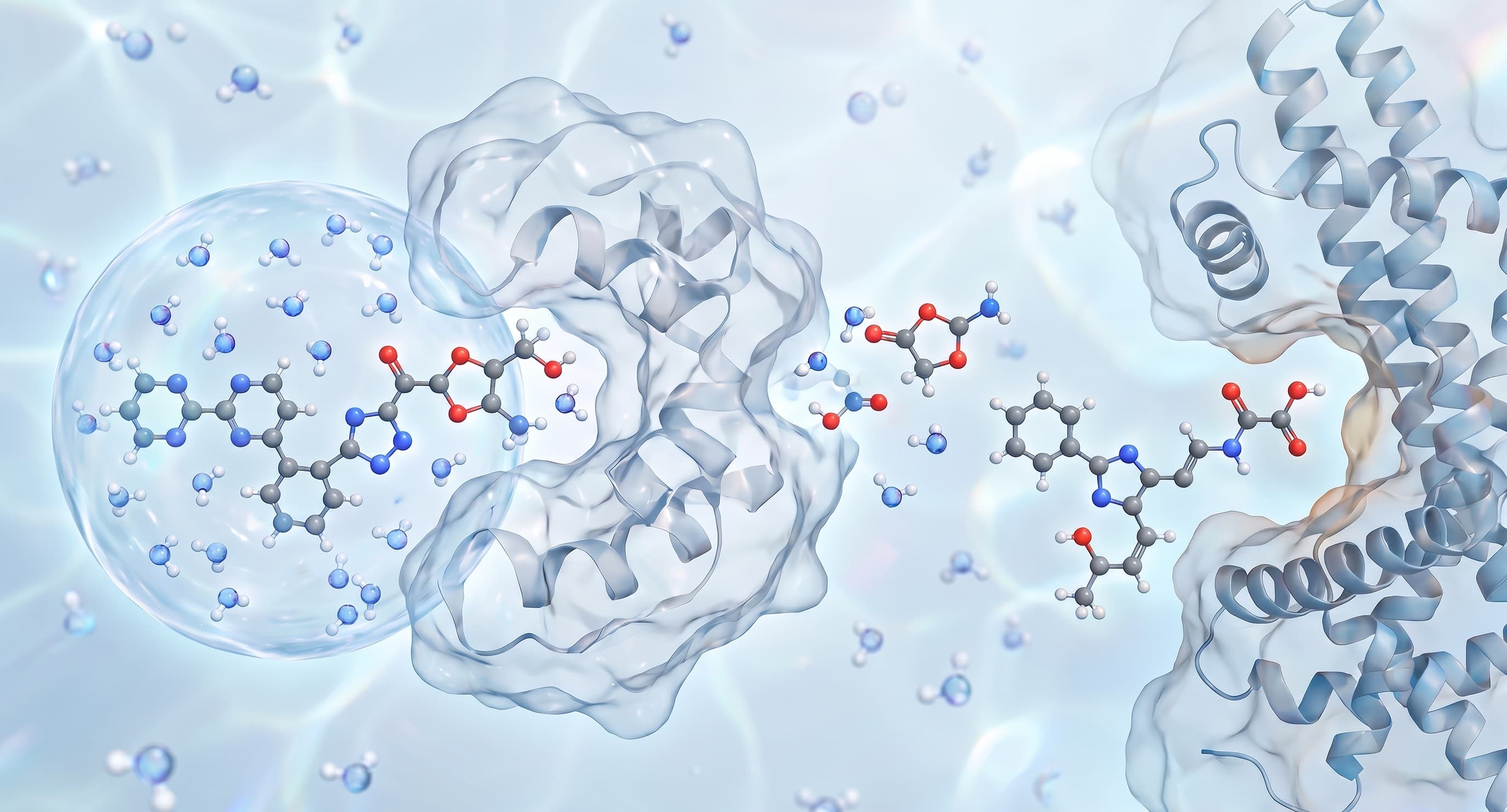
Matrix asserted that tertiary alcohols and medoxomil esters were standard tools in medicinal chemistry, rendering the resulting molecule obvious.
Why the SAR Taught Away from Hydrophilic Substituents
Writing for the Federal Circuit, Circuit Judge Alan D. Lourie (joined by Circuit Judges Arthur J. Gajarsa and Richard Linn) affirmed the district court's judgment of patent validity, dismantling Matrix's argument on two foundational chemistry grounds:
1. Failure to Justify Lead Compound Selection: Under the Federal Circuit's lead compound framework (reaffirmed in Takeda and Eisai), an obviousness challenge requires clear and convincing evidence that a skilled artisan would have selected the asserted prior art reference as a starting point based on its demonstrated properties. DuPont's '069 patent disclosed hundreds of compounds, with losartan standing as the clear commercial and clinical lead.
By contrast, Example 118 was an obscure, isolated isomer exhibiting inferior receptor binding affinity and weak in vivo potency. Matrix pointed to Example 118 solely because its structural framework happened to resemble olmesartan--a textbook demonstration of impermissible retrospective hindsight.
2. Structure-Activity Relationships Taught Away: Even if a chemist had chosen Example 118, the prior art ARB landscape directly discouraged introducing hydrophilic hydroxyalkyl substituents at the imidazole 4-position: - The AT1 receptor binding pocket is lined with hydrophobic amino acid residues (including phenylalanine, isoleucine, and valine). - Medicinal chemistry literature across the entire sartan class established that lipophilic substituents at the 4-position (such as chlorine in losartan or bulky hydrophobic groups in irbesartan and candesartan) were necessary for potent receptor interaction. - The prior art demonstrated that replacing lipophilic 4-position substituents with polar or hydrophilic moieties caused precipitous drops in binding affinity and antihypertensive efficacy.
Thus, far from providing a motivation with a reasonable expectation of success, the prior art taught away from synthesizing a tertiary alcohol like 1-hydroxy-1-methylethyl at that location.
Strategic Takeaways for Chemical Patent Practice
Daiichi Sankyo v. Matrix Laboratories remains one of the most critical Federal Circuit precedents defining the evidentiary burden in chemical patent litigation:
- Structural Closeness Alone Is Insufficient: A generic challenger cannot cherry-pick an embodiment from a massive prior art disclosure merely because its atoms line up with the claimed drug. The prior art must signal an objective functional reason to develop that specific compound. - Respecting the Pharmacophore: When established SAR dictates that a hydrophobic pocket requires lipophilic substituents, an innovator's counter-intuitive introduction of a polar or hydrophilic moiety is strong objective evidence of non-obviousness. - Unpredictable Prodrug Synergy: Combining an unexpected polar core modification with an ester prodrug system to overcome absorption barriers is a potent defense against obviousness-to-try challenges.
For patent prosecutors and litigators alike, the case reinforces that chemistry-driven rationale--grounded in receptor biology and SAR data--will consistently defeat hindsight-driven molecular reconstructions.
What we do
See if this applies to one of your matters
We run genus/species (Markush) claim coverage analysis, Section 3(d) compliance screening, and prior-art structural triage on real chemical structures: not keyword search. If a case like this one is live for you, we'll run a free sample on a compound of your choosing.