
Merck Formulated Bicarbonate to Prevent Ertapenem Dimerization. The Federal Circuit Held Routine Process Optimization Is Obvious.
By Prashant Kotian, PhD Researcher (Chemistry), ICT Mumbai
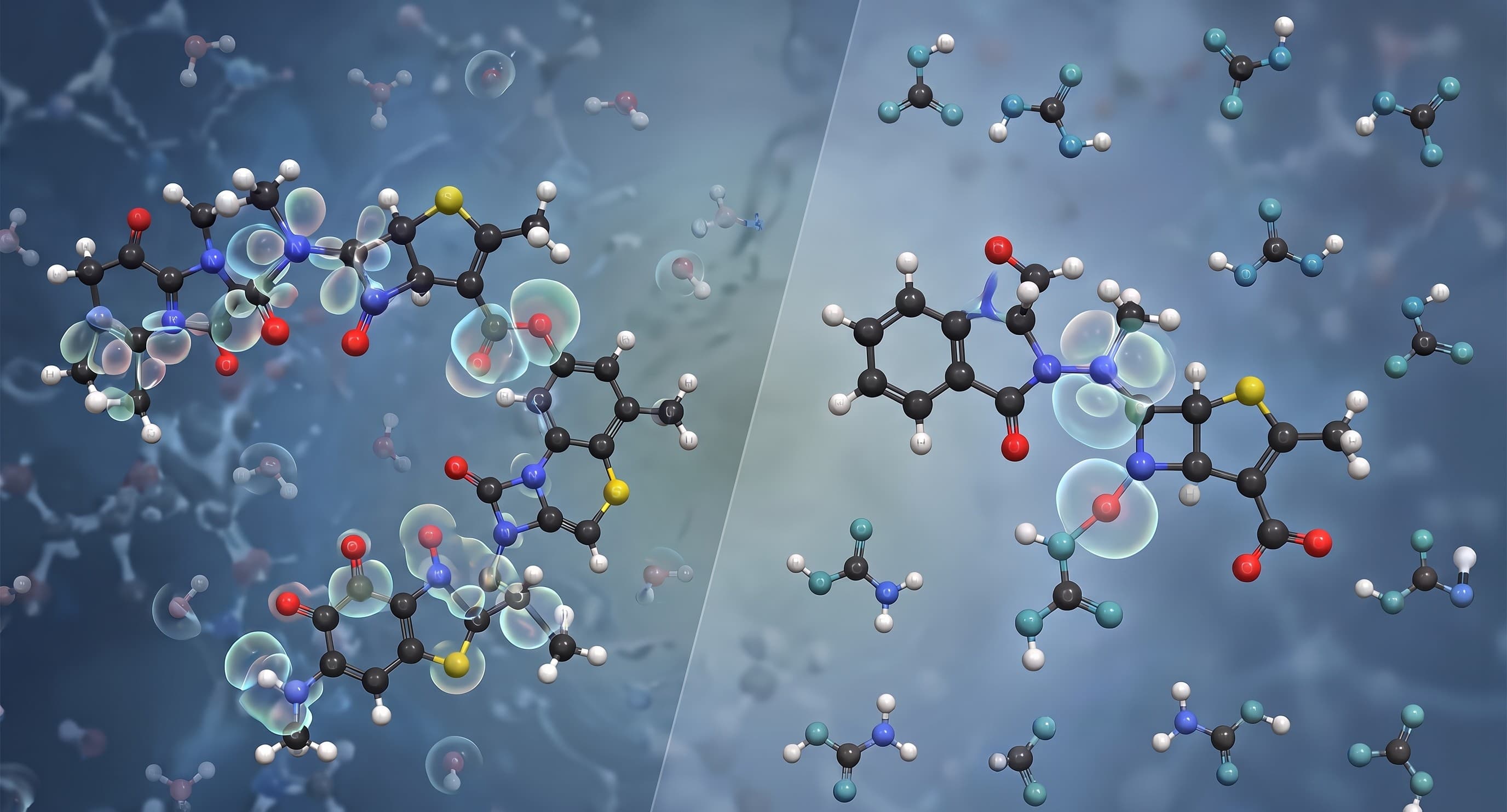
Can a pharmaceutical innovator preserve patent exclusivity over a multi-billion dollar antibiotic by claiming the specific temperature, pH, and sequence of steps required to scale up a previously disclosed stabilization reaction?
In Merck Sharp & Dohme Corp. v. Hospira, Inc. (Appeal No. 2017-1115, 874 F.3d 724, decided October 26, 2017), the U.S. Court of Appeals for the Federal Circuit answered with a decisive no. In an opinion authored by Circuit Judge Alan D. Lourie and joined by Circuit Judge Todd M. Hughes, the court affirmed a District of Delaware judgment invalidating the asserted formulation claims of Merck's U.S. Patent No. 6,486,150 ('the '150 patent'). The court held that optimizing conventional manufacturing parameters to prevent chemical degradation constitutes obvious routine experimentation under 35 U.S.C. 103 when the stabilizing chemical mechanism was already disclosed in the prior art.
Equally significant for generic counsel, the Federal Circuit reinforced the "blocking patent" doctrine: an innovator cannot rely on the commercial success of its marketed pharmaceutical product to prove non-obviousness when a separate, dominant compound patent legally blocked generic competitors from entering the commercial market.
### The Chemical Architecture and Dual Degradation Vulnerability of Ertapenem
Ertapenem sodium (chemically designated as [4R-[3(3S*,5S*),4alpha,5beta,6beta(R*)]]-3-[[5-[[(3-carboxyphenyl)amino]carbonyl]-3-pyrrolidinyl]thio]-6-(1-hydroxyethyl)-4-methyl-7-oxo-1-azabicyclo[3.2.0]hept-2-ene-2-carboxylic acid sodium salt) is a parenteral 1-beta-methylcarbapenem beta-lactam antibiotic.
Marketed by Merck as Invanz, ertapenem exhibits potent broad-spectrum bactericidal activity against Gram-positive and Gram-negative aerobic and anaerobic pathogens. The structural core integrates a strained four-membered beta-lactam ring fused to a five-membered unsaturated pyrroline ring, modified with a 1-beta-methyl substituent providing resistance to renal dehydropeptidase-1 (DHP-1), a 1-hydroxyethyl tail at C6, and a C2-(pyrrolidin-3-yl)sulfanyl group appended with a 3-carboxyphenylcarbamoyl moiety that confers an extended plasma half-life (~4 hours) allowing once-daily dosing.
However, ertapenem possesses an acute Achilles' heel in aqueous formulation: severe chemical instability driven by two distinct, competing degradation pathways:
1. Beta-Lactam Ring Hydrolysis: Like all carbapenems, the strained fused bicyclic beta-lactam ring is under high angular ring strain. Nucleophilic attack by hydroxide ions or ambient water molecules cleaves the cyclic amide bond (C7=O), opening the beta-lactam ring and destroying antibiotic activity. This hydrolytic degradation accelerates dramatically at alkaline pH (> 9.0) and under acidic conditions (< 6.0).
2. Intermolecular Dimerization: Uniquely, the secondary amine on the pyrrolidine ring is basic and nucleophilic. In concentrated aqueous solutions around neutral pH, the unshared electron pair on the pyrrolidine nitrogen of one ertapenem molecule mounts an intermolecular nucleophilic acyl substitution attack against the electrophilic beta-lactam carbonyl carbon of an adjacent ertapenem molecule. This opens the second molecule's beta-lactam ring, forming an inactive covalent ertapenem dimer. This open-ring dimer retains a reactive amine that can attack further intact molecules, triggering cascading oligomerization.
Because dimerization accelerates at neutral pH (where the pyrrolidine amine is unprotonated and nucleophilic) while hydrolysis accelerates at alkaline and acidic extremes, ertapenem degrades rapidly in ordinary aqueous vehicles, frustrating traditional liquid formulation efforts.
### The Chemical Solution: In Situ Carbamate Adduct Formation
Merck's synthetic and formulation chemists solved the dimerization crisis through a reversible chemical transformation: in situ N-carboxylation.
When ertapenem is brought into contact with a carbon dioxide source--specifically sodium bicarbonate (NaHCO3) or sodium carbonate (Na2CO3)--the basic bicarbonate ion reacts with the secondary pyrrolidine nitrogen atom, yielding an N-carboxylation carbamate adduct (-NH-COO- Na+).
This reaction alters the molecular electronic landscape: - The lone pair of electrons on the pyrrolidine nitrogen is delocalized into the adjacent carbonyl of the carbamate group through resonance, completely quenching its nucleophilicity. - Steric and electrostatic repulsion from the bulky, negatively charged carboxylate group prevents the pyrrolidine ring from approaching the strained beta-lactam carbonyl of neighboring molecules. - Dimerization is effectively halted, stabilizing the carbapenem in concentrated aqueous solution long enough to undergo sterilizing filtration and lyophilization into a shelf-stable powder.
Crucially, the carbamate linkage is reversible. Following reconstitution with sterile water and intravenous infusion, the physiological environment of systemic circulation--dilution and buffering at pH 7.4--causes the carbamate adduct to dissociate spontaneously, releasing carbon dioxide and liberating fully active ertapenem to bind bacterial penicillin-binding proteins (PBPs).
### The Patent Dispute: Disclosed Chemistry vs. Claimed Manufacturing Recipes
Merck initially patented this carbamate stabilization mechanism in U.S. Patent No. 5,952,323 ('Almarsson'), which issued in 1999. The Almarsson patent disclosed that ertapenem forms a reversible carbon dioxide adduct in the presence of bicarbonate, that this adduct stabilizes the antibiotic against dimerization, and that the resulting solution is stable across a pH window of about 6.0 to about 9.0.
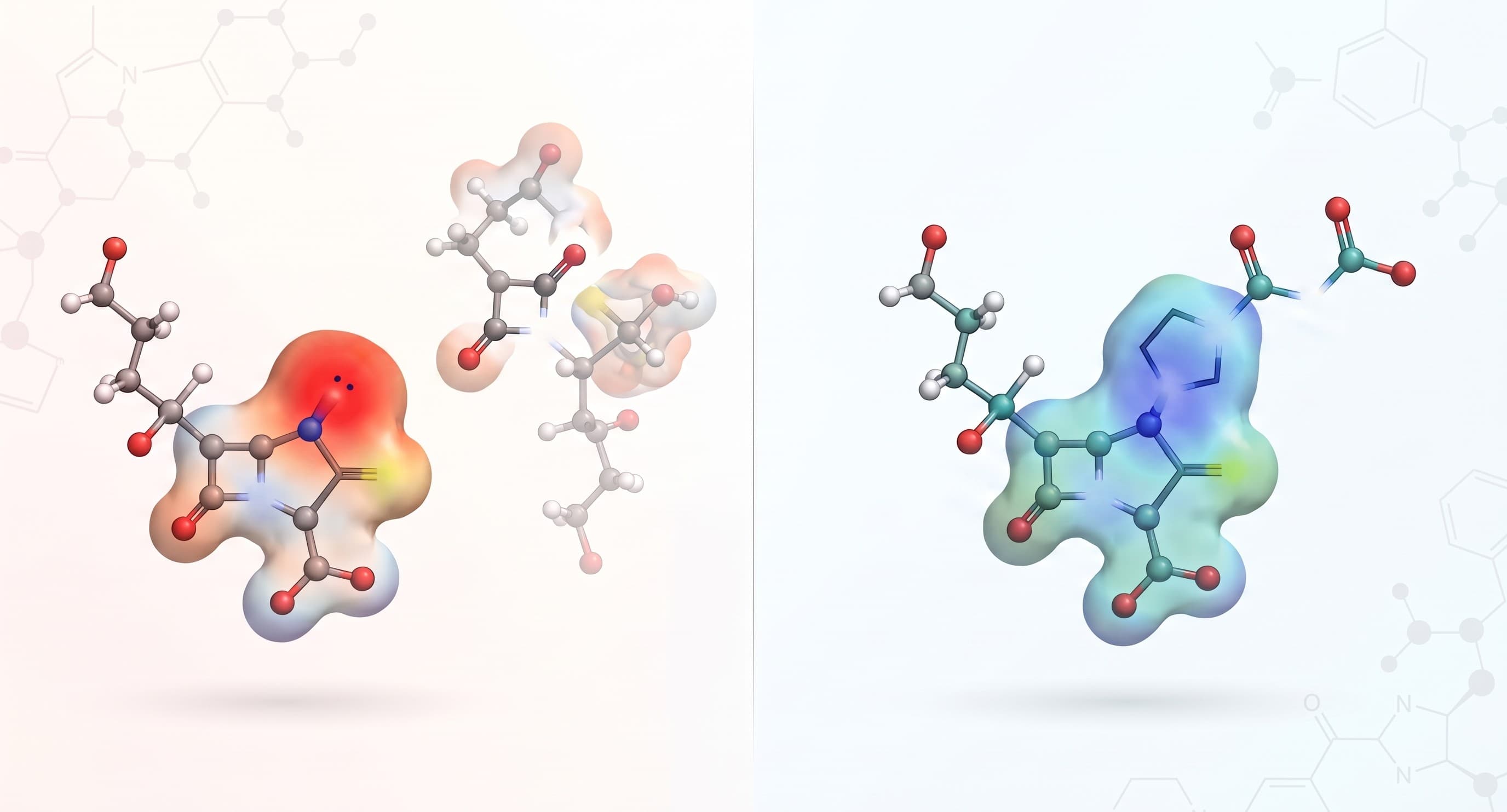
However, as the expiration of its core compound patent (U.S. Patent No. 5,478,820, expiring in 2014) approached, Merck sought to extend its market monopoly by obtaining the '150 patent in 2002. The '150 patent asserted claims (specifically claims 21-34) covering a commercial manufacturing recipe for preparing the final lyophilized formulation. Representative claim 21 recited:
"A process for preparing a final formulation product of a compound of formula I... comprising the steps of: (1) charging a solution of a carbon dioxide source having a pH range of about 6.0 to about 12.0 into a reaction vessel; (2) adding an effective amount of a mole ratio of a base and [ertapenem] into the reaction vessel containing the solution of the carbon dioxide source to maintain the pH at about 6.0 to about 9.0 and a temperature range of about -3 deg C to about 15 deg C; and (3) lyophilizing the solution from step (2) to yield the final formulation product with less than about 10% moisture content."
When generic manufacturer Hospira, Inc. filed an Abbreviated New Drug Application (ANDA) seeking FDA approval for generic ertapenem, Merck sued for patent infringement under 35 U.S.C. 271(e)(2). Hospira conceded that its proposed process met the claim limitations but asserted that claims 21-34 were invalid for obviousness under 35 U.S.C. 103 in view of Almarsson and standard pharmaceutical engineering principles.
### The Federal Circuit Holding: Routine Optimization Is Not Invention
Following a bench trial, District Judge Richard G. Andrews held the asserted claims invalid as obvious. On appeal, the Federal Circuit affirmed.
Circuit Judge Lourie, writing for the majority, methodically dismantled Merck's validity defense:
1. Obviousness of Process Parameters: The court recognized that Almarsson had already taught the foundational chemical insight--that ertapenem reacts with carbon dioxide to form a protective adduct that minimizes dimerization within a pH of 6.0 to 9.0. Once that core chemical principle was public knowledge, every subsequent parameter recited in claim 21 was conventional: - Order of Addition: Charging the carbon dioxide source first and maintaining the pH during addition was a routine measure to prevent localized pH spikes that would hydrolyze the beta-lactam ring. - Temperature Control: Maintaining a low temperature (-3 deg C to 15 deg C) was standard protocol for handling heat-sensitive carbapenem solutions during bulk batch processing. - Lyophilization: Lyophilization to under 10% moisture is standard pharmaceutical technology for parenteral powders.
2. Routine Optimization: Citing KSR International Co. v. Teleflex Inc., the court held that selecting specific pH ranges and temperature setpoints to balance the competing degradation rates of hydrolysis and dimerization was the product of ordinary skill and routine experimentation, not patentable invention.
### The "Blocking Patent" Doctrine and Commercial Success
Merck vigorously argued that secondary considerations of non-obviousness--namely Invanz's multi-hundred-million-dollar commercial success and Hospira's copying of the manufacturing process--compelled a finding of validity.
The Federal Circuit firmly rejected this argument, establishing a landmark precedent on the interplay between dominant and secondary patents:
1. Absence of Nexus: Commercial success is probative of non-obviousness only where a clear legal nexus exists between the commercial demand and the claimed technological improvement. 2. The Blocking Patent: Merck held U.S. Patent No. 5,478,820, a dominant compound patent that claimed ertapenem itself. Because the '820 patent legally excluded all competitors from manufacturing, marketing, or selling ertapenem in any formulation until its 2014 expiration, Invanz's commercial exclusivity flowed entirely from the active pharmaceutical ingredient, not the manufacturing process of the '150 patent. 3. Market Reality: Potential generic competitors were legally barred by the compound patent from testing alternative manufacturing methods in the commercial marketplace. Therefore, commercial success could not serve as objective evidence that the process patent was non-obvious.
### Strategic Takeaways for Generic and Innovator Teams
The Federal Circuit's ruling in Merck v. Hospira provides crucial strategic blueprints for generic litigation and portfolio lifecycle management:
1. Routine Scale-Up Parameters Are Vulnerable: Innovators cannot extend franchise exclusivity by converting known chemical stabilization mechanisms into multi-step manufacturing process claims with routine pH and temperature brackets. Generic challengers can successfully attack such process claims under 35 U.S.C. 103 by demonstrating that the chemical principles were already disclosed.
2. The Blocking Patent Defense Against Secondary Considerations: When innovators assert commercial success, licensing, or copying to defend late-expiring secondary formulation or process patents, generic defendants should vigorously scrutinize earlier dominant compound patents. If an earlier blocking patent precluded competitor entry, commercial success carries minimal legal weight.
3. Complete Portfolio Mapping in ANDA Litigation: Generic manufacturers evaluating complex injectable formulations should distinguish between true chemical breakthroughs and routine bioprocess optimizations, enabling aggressive Paragraph IV invalidity strategies that clear the path for generic launch upon primary compound expiration.
What we do
See if this applies to one of your matters
We run genus/species (Markush) claim coverage analysis, Section 3(d) compliance screening, and prior-art structural triage on real chemical structures: not keyword search. If a case like this one is live for you, we'll run a free sample on a compound of your choosing.