
Mylan Argued Topiramate Was Obvious to Try. The Federal Circuit Held Serendipitous Intermediate Synthesis Defeats Obviousness.
By Prashant Kotian, PhD Researcher (Chemistry), ICT Mumbai
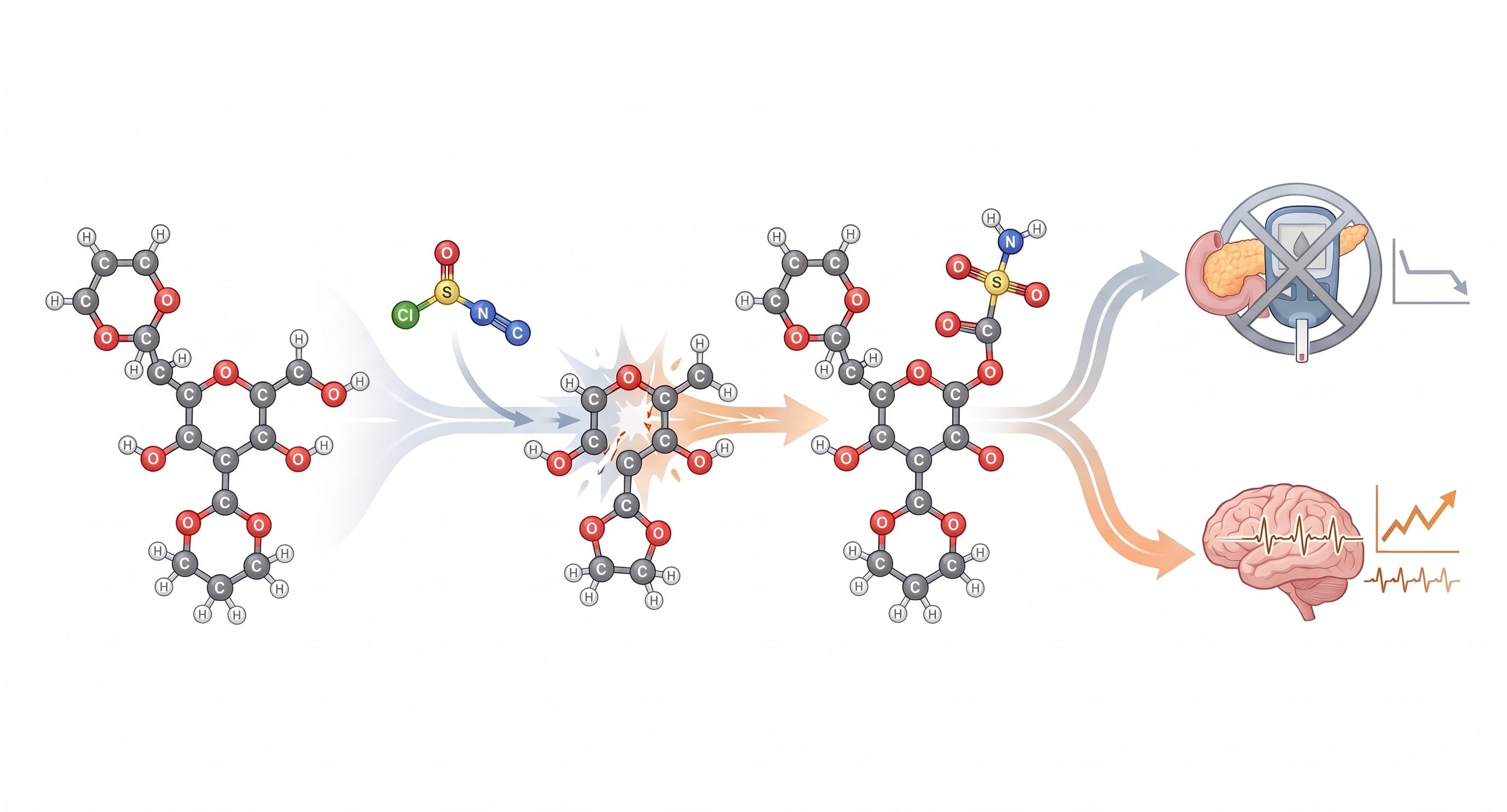
In small-molecule pharmaceutical patent litigation, generic challengers frequently attempt to dismantle composition-of-matter patents by retrofitting discovery timelines. Armed with the final commercial structure, challengers point to known starting materials, invoke standard synthetic toolkits, and argue that arriving at the therapeutic molecule was merely "obvious to try." Under 35 U.S.C. 103, however, the Supreme Court's KSR framework does not permit hindsight reconstruction of chemical pathways that were vast, unpredictable, and driven by serendipity. In Ortho-McNeil Pharmaceutical, Inc. v. Mylan Laboratories, Inc. (520 F.3d 1358, Fed. Cir. 2008), the U.S. Court of Appeals for the Federal Circuit established a foundational boundary for chemical obviousness, holding that synthesizing an unexpected reaction intermediate during research directed at an entirely unrelated disease target utterly defeats an obvious-to-try challenge.
Topiramate, marketed by Ortho-McNeil (Johnson & Johnson) under the brand name Topamax, became one of the most widely prescribed neurological therapeutics in medical history, achieving multi-billion-dollar blockbuster status for the treatment of partial-onset seizures, primary generalized tonic-clonic seizures, and migraine prophylaxis. Chemically, topiramate represents a radical architectural departure from conventional antiepileptic drugs. While traditional anticonvulsants typically featured nitrogenous heterocyclic ring assemblies--such as the hydantoins (phenytoin), barbiturates (phenobarbital), iminostilbenes (carbamazepine), and benzodiazepines--topiramate is a sulfamate-substituted monosaccharide derivative. Specifically, its systematic IUPAC designation is 2,3:4,5-bis-O-(1-methylethylidene)-beta-D-fructopyranose sulfamate. The molecule is constructed around a central beta-D-fructopyranose core rigidly constrained into a lipophilic envelope by two isopropylidene (acetonide) protective rings spanning the C2-C3 and C4-C5 oxygen atoms, capped at the primary C1 carbon by a highly polar sulfamate ester group.
The origin of topiramate is one of the classic serendipitous discoveries of modern medicinal chemistry. In the late 1970s, Dr. Bruce E. Maryanoff and Dr. Joseph F. Gardocki at McNeil Laboratories were investigating potential anti-diabetic therapies. Their specific synthetic objective was to modify simple carbohydrates to create novel oral hypoglycemic agents that would lower blood glucose in diabetic patients. Working with D-fructose protected as its bis-acetonide, Dr. Maryanoff sought to transform the sole unhindered primary hydroxyl group at C1 into a chlorosulfate ester intermediate using chlorosulfonyl isocyanate, intending to elaborate it further through nucleophilic displacement. Instead of following the expected reaction pathway, the reaction underwent an unpredicted rearrangement and spontaneous solvolysis, generating a crystalline sulfamate ester.
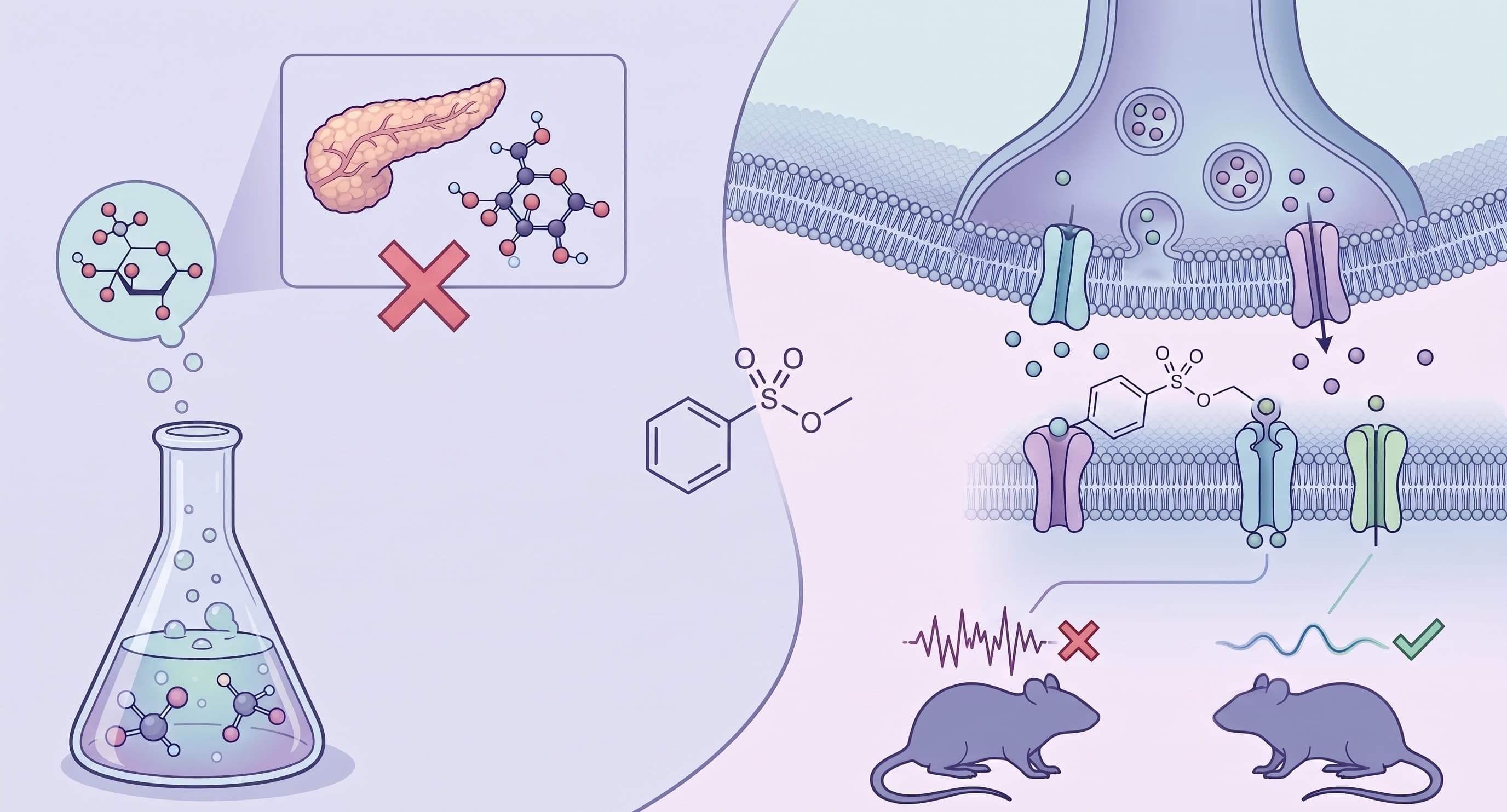
When Dr. Maryanoff submitted this unexpected synthetic detour to the biology team for glycemic evaluation, the result was a complete failure: the compound exhibited zero anti-diabetic or hypoglycemic efficacy. However, as part of Ortho-McNeil's standard pharmacological profiling, novel structural entities were also passed through a broad neuropharmacological evaluation battery, including the rodent maximal electroshock (MES) seizure test. In the MES assay, the sugar sulfamate demonstrated astonishing, potent, broad-spectrum anticonvulsant activity with an extraordinarily wide therapeutic margin and none of the debilitating sedative liabilities that plagued contemporary anticonvulsants. Recognizing the breakthrough, Ortho-McNeil secured U.S. Patent No. 4,513,006 (the '006 patent), with Claim 1 specifically protecting the topiramate molecule.
Decades later, seeking early commercial entry under the Hatch-Waxman Act, generic giant Mylan Laboratories filed an Abbreviated New Drug Application (ANDA) with a Paragraph IV certification, asserting that Claim 1 of the '006 patent was invalid for obviousness under 35 U.S.C. 103. Mylan's legal strategy rested heavily on the Supreme Court's 2007 decision in KSR International Co. v. Teleflex Inc. Mylan argued that because KSR endorsed an "obvious to try" standard, a medicinal chemist seeking anticonvulsants would have naturally selected the known intermediate 2,3:4,5-bis-O-(1-methylethylidene)-beta-D-fructopyranose from the chemical catalog, combined it with chlorosulfonyl isocyanate to install a sulfamate group in light of known sulfamates like acetazolamide and sulthiame, and inevitably arrived at topiramate.
Following a bench trial in the U.S. District Court for the District of New Jersey, Chief Judge Garrett E. Brown, Jr. rejected Mylan's invalidity contentions in their entirety, upholding Claim 1 as valid and non-obvious. On appeal, a Federal Circuit panel comprising Circuit Judges Randall R. Rader, Richard Linn, and Chief Judge Paul R. Michel unanimously affirmed Judge Brown's decision in an opinion authored by Judge Rader.
Writing for the court, Judge Rader delivered a definitive clarification of how KSR's "obvious to try" doctrine applies to chemical compound inventions. The Federal Circuit emphasized that under KSR, an invention is obvious to try only where a problem presents a finite number of identified, predictable solutions. In chemical synthesis, however, the landscape of possible starting materials, reagent combinations, and reaction conditions is vast and unconstrained. As Judge Rader observed, medicinal chemists at the priority date faced thousands of possible compounds and virtually limitless avenues of exploration. The prior art contained no signpost directing a skilled artisan to pluck a protected fructose intermediate from carbohydrate chemistry and append a sulfamate moiety in hopes of generating an anticonvulsant.
Crucially, the Federal Circuit highlighted the role of serendipity in rebutting obviousness. Dr. Maryanoff did not design topiramate through a predictable, step-by-step optimization toward an anticonvulsant drug; he was searching for a diabetes treatment. The compound itself arose from an unexpected reaction pathway that surprised the inventing chemists, yielding an intermediate that was entirely inactive for its intended purpose. To argue post-hoc that a skilled artisan would have been motivated to combine these specific reagents to solve an unposed problem was classic hindsight bias. Patent law does not penalize innovators for pursuing unplanned synthetic detours that yield transformative clinical assets.
The Federal Circuit also reinforced that objective evidence of non-obviousness--secondary considerations--serves as an independent, substantive pillar of the obviousness calculus rather than a secondary afterthought. The profound, unexpected anticonvulsant efficacy of a carbohydrate-derived sulfamate, coupled with Topamax's extraordinary commercial success and its fulfillment of a long-felt need for safer seizure management, decisively extinguished any prima facie obviousness inference.
Ortho-McNeil v. Mylan remains a cornerstone precedent in pharmaceutical patent practice. It establishes that KSR's "obvious to try" language cannot be weaponized into a generalized mandate for retrospective chemical jigsaw puzzles. For patent practitioners, the ruling provides enduring protection for serendipitous discoveries, ensuring that when an unexpected chemical detour reveals unforeseen therapeutic potency, the resulting small molecule remains robustly patentable under Section 103.
What we do
See if this applies to one of your matters
We run genus/species (Markush) claim coverage analysis, Section 3(d) compliance screening, and prior-art structural triage on real chemical structures: not keyword search. If a case like this one is live for you, we'll run a free sample on a compound of your choosing.