
Pfizer Claimed the Hemicalcium Salt of a Free Acid. The Federal Circuit Held Improper Dependency Invalidated Lipitor's Patent.
By Prashant Kotian, PhD Researcher (Chemistry), ICT Mumbai
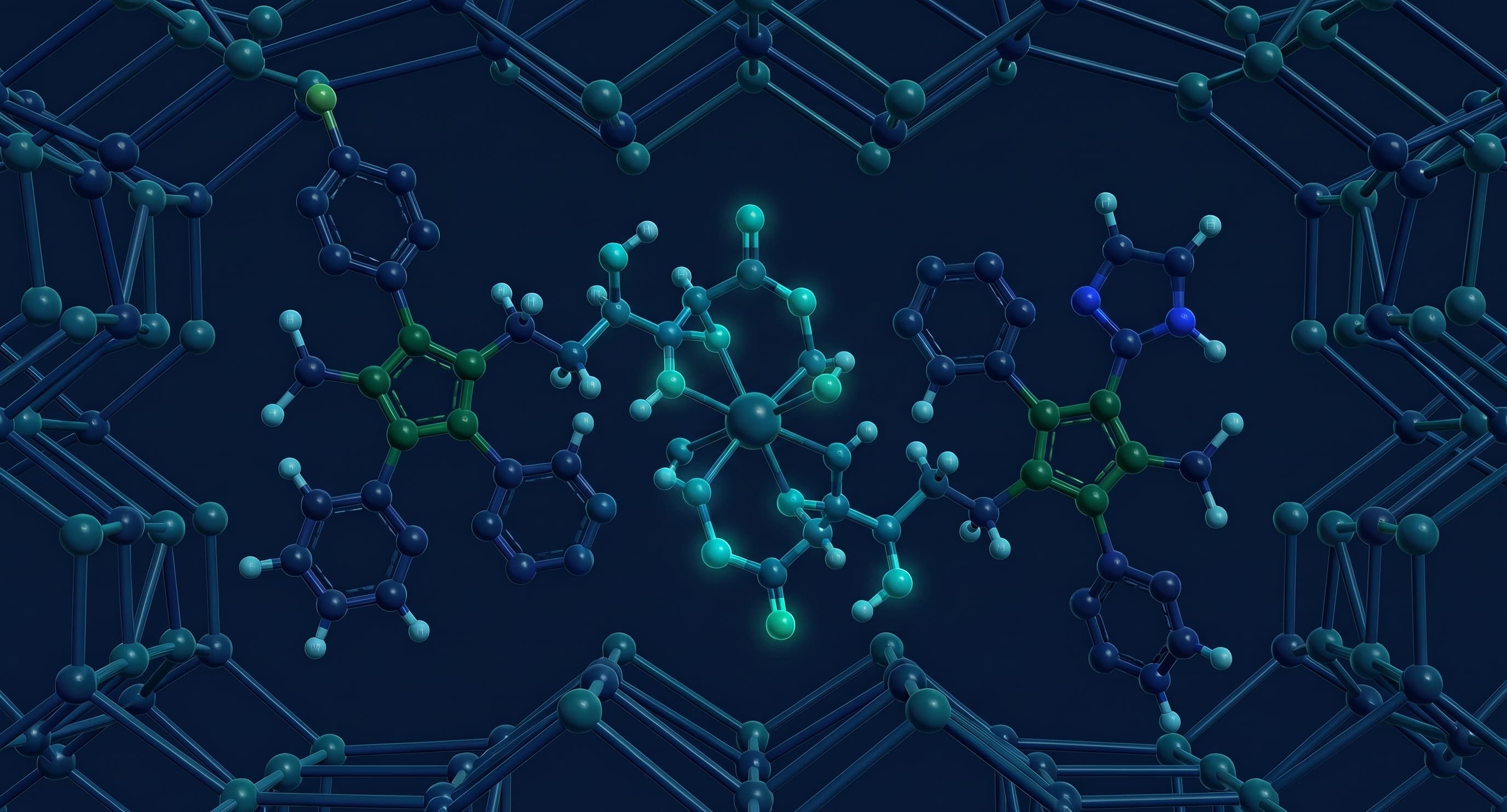
In pharmaceutical patent portfolio architecture, secondary patents claiming specific salts, polymorphic lattices, and isolated stereoisomers are routinely deployed to preserve market exclusivity long after basic compound patents expire. But when drafting cascading claim hierarchies, formal statutory compliance under patent law is unforgiving. In Pfizer Inc. v. Ranbaxy Laboratories Ltd., the U.S. Court of Appeals for the Federal Circuit delivered a defining lesson in claim drafting precision, invalidating a vital secondary patent protecting Lipitor (atorvastatin calcium)--the highest-grossing prescription medicine in pharmaceutical history--due to a fatal claim dependency mismatch.
Atorvastatin is a synthetic, highly potent competitive inhibitor of 3-hydroxy-3-methylglutaryl-coenzyme A (HMG-CoA) reductase, the rate-limiting enzyme in hepatic cholesterol biosynthesis. Structurally, the molecule comprises a heavily substituted central pyrrole ring bearing an anilide sidechain, an isopropyl group, a phenyl group, and a 4-fluorophenyl substituent, tethered to a flexible dihydroxyheptanoic acid pharmacophore mimic. The dihydroxyheptanoic arm carries two asymmetric chiral centers configured in the [R-(R*,R*)] stereochemical orientation. In chemical equilibrium and organic synthesis, the dihydroxy acid spontaneously lactonizes into an intramolecular cyclic ester. To ensure solid-state stability, reliable intestinal absorption, and commercial tableting performance, medicinal chemists neutralized the open dihydroxy acid with calcium hydroxide to yield a crystalline hemicalcium salt trihydrate, in which one divalent calcium cation (Ca2+) coordinates electrostatically with two monovalent atorvastatin carboxylate anions.
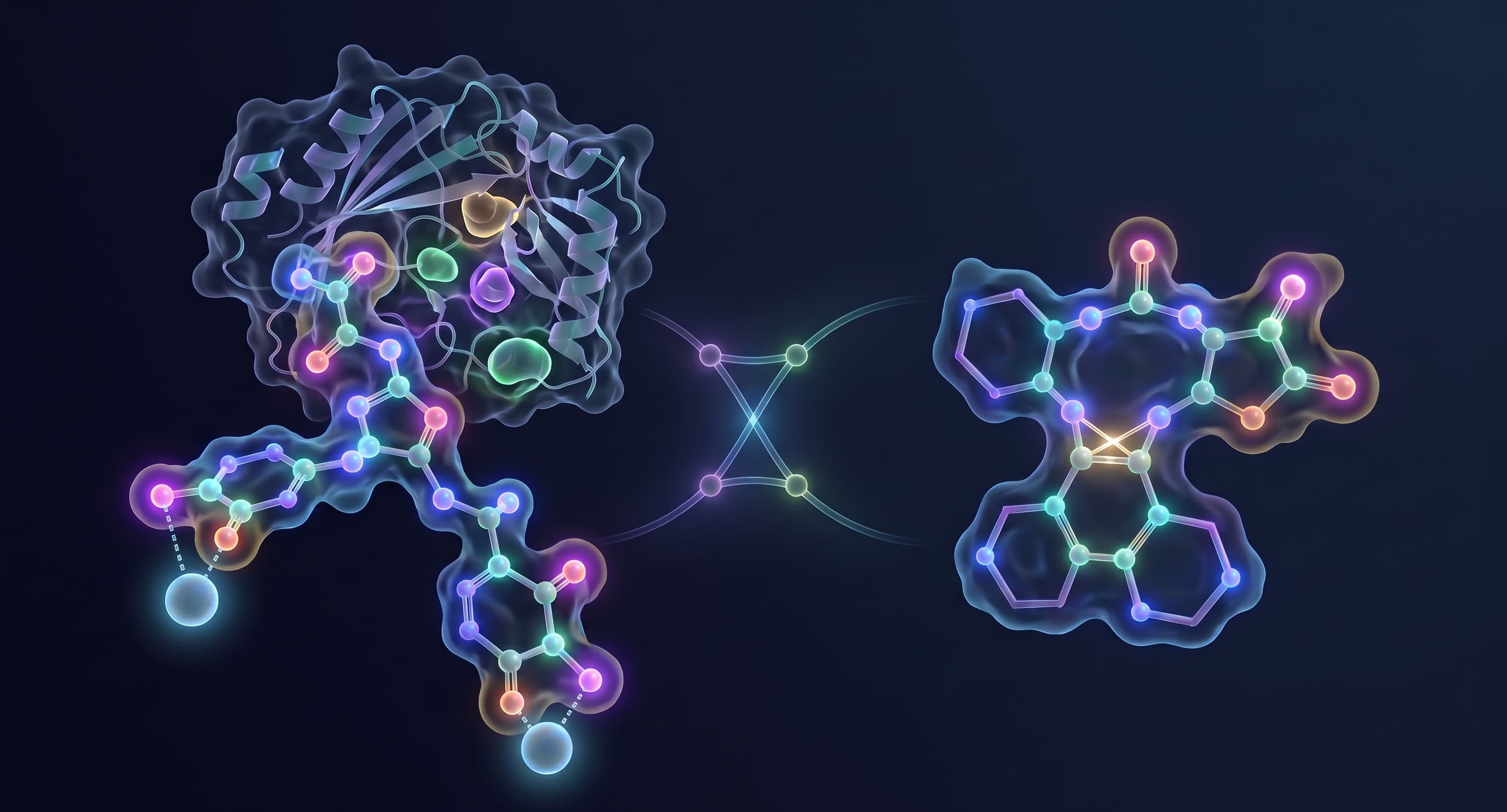
Pfizer anchored Lipitor's baseline protection with U.S. Patent No. 4,681,893 (the '893 patent), which covered a broad genus of trans-substituted pyrrole dihydroxy acids and lactones. Seeking an extended secondary perimeter, Pfizer obtained U.S. Patent No. 5,273,995 (the '995 patent), which specifically claimed the purified [R-(R*,R*)] enantiomer and its salts. However, the claim architecture contained a drafting anomaly. Independent Claim 1 broadly recited the [R-(R*,R*)]-isomer or a pharmaceutically acceptable salt thereof. Dependent Claim 2 narrowed Claim 1 specifically to '[t]he [R-(R*,R*)]-isomer of the compound of claim 1 in its carboxylic acid form.' By explicitly reciting the free carboxylic acid form, Claim 2 deliberately carved out and excluded both the cyclic lactone and all pharmaceutically acceptable salts. Four claims down the hierarchy, dependent Claim 6 recited: '[t]he hemicalcium salt of the compound of claim 2.'
When Indian generic pioneer Ranbaxy Laboratories filed an Abbreviated New Drug Application (ANDA No. 76-477) with a Paragraph IV certification seeking to market generic atorvastatin calcium, Pfizer sued for patent infringement in the District of Delaware. Ranbaxy mounted an aggressive statutory defense under 35 U.S.C. 112, paragraph 4, asserting that Claim 6 was invalid on its face. Under Section 112, paragraph 4 (now 35 U.S.C. 112(d)), a dependent claim must reference a preceding claim, incorporate all its limitations, and specify a further limitation of the subject matter claimed. Because parent Claim 2 was strictly limited to the free carboxylic acid form and expressly excluded salts, Ranbaxy argued that Claim 6 attempted to recapture subject matter disclaimed by its parent, creating a logical impossibility and broadening beyond its parent scope. The district court dismissed Ranbaxy's argument as a mere scrivener's error, concluding that Claim 6 could be reasonably interpreted as depending from independent Claim 1.
Writing for a unanimous appellate panel alongside Circuit Judges Pauline Newman and William C. Bryson, Circuit Judge Alvin A. Schall reversed the district court, invalidating Claim 6. The Federal Circuit firmly ruled that Section 112, paragraph 4 is an explicit statutory invalidity defense that trial courts cannot bypass. Even if the patentee inadvertently drafted Claim 6 to depend from Claim 2 instead of Claim 1, federal courts possess no equitable or statutory authority to rewrite or redraft patent claims during infringement litigation. Because Claim 6 failed to narrow parent Claim 2 and instead claimed a chemical species excluded by it, Claim 6 was invalid as a matter of law. While Pfizer preserved its basic '893 compound patent through its Patent Term Extension date, Ranbaxy's decisive victory eliminated Pfizer's secondary hemicalcium salt barrier, demonstrating to generic challengers worldwide that rigorous chemical and syntactic analysis of patent claims can dismantle blockbuster monopolies.
What we do
See if this applies to one of your matters
We run genus/species (Markush) claim coverage analysis, Section 3(d) compliance screening, and prior-art structural triage on real chemical structures: not keyword search. If a case like this one is live for you, we'll run a free sample on a compound of your choosing.