
Pfizer Screened 53 Salts to Fix Amlodipine Stickiness. The Federal Circuit Held Routine Optimization Defeats Salt Patentability.
By Prashant Kotian, PhD Researcher (Chemistry), ICT Mumbai
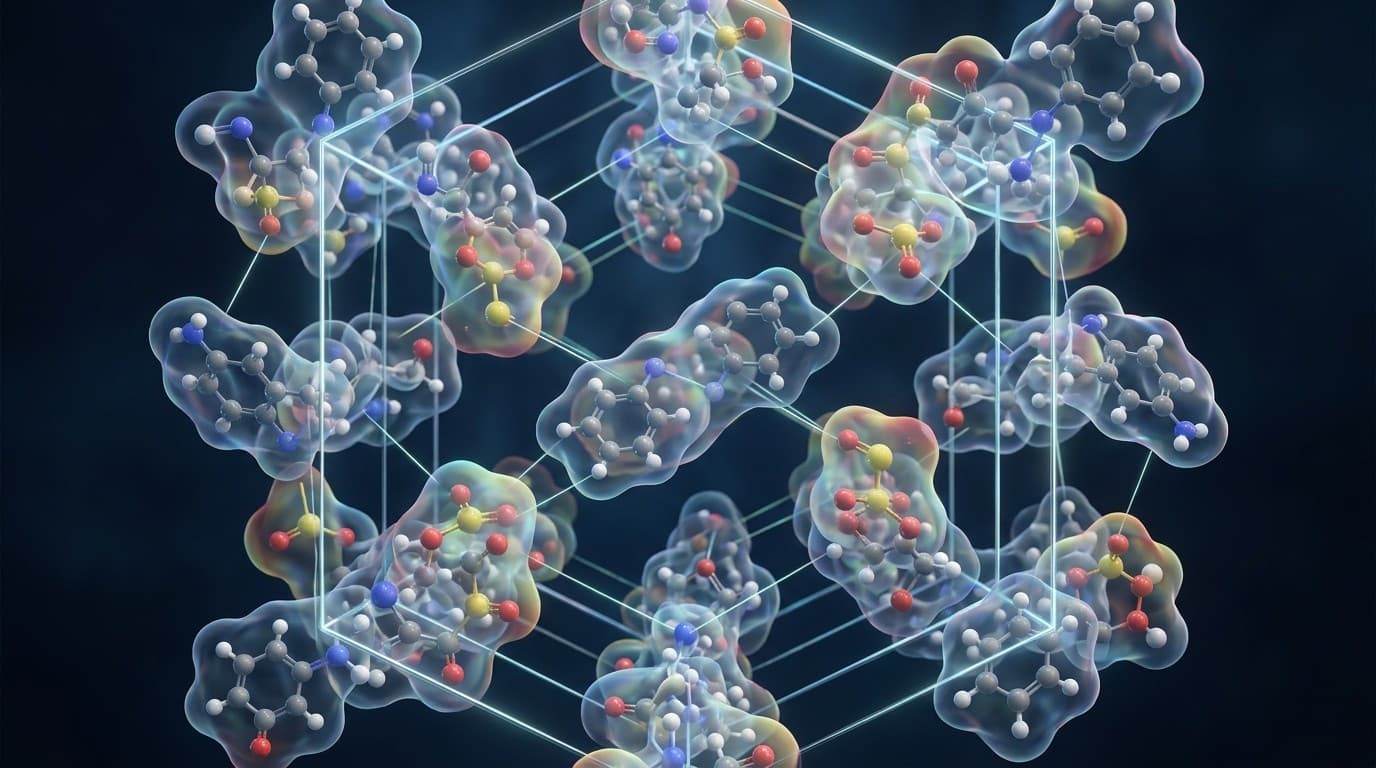
## The Chemical Dilemma of Amlodipine Salt Selection
In pharmaceutical development, selecting an optimal salt form is frequently the difference between a benchtop discovery and a commercially manufacturable solid dosage form. For amlodipine (3-ethyl 5-methyl 2-[(2-aminoethoxy)methyl]-4-(2-chlorophenyl)-6-methyl-1,4-dihydropyridine-3,5-dicarboxylate), an orally active dihydropyridine calcium channel blocker indicated for hypertension and angina, the search for a commercially viable salt produced one of the most defining patent law precedents in Federal Circuit history: *Pfizer, Inc. v. Apotex, Inc.*, 480 F.3d 1348 (Fed. Cir. 2007).
Pfizer initially disclosed amlodipine and its pharmaceutically acceptable acid addition salts in U.S. Patent No. 4,572,909 (the '909 patent). The '909 specification identified a broad genus of acceptable salt-forming acids and singled out amlodipine maleate as the preferred embodiment across several concrete examples. Consequently, amlodipine maleate advanced into formulation development and clinical evaluation.
However, as Pfizer scaled up solid dosage manufacturing, two severe chemical and physical liabilities emerged:
1. **Chemical Degradation via Michael Addition**: Amlodipine possesses a unique primary aliphatic amine situated at the terminus of its 2-aminoethoxymethyl ether side chain. Maleic acid is an alpha,beta-unsaturated dicarboxylic acid containing an electron-deficient carbon-carbon double bond activated by adjacent carboxyl groups. In aqueous solution and accelerated solid-state stability testing, the nucleophilic primary amine of amlodipine attacked the electrophilic olefinic bond of maleic acid via an intermolecular Michael addition reaction. This reaction yielded an unwanted aspartic acid derivative adduct (an amlodipine-maleate covalent conjugate impurity), causing unacceptable chemical degradation over shelf-life storage.
2. **Severe Tablet Punch Adhesion (Stickiness)**: When formulated into dry granulations for high-speed rotary tablet compression, amlodipine maleate powder exhibited marked hygroscopic behavior and severe stickiness. The formulation adhered stubbornly to the metal faces of tablet punches, causing severe picking, punch-binding, and weight variation that rendered commercial tableting infeasible.
## Screening the Berge Compendium
Faced with a non-viable maleate salt, Pfizer medicinal chemists and pharmaceutical scientists embarked on an empirical salt screening program. To replace maleic acid, Pfizer consulted the literature, specifically the seminal 1977 review by Berge et al., *Pharmaceutical Salts*, Journal of Pharmaceutical Sciences 66:1-19 (1977). The Berge paper cataloged 53 FDA-approved, pharmaceutically acceptable anions commonly utilized in commercial drug products.
Pfizer evaluated several candidate anions from the Berge list, including acetate, methanesulfonate (mesylate), succinate, and benzenesulfonate (besylate). The screening revealed that amlodipine benzene sulfonate (besylate) resolved both critical manufacturing defects: - **Chemical Stability**: Benzenesulfonic acid is an aromatic sulfonic acid that completely lacks an activated aliphatic double bond. As a result, the destructive intermolecular Michael addition pathway was eliminated, conferring robust solid-state stability. - **Physical Processability**: Amlodipine besylate crystallized into non-hygroscopic, free-flowing crystals that exhibited no adhesion to tablet punch faces during high-speed compression, enabling commercial scale-up into Pfizer's blockbuster medicine Norvasc.
Pfizer filed a separate patent application claiming amlodipine besylate and its formulations, which issued as U.S. Patent No. 4,879,303 (the '303 patent).
## The Hatch-Waxman Dispute and District Court Decision
When generic drug manufacturer Apotex filed an Abbreviated New Drug Application (ANDA) seeking FDA approval to market generic amlodipine besylate tablets before the expiration of the '303 patent, Pfizer initiated Hatch-Waxman patent infringement litigation.
Apotex conceded infringement but asserted that all asserted claims of the '303 patent were invalid for obviousness under 35 U.S.C. 103 over the prior art '909 patent, the Berge 1977 review, and related literature. Apotex argued that: - The '909 patent already disclosed free base amlodipine and taught that acid addition salts could be formed. - Berge provided a finite, discrete roster of 53 known pharmaceutically acceptable anions. - When maleate failed, choosing another candidate from the Berge list was a matter of routine optimization that a person of ordinary skill in the art would naturally perform with a reasonable expectation of success.
Following a bench trial, the U.S. District Court for the Northern District of Illinois held that Apotex had failed to prove obviousness by clear and convincing evidence. The district court reasoned that: 1. Salt formation is notoriously unpredictable in solid-state chemistry. 2. A skilled artisan could not have predicted with certainty whether amlodipine besylate would form a crystalline salt, or whether it would solve the stickiness and degradation issues. 3. Benzenesulfonate was an uncommon salt in commercial pharmaceuticals at the time (only one approved drug had used besylate prior to amlodipine). 4. The superior physical and chemical properties of besylate constituted 'unexpected results' that rebutted obviousness.
## The Federal Circuit's Landmark Reversal
On appeal, the Federal Circuit reversed the district court in a unanimous, highly influential opinion authored by Chief Judge Paul R. Michel, joined by Circuit Judges Haldane Robert Mayer and Richard Linn (*Pfizer, Inc. v. Apotex, Inc.*, 480 F.3d 1348 (Fed. Cir. 2007)).
The Federal Circuit systematically dismantled the district court's reasoning across five core legal and chemical principles:
### 1. Clear Motivation to Modify the Prior Art The court emphasized that the obviousness inquiry begins with the problem confronting the skilled artisan at the time of the invention. A pharmaceutical formulator aware of amlodipine maleate's chemical degradation via Michael addition and severe punch-face sticking would have had direct, compelling motivation to seek an alternative salt form. The prior art specifically motivated moving away from maleate to solve documented stability and tableting defects.
### 2. A Finite, Predictable Universe of Alternatives Rather than wandering through an infinite field of chemical possibilities, the skilled artisan was guided by established pharmaceutical compendia: > *'The prior art of record here, including the '909 patent and Berge, provided a finite number of identified, predictable solutions... Berge taught that fifty-three anions were pharmaceutically acceptable and had been approved by the FDA for use in drugs.'*
The court rejected the notion that the universe of salt-forming acids was limitless. When faced with a failed lead salt, a formulator would logically work through the finite roster of known acceptable anions.
### 3. Routine Verification Testing vs. Inventive Discovery The court examined Pfizer's internal research records and determined that the discovery of amlodipine besylate was the product of routine, conventional screening: > *'Pfizer's scientists simply followed the standard, conventional screening procedures taught in the prior art to determine which of the known pharmaceutically acceptable anions would yield an acceptable salt... This was routine verification testing, not patentable invention.'*
The court emphasized that patent protection is not designed to reward the mere expenditure of standard laboratory labor on routine optimization.
### 4. Reasonable Expectation of Success Does Not Require Absolute Certainty The district court had committed legal error by conflating a 'reasonable expectation of success' with 'absolute predictability': > *'Obviousness does not require absolute predictability of success... All that is required is a reasonable expectation of success.'*
While solid-state behavior and individual crystal lattice packing may be empirically determined, a skilled pharmaceutical chemist preparing acid addition salts from basic amines would reasonably expect that one or more of the 53 known pharmaceutically acceptable anions would produce an acceptable, non-degrading, and non-sticky crystalline salt.
### 5. Failure of 'Unexpected Results' Defense Pfizer argued that the exceptional stability and non-stickiness of the besylate salt were unexpected results that defeated obviousness. The Federal Circuit firmly rejected this defense: - To rebut obviousness, unexpected results must be demonstrated across the closest prior art. Because amlodipine maleate had known stability defects, merely finding an alternative salt that cured those defects was the very objective of the screening process, not an unexpected anomaly. - As Chief Judge Michel observed, superior properties that are simply the natural, expected outcome of routine screening among known alternatives cannot confer patentability upon an otherwise obvious compound.
## Strategic Takeaways for Pharma Patent Strategy and Generic R&D
The *Pfizer v. Apotex* decision fundamentally reshaped Hatch-Waxman litigation, lifecycle management, and generic development worldwide, carrying major implications for Indian generic pharmaceutical manufacturers:
1. **The High Bar for Salt Selection Patents**: Brand-name pharmaceutical companies cannot secure defensible follow-on patent exclusivity merely by screening alternative counter-ions from the Berge list to solve routine solubility, tableting, or stability problems. Without demonstrating unexpected pharmacological, pharmacokinetic, or therapeutic properties (e.g., fundamentally altered receptor activity or unpredicted in vivo efficacy), second-generation salt claims are highly vulnerable under Section 103.
2. **Opening Generic Market Entry**: The invalidation of the '303 patent in *Pfizer v. Apotex* opened the multi-billion-dollar amlodipine market to generic competition months earlier than the brand's secondary patent term, benefiting major generic powerhouses (such as Apotex, Dr. Reddy's Laboratories, and Mylan) that had challenged or sought alternatives to Pfizer's salt monopoly.
3. **Interplay with Patent Term Extensions**: The ruling underscored the boundary between active moiety exclusivity under the compound patent (and Hatch-Waxman Patent Term Extensions under 35 U.S.C. 156) and secondary formulation patents. While Section 156 protects the approved active moiety against alternative salts during the extended period of the basic patent (*Pfizer v. Dr. Reddy's*, 359 F.3d 1361), secondary salt patents cannot artificially extend commercial exclusivity once the basic patent expires if the salt choice was obvious to try.
4. **Rigorous Scrutiny of 'Obvious to Try' Post-KSR**: Decided mere weeks before the Supreme Court's landmark *KSR International Co. v. Teleflex Inc.* decision, *Pfizer v. Apotex* anticipated KSR's revival of the 'obvious to try' doctrine in predictable selection arts. Where a problem exists and there is a finite number of identified, predictable solutions, a person of ordinary skill has good reason to pursue the known options within their technical grasp.
What we do
See if this applies to one of your matters
We run genus/species (Markush) claim coverage analysis, Section 3(d) compliance screening, and prior-art structural triage on real chemical structures: not keyword search. If a case like this one is live for you, we'll run a free sample on a compound of your choosing.