
Salix Claimed Rifaximin Beta Crystals as a Breakthrough. The Federal Circuit Said Cannata Had Already Grown Them.
By Prashant Kotian, PhD Researcher (Chemistry), ICT Mumbai
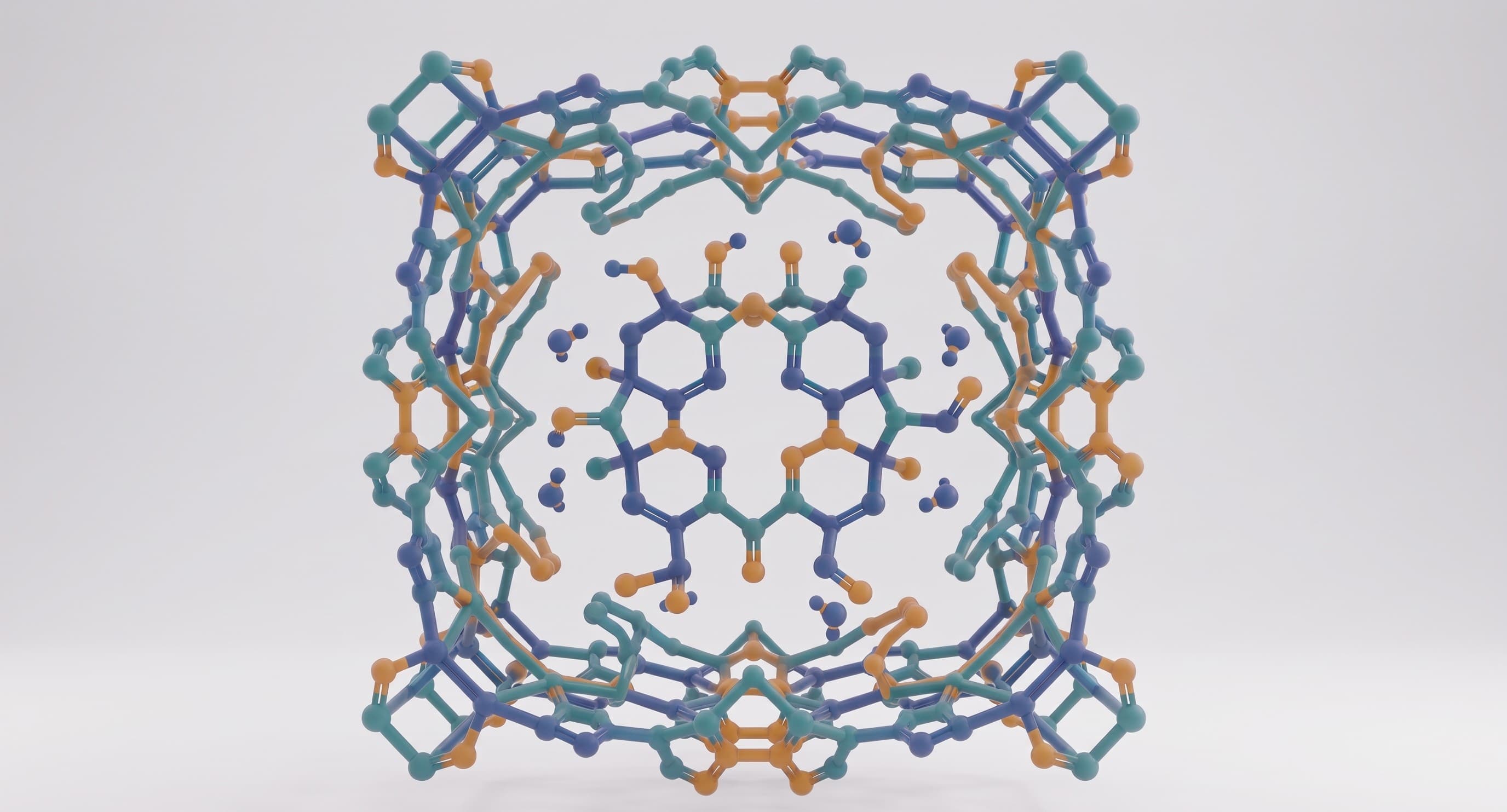
Rifaximin is an oral, non-systemic semi-synthetic antibiotic widely prescribed as Xifaxan for travelers\' diarrhea, irritable bowel syndrome with diarrhea (IBS-D), and reduction in risk of overt hepatic encephalopathy (HE) recurrence. Chemically, it is a pyrido-imidazo-rifamycin built upon the classic rifamycin macrocyclic ansa skeleton. Because the molecule acts almost exclusively locally within the gastrointestinal tract due to negligible systemic absorption (<0.4%), its physical solid-state characteristics--solubility, crystal packing, and dissolution kinetics--directly dictate both its local therapeutic activity and safety profile.
In U.S. Patent Nos. 7,612,199 and 7,902,206, Salix and its licensor Alfasigma claimed specific crystalline polymorphic forms of rifaximin, notably Form beta. The claims recited distinct powder X-ray diffraction (PXRD) 2-theta peaks and specified a water content greater than 4.5%. Salix asserted that discovering and isolating Form beta was an unpredictable breakthrough that warranted independent patent protection separate from the expired composition-of-matter patent on the base chemical entity.
Generic applicant Norwich Pharmaceuticals challenged these polymorph claims in Hatch-Waxman ANDA litigation, pointing to a seminal 1986 patent to Cannata et al. (U.S. Patent No. 4,572,903). Cannata taught the general synthesis of rifaximin and disclosed crystallization from a 7:3 ethanol/water solvent mixture at 50 to 60 degrees Celsius, followed by cooling, filtration, and drying. Expert evidence demonstrated that following Cannata\'s exact crystallization protocol routinely produces crystalline Form beta whenever the crystallization and ambient handling preserve a water content above 4.5%.
Salix defended its claims by invoking Federal Circuit decisions such as Grunenthal and Pharmacyclics, arguing that solid-state polymorphism is inherently unpredictable, and that identifying specific crystalline forms cannot be rendered obvious simply because the underlying molecule was previously synthesized. The Federal Circuit firmly rejected this broad shield. Writing for the unanimous panel, Judge Lourie explained that while polymorph behavior involves empirical experimentation, characterizing the physical crystal form resulting from a known, disclosed crystallization procedure is routine for a person of ordinary skill in the art. Where the prior art provides an explicit recipe that yields the polymorph, an artisan would have had a reasonable expectation of success in isolating and characterizing that form with standard analytical tools.
The decision also delivered a vital lesson in Hatch-Waxman litigation procedure. While Norwich succeeded in invalidating both the polymorph patents and the IBS-D dosing claims, Salix prevailed on its method-of-use patents directed to maintaining remission of hepatic encephalopathy. Following trial, Norwich moved under Rule 59(e) and Rule 60(b) to modify the district court\'s final judgment, seeking to carve out the infringing HE indication from its ANDA and obtain immediate FDA approval for IBS-D alone. The Federal Circuit affirmed the denial of Norwich\'s motion. Under 35 U.S.C. 271(e)(4)(A), once an ANDA applicant litigates its full application to final judgment and loses on an asserted indication, it cannot post-trial circumvent the statutory injunction by retroactively altering its regulatory filing.
For pharmaceutical patent strategists and generic manufacturers, Salix v. Norwich establishes clear operational boundaries. Solid-state polymorph patents cannot survive scrutiny where crystallization protocols in early chemical disclosures yield the claimed crystal form upon routine replication. At the same time, generic litigators cannot treat Section viii carve-outs as a post-trial safety net once they elect to litigate the entire label to final judgment.
What we do
See if this applies to one of your matters
We run genus/species (Markush) claim coverage analysis, Section 3(d) compliance screening, and prior-art structural triage on real chemical structures: not keyword search. If a case like this one is live for you, we'll run a free sample on a compound of your choosing.