
Sanofi Isolated Clopidogrel's Active Enantiomer from a Toxic Racemate. The Federal Circuit Held Unpredictable Property Separation Defeats Obviousness.
By Prashant Kotian, PhD Researcher (Chemistry), ICT Mumbai
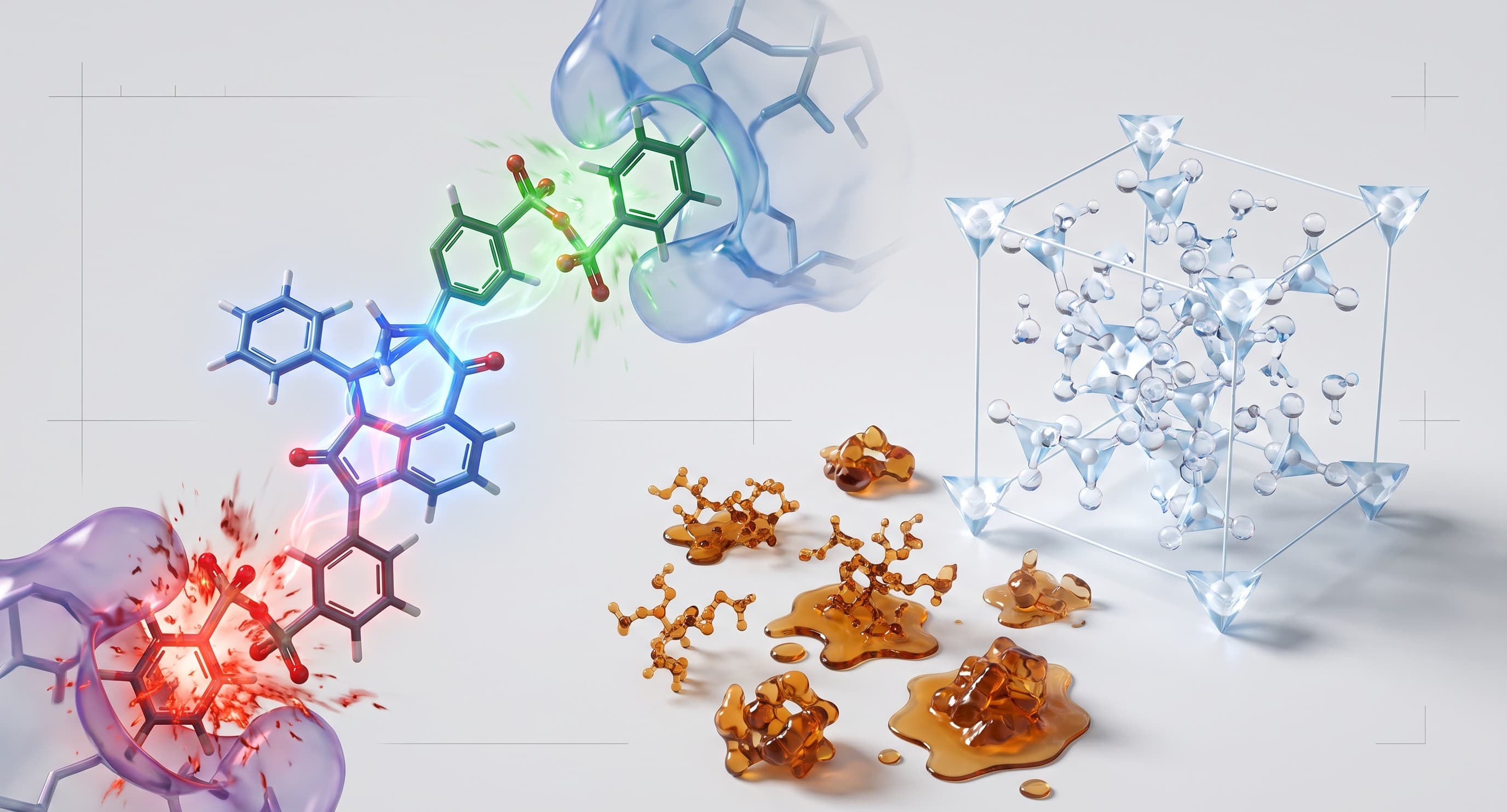
When medicinal chemists identify a biologically active drug candidate as a racemic mixture, conventional wisdom often suggests that resolving the individual enantiomers is a predictable, routine next step. But under United States patent jurisprudence, can the unexpected partition of efficacy and toxicity between stereocenters--coupled with extreme solid-state unpredictability--support a patent on an isolated single enantiomer salt?
In Sanofi-Synthelabo v. Apotex, Inc., 550 F.3d 1075 (Fed. Cir. 2008), the U.S. Court of Appeals for the Federal Circuit delivered an affirmative answer in one of the most critical Hatch-Waxman decisions in pharmaceutical history. Authored by Circuit Judge Pauline Newman and joined by Circuit Judges Alan D. Lourie and Sharon Prost, the court affirmed a final judgment from the U.S. District Court for the Southern District of New York (Judge Sidney H. Stein), upholding the validity of claim 1 of U.S. Patent No. 4,847,265 ('the '265 patent') covering clopidogrel hydrogen sulfate (Plavix).
The decision firmly establishes that KSR obviousness principles cannot invalidate an isolated single-enantiomer salt where the prior art provided no reasonable expectation that stereochemical resolution would achieve an absolute segregation of therapeutic benefit from lethal toxicity, and where solid-state salt screening proved exceptionally unpredictable.
### The Chemistry of Thienopyridine Antiplatelet Agents and Enantiomeric Resolution
Clopidogrel, chemically designated as methyl (+)-(S)-alpha-(2-chlorophenyl)-6,7-dihydrothieno[3,2-c]pyridine-5(4H)-acetate, is a second-generation thienopyridine prodrug widely prescribed to prevent thrombotic events, including myocardial infarction and ischemic stroke.
Following oral administration, clopidogrel undergoes extensive hepatic bioactivation. Roughly 85% of circulating clopidogrel is hydrolyzed by human carboxylesterase 1 (CES1) into an inactive carboxylic acid metabolite. The remaining 15% is metabolized via a sequential two-step cytochrome P450 cascade involving CYP2C19, CYP3A4, and CYP2B6: 1. Oxidation of the thienopyridine core to form 2-oxo-clopidogrel. 2. Oxidative cleavage of the thiolactone ring to liberate the active metabolite (R-130964), which bears a reactive, labile sulfhydryl (-SH) thiol moiety.
At the molecular level, this active thiol group forms a covalent disulfide bond with critical cysteine residues (specifically Cys17 and Cys270) within the extracellular loops of the platelet P2Y12 purinergic G-protein coupled receptor. This covalent linkage irreversibly locks the receptor in an inactive conformation, blocking adenosine diphosphate (ADP)-mediated activation of the GPIIb/IIIa integrin complex and permanently suppressing platelet aggregation for the lifespan of the platelet (7 to 10 days).
The molecule possesses a single asymmetric chiral carbon center at the alpha position adjacent to the 2-chlorophenyl ring and the methyl ester moiety, giving rise to two non-superimposable mirror-image stereoisomers: the dextrorotatory (+) enantiomer and the levorotatory (-) enantiomer.
### The Prior Art Racemate PCR 4099 and Biological Separation
Years before inventing clopidogrel, Sanofi synthesized and patented a diverse series of thienopyridine compounds in U.S. Patent No. 4,529,596 (the '596 patent). Among the preferred embodiments was PCR 4099, the racemic hydrochloride salt containing an equimolar (50:50) mixture of the (+) and (-) enantiomers.
Although PCR 4099 demonstrated potent antiplatelet activity in preliminary screening, clinical development revealed intolerable safety liabilities. In preclinical toxicology evaluations and early clinical assessments, the racemic drug caused severe, dose-limiting adverse events, including acute gastric erosion and dangerous neurotoxicity.
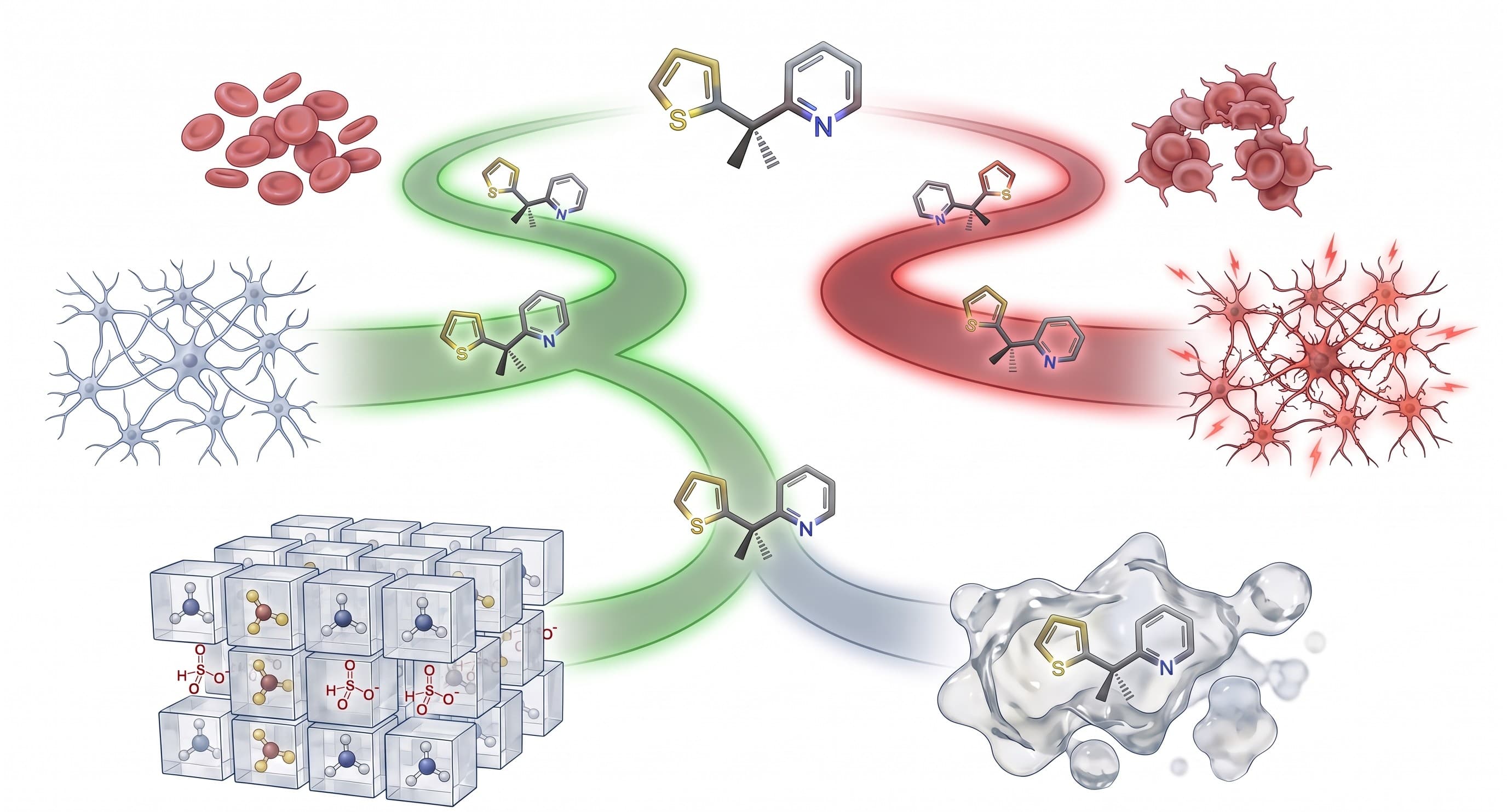
Seeking to overcome these liabilities, Sanofi scientists set out to resolve PCR 4099 into its individual enantiomers. Resolution was achieved through classical fractional crystallization of diastereomeric salts formed with (1R)-(-)-10-camphorsulfonic acid. When the isolated enantiomers were subjected to pharmacological and toxicological profiling, the results defied all conventional expectations: - The dextrorotatory (+) enantiomer, clopidogrel, accounted for 100% of the antiplatelet and antithrombotic efficacy. Furthermore, clopidogrel exhibited substantially enhanced gastric tolerance. - The levorotatory (-) enantiomer was completely devoid of antiplatelet activity. However, it was discovered to be the sole culprit behind the catastrophic toxicity of the racemate, causing severe, fatal convulsant neurotoxicity and cerebellar damage in animal models.
Thus, resolving the racemate did not merely double potency; it accomplished an absolute, unpredictable segregation of therapeutic efficacy from fatal neurotoxicity.
### The Solid-State Screening Hurdle: 20 Failed Salts
Isolating the active enantiomer was only half the medicinal chemistry challenge. Free base clopidogrel is a viscid, thermodynamically unstable oily liquid that rapidly discolors and degrades upon ambient exposure. To formulate a reliable solid oral dosage tablet, Sanofi formulators needed a crystalline, non-hygroscopic, thermo-stable acid addition salt.
Sanofi systematically evaluated 21 pharmaceutically acceptable acid addition salts, including conventional candidates such as hydrochloride, hydrobromide, maleate, methanesulfonate, tartrate, and citrate.
Remarkably, twenty out of the twenty-one candidate salts failed completely to yield crystalline solids. Instead, they produced amorphous gums, hygroscopic syrups, or rapidly decomposing glassy masses that could not be processed into tablets or stored under commercial shelf-life conditions.
Only one counter-ion formed an acceptable solid: benzenesulfonic acid and sulfuric acid were evaluated, and sulfuric acid uniquely yielded clopidogrel hydrogen sulfate (clopidogrel bisulfate). This salt crystallized cleanly into free-flowing, non-hygroscopic crystals possessing outstanding mechanical stability and high chemical purity. Sanofi patented this specific salt in the '265 patent, advancing it into commercial production as Plavix.
### The Hatch-Waxman Challenge and Obviousness Analysis
Generic manufacturer Apotex filed an ANDA seeking approval to market generic clopidogrel bisulfate, certifying under Paragraph IV that the '265 patent was invalid for obviousness under 35 U.S.C. 103 over Sanofi's prior art '596 patent and general stereochemical literature.
Apotex argued that: 1. The prior art '596 patent explicitly disclosed the racemate PCR 4099 and suggested that resolving isomers was possible using standard techniques. 2. A person of ordinary skill in the art would naturally be motivated to separate the racemate into its enantiomers in accordance with routine drug development practices. 3. Once the active enantiomer was isolated, testing standard acid addition salts was a routine exercise in optimization.
The Federal Circuit decisively rejected Apotex's obviousness challenge, affirming Judge Sidney Stein's extensive factual findings.
Writing for the panel, Judge Newman explained that an obviousness inquiry cannot rely on hindsight reconstruction. While separation techniques were known in the art, a skilled artisan at the priority date had no reasonable expectation of success that resolving PCR 4099 would achieve an absolute, clean separation between therapeutic activity and lethal toxicity.
In many racemic drug pairs, both enantiomers exhibit therapeutic activity or share toxicities to varying degrees. The complete concentration of antiplatelet efficacy into the dextrorotatory isomer accompanied by the total retention of convulsant neurotoxicity in the levorotatory isomer was a profoundly unexpected biological finding that powerfully rebutted any prima facie case of obviousness.
Furthermore, the Federal Circuit held that the district court properly credited the extreme solid-state unpredictability. The fact that twenty out of twenty-one pharmaceutically acceptable salts failed to crystallize demonstrated that salt selection for clopidogrel was not a predictable exercise of routine optimization. The discovery of the hydrogen sulfate salt was an inventive technical breakthrough that enabled the creation of a stable, lifesaving commercial medicine.
The Federal Circuit's decision in Sanofi v. Apotex remains a cornerstone precedent in pharmaceutical patent law, demonstrating that when stereochemical resolution delivers unforeseen divergence in biological safety and non-routine solid-state crystallization, the resulting single enantiomer salt stands upon firm, non-obvious ground.
What we do
See if this applies to one of your matters
We run genus/species (Markush) claim coverage analysis, Section 3(d) compliance screening, and prior-art structural triage on real chemical structures: not keyword search. If a case like this one is live for you, we'll run a free sample on a compound of your choosing.