
Teva and Sun Pharma Swapped a Pyridine Methyl to Attack Pantoprazole. The Federal Circuit Held Known Potency Made Compound 12 a Natural Lead.
By Prashant Kotian, PhD Researcher (Chemistry), ICT Mumbai
In the high-stakes arena of pharmaceutical lifecycle management, brand innovators frequently defend blockbuster monopolies by arguing that selecting a specific lead compound from the prior art requires impermissible hindsight. When generic challengers launch patent attacks against multi-billion-dollar small molecules, the courtroom battle routinely hinges on whether the claimed active ingredient represents a patentable chemical breakthrough or merely an obvious modification of an established scaffold. In Altana Pharma AG v. Teva Pharmaceuticals USA, Inc., the U.S. Court of Appeals for the Federal Circuit delivered an essential precedent on chemical obviousness under 35 U.S.C. 103, affirming the denial of a preliminary injunction against generic challengers Teva and Sun Pharmaceutical Industries. By refusing to block generic market entry for pantoprazole sodium (Protonix)--a proton pump inhibitor generating billions in annual revenue--the appellate court underscored that compelling public biological data will cement a prior art molecule as a natural lead compound, and that innovators cannot rely on secret, undisclosed internal drawbacks to shield their patents.
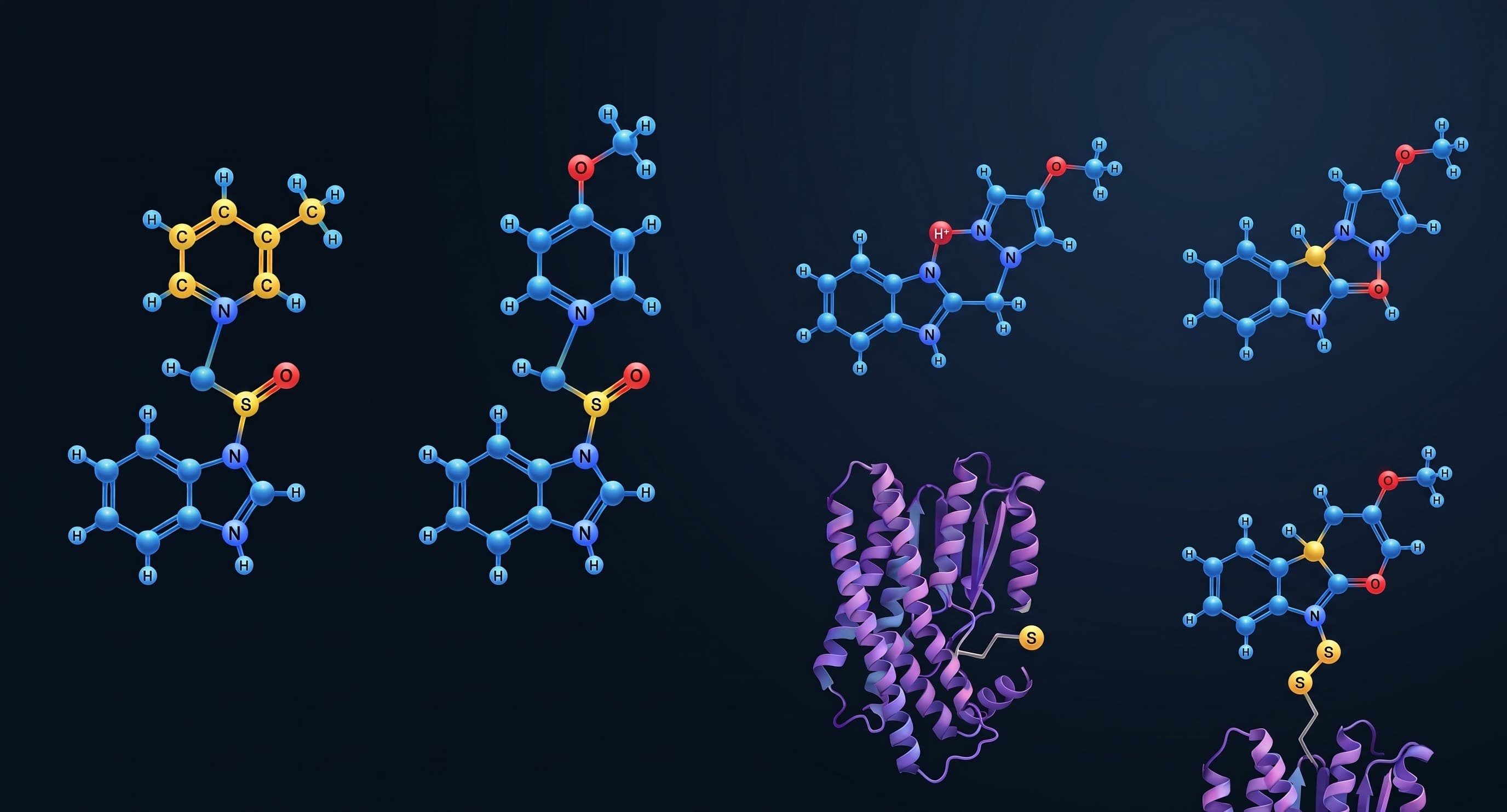
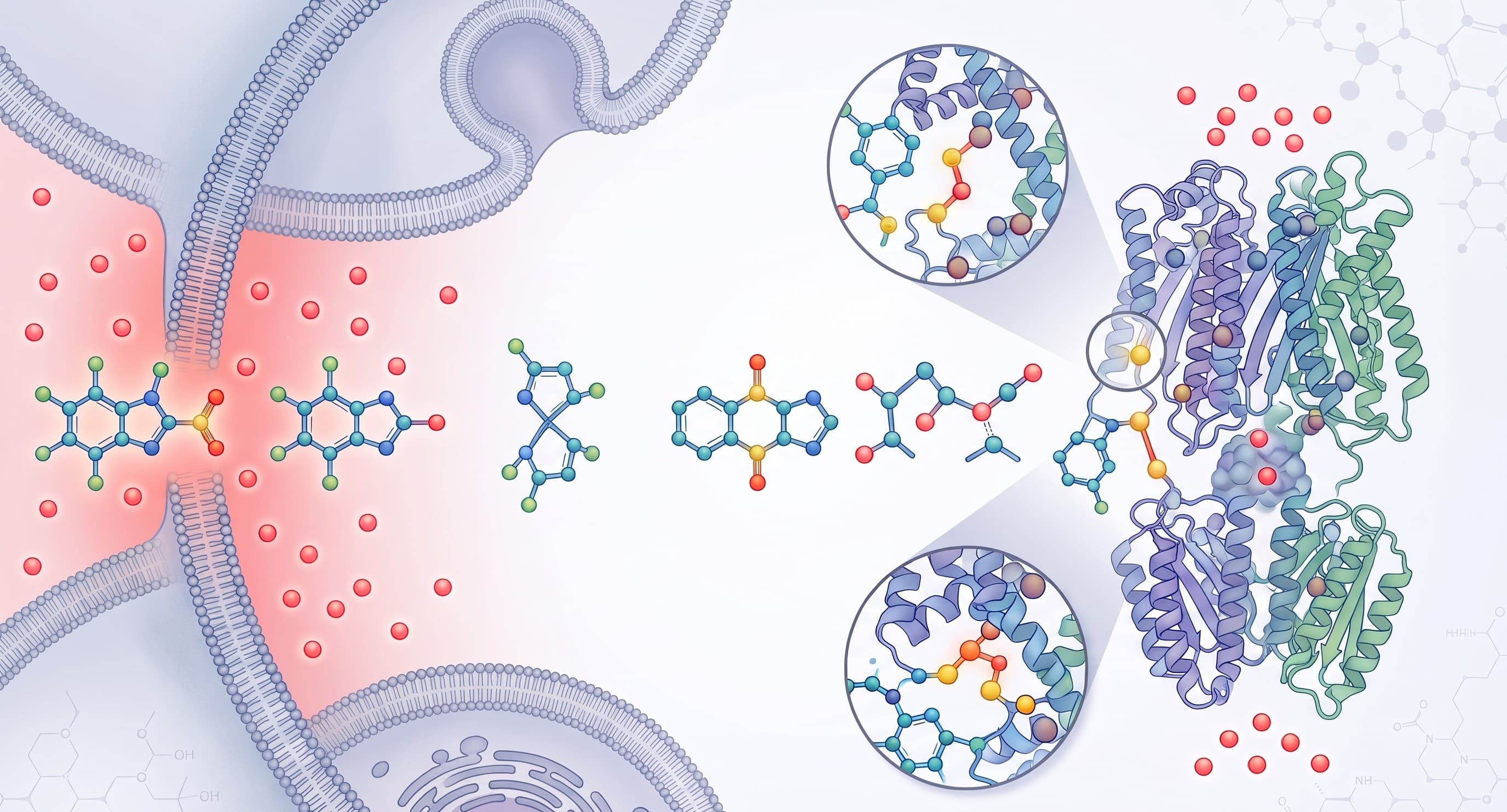
The medicinal chemistry of gastric acid suppression centers on the parietal cell secretory canaliculus, where the H+/K+-ATPase enzyme acts as the definitive proton pump. Proton pump inhibitors share a conserved molecular framework consisting of a substituted benzimidazole ring tethered through a chiral sulfinyl linker to a substituted pyridine ring. These molecules operate as prodrugs: upon diffusing into the canalicular space, where the pH plummets below 2.0, the pyridine nitrogen becomes protonated. This acid activation triggers a concerted nucleophilic rearrangement, forming a spiro-dihydrobenzimidazole intermediate that dehydrates into a planar, reactive tetracyclic sulfenamide. The electrophilic sulfenamide then forms covalent disulfide bridges with critical cysteine residues on the luminal alpha-subunit of the proton pump, permanently inactivating the enzyme. For a PPI to achieve clinical success, its chemical architecture must strike an intricate kinetic balance: the pyridine ring must be sufficiently nucleophilic to activate rapidly within parietal cells, yet stable enough in neutral circulation to reach gastric tissue intact without premature systemic decomposition.
Altana anchored Protonix with U.S. Patent No. 4,758,579 (the '579 patent), which claimed pantoprazole: 5-(difluoromethoxy)-2-[[(3,4-dimethoxy-2-pyridinyl)methyl]sulfinyl]-1H-benzimidazole. However, Altana had previously secured U.S. Patent No. 4,555,518 (the '518 patent), which disclosed a detailed series of eighteen closely related benzimidazole sulfoxides. Among these disclosures was a molecule designated 'Compound 12': 5-(difluoromethoxy)-2-[[(3-methyl-4-methoxy-2-pyridinyl)methyl]sulfinyl]-1H-benzimidazole. A direct chemical comparison revealed that pantoprazole and Compound 12 were nearly identical structural twins. Both shared the exact same 5-difluoromethoxy substitution on the benzimidazole ring and the exact same 4-methoxy group on the pyridine ring. The solitary structural difference across the entire molecular scaffold was situated at the 3-position of the pyridine ring: Compound 12 carried an electron-donating methyl group (-CH3), whereas pantoprazole featured a moderately electron-donating methoxy group (-OCH3).
When Teva, Sun Pharma, and KUDCo filed Abbreviated New Drug Applications with Paragraph IV certifications seeking to commercialize generic pantoprazole, Altana and its U.S. marketing partner Wyeth sued for patent infringement in the District of New Jersey and moved for an immediate preliminary injunction. The generic defendants mounted a vigorous defense under Section 103, asserting that the '579 patent was obvious over Compound 12. Generic litigation experts demonstrated that Compound 12 satisfied the first prong of the lead compound doctrine: the published '518 patent explicitly reported that Compound 12 was one of the two most potent gastric acid inhibitors in the entire series, exceeding the potency of omeprazole while displaying exceptionally low acute toxicity (an LD50 exceeding 1,000 mg/kg in animal models). Seeking to disqualify its own prior art disclosure, Altana produced internal, non-public research showing that Compound 12 caused thyroid toxicity and follicular cell hyperplasia in rats. Altana argued that a skilled medicinal chemist aware of this defect would have abandoned the compound. The district court firmly rejected this defense, holding that undisclosed internal testing cannot negate what the published prior art affirmatively teaches the scientific community.
Addressing the second obviousness prong, the generic challengers established a clear motivation to modify the 3-position of the pyridine ring with a reasonable expectation of success. In pyridine heterocycles, swapping a 3-methyl group for a 3-methoxy substituent subtly lowers the basicity of the pyridine nitrogen, shifting its pKa from roughly 4.8 downward to approximately 3.8 to 4.0. Published medicinal chemistry literature confirmed that this modest pKa reduction improved acid stability at neutral pH, minimizing undesirable degradation in systemic transit while preserving potent acid-mediated activation in parietal canaliculi. Writing for the Federal Circuit alongside District Judge T. John Ward, Circuit Judge Arthur J. Gajarsa affirmed the denial of the preliminary injunction, concluding that the generic defendants had raised a substantial question of invalidity. While Circuit Judge Pauline Newman concurred on preliminary relief grounds, the ruling sent shockwaves through the pharmaceutical sector. Empowered by the decision, Teva and Sun Pharma executed historic at-risk generic launches, permanently demonstrating that structural similarity combined with published preclinical potency leaves compound monopolies highly vulnerable to obviousness attacks.
What we do
See if this applies to one of your matters
We run genus/species (Markush) claim coverage analysis, Section 3(d) compliance screening, and prior-art structural triage on real chemical structures: not keyword search. If a case like this one is live for you, we'll run a free sample on a compound of your choosing.