
Teva Swapped a Pyridine Nitrogen to Claim Risedronate Was Obvious. The Federal Circuit Held Bone Mineralization Toxicity Taught Away.
By Prashant Kotian, PhD Researcher (Chemistry), ICT Mumbai
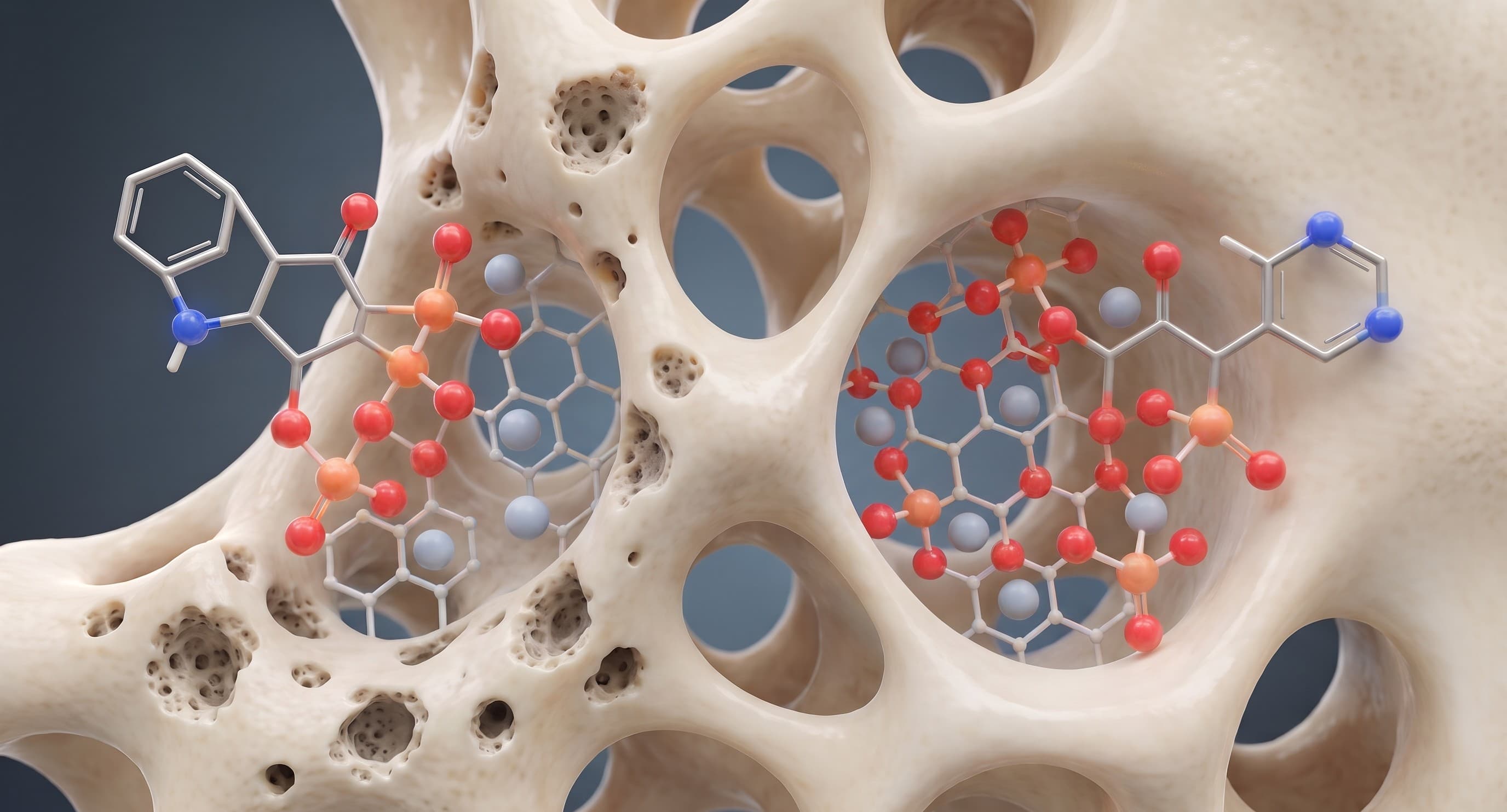
In pharmaceutical patent litigation, generic challengers frequently deploy structural isomerism as an intuitive weapon against primary compound patents. Under the Supreme Court's flexible obviousness framework in KSR International Co. v. Teleflex Inc., generic filers routinely argue that walking a heteroatom along an aromatic ring, shifting an alkyl branch, or testing positional isomers represents routine optimization within the ordinary skill of medicinal chemists.
However, in The Procter & Gamble Company v. Teva Pharmaceuticals USA, Inc. (566 F.3d 989), the United States Court of Appeals for the Federal Circuit established an enduring boundary against retroactive hindsight in chemical patent law. Affirming Chief Judge Joseph J. Farnan, Jr. of the U.S. District Court for the District of Delaware, the Federal Circuit held that structural similarity between positional isomers cannot establish prima facie obviousness under 35 U.S.C. 103 without clear and convincing evidence that a person of ordinary skill in the art would have selected the asserted prior art molecule as a lead compound and possessed a reasonable expectation of success in modifying it. Crucially, where the asserted prior art molecule exhibits debilitating clinical toxicities--specifically the inhibition of normal bone mineralization--that toxic profile teaches away from selecting it as a lead compound, defeating an obviousness challenge as a matter of law.
### Pyrophosphate Mimicry: The Architecture and Pharmacology of Bisphosphonates
To appreciate the medicinal chemistry dispute, one must examine the molecular physiology of bone remodeling and the synthetic evolution of bisphosphonates. Healthy skeletal tissue maintains equilibrium through coupled cycles of bone resorption by multinucleated osteoclasts and bone formation by osteoblasts. When osteoclastic resorption outpaces bone deposition, pathological bone loss ensues, precipitating postmenopausal osteoporosis and Paget's disease.
Endogenous pyrophosphate (P-O-P) regulates calcification in biological systems, but its labile phosphodiester-like oxygen bridge undergoes rapid enzymatic hydrolysis by alkaline phosphatases. To overcome this metabolic vulnerability, medicinal chemists engineered synthetic bisphosphonates, substituting the bridging oxygen atom with a geminal carbon atom to forge a stable, non-hydrolyzable P-C-P backbone.
This P-C-P architecture acts as a "bone hook." The two negatively charged phosphonate groups chelate divalent calcium ions (Ca2+) embedded within the crystalline hydroxyapatite lattice (Ca10(PO4)6(OH)2) of trabecular bone surfaces with high thermodynamic affinity. When bone-resorbing osteoclasts assemble an acidic sealing zone (pH approximately 4.5) to dissolve mineralized bone, the embedded bisphosphonate molecules are released and internalized by osteoclasts through fluid-phase endocytosis.
In nitrogen-containing bisphosphonates such as risedronate, the basic nitrogen atom plays a vital pharmacological role: it binds directly to the active site of farnesyl pyrophosphate synthase (FPPS), a key regulatory enzyme in the mevalonate biosynthetic pathway. Inhibiting FPPS halts the downstream synthesis of isoprenoid lipids, specifically farnesyl pyrophosphate (FPP) and geranylgeranyl pyrophosphate (GGPP). Deprived of these lipid anchors, essential small GTP-binding proteins (including Rho, Rac, Rab, and Cdc42) fail to undergo post-translational prenylation and cannot anchor to intracellular membranes. This molecular disruption causes cytoskeletal collapse, loss of the osteoclast ruffled border, and apoptosis, halting bone resorption.
### The Fatal Flaw of First-Generation Bisphosphonates
The central therapeutic dilemma confronting bisphosphonate development in the 1970s and 1980s was not potency, but safety. The earliest commercialized bisphosphonate, etidronate (1-hydroxyethylidene-1,1-bisphosphonic acid, or EHDP), lacked a nitrogen-bearing side chain. While etidronate bound bone mineral and blunted osteoclast resorption, it possessed a severe, dose-limiting clinical flaw: at doses required to inhibit bone resorption, it simultaneously poisoned normal osteoblastic bone mineralization.
By impairing the calcification of newly synthesized unmineralized osteoid matrix, etidronate caused clinical osteomalacia, spontaneous non-traumatic bone fractures, and weakened skeletal architecture. Etidronate operated within an exceptionally narrow therapeutic window, with a toxic-to-effective ratio of roughly 1:1 to 2:1. Clinicians could only administer etidronate in intermittent, cyclical pulses to prevent skeletal failure. For medicinal chemists at Procter & Gamble, the holy grail was designing a bisphosphonate that dramatically amplified anti-resorptive potency without inhibiting bone mineralization at therapeutic doses.
### The Prior Art Genus and the Positional Isomer Challenge
In U.S. Patent No. 4,761,406 (the '406 patent), Procter & Gamble disclosed a broad genus of bisphosphonates for treating osteoporosis and highlighted 36 specific compounds, including "2-pyr EHDP" ([1-hydroxy-2-(2-pyridinyl)ethylidene]bis[phosphonic acid]). In 2-pyr EHDP, the geminal bisphosphonate ethylidene chain is linked to the 2-position of a pyridine ring, immediately adjacent to the heterocyclic nitrogen atom.

Subsequently, P&G synthesized risedronate ([1-hydroxy-2-(3-pyridinyl)ethylidene]bis[phosphonic acid], marketed as Actonel), which was claimed in Claim 40 of U.S. Patent No. 5,583,122 (the '122 patent). Structurally, risedronate (3-pyr EHDP) is a positional isomer of 2-pyr EHDP: the geminal bisphosphonate chain is attached to carbon-3 of the pyridine ring rather than carbon-2.
When Teva Pharmaceuticals filed an Abbreviated New Drug Application (ANDA) seeking FDA approval for generic risedronate tablets, it conceded infringement but asserted that Claim 40 was invalid under 35 U.S.C. 103 for obviousness (and obviousness-type double patenting) over 2-pyr EHDP in the '406 patent. Relying on KSR, Teva argued that because 2-pyr EHDP was disclosed as an active anti-resorptive bisphosphonate, an artisan of ordinary skill in 1985 would have selected it as a lead compound. Teva contended that "ring walking" the geminal bisphosphonate chain from the 2-position to the 3-position was an obvious positional isomer exploration that a medicinal chemist would routinely attempt with a reasonable expectation of success.
### The Federal Circuit Analysis: Lead Compound Selection and Teaching Away
Writing for a unanimous panel that included Circuit Judges Haldane Robert Mayer and Timothy B. Dyk, Circuit Judge Arthur J. Gajarsa affirmed Chief Judge Farnan's validity judgment, issuing a comprehensive clarification of post-KSR chemical patent law.
The Federal Circuit firmly rejected Teva's premise that KSR eliminated the requirement to prove a prima facie case of chemical obviousness. Under Section 103, establishing obviousness based on structural similarity requires clear and convincing evidence across two mandatory prongs: 1. That a skilled artisan would have selected the asserted prior art molecule as a lead compound for further structural development; and 2. That the prior art would have provided a reason or motivation to modify that lead compound to reach the claimed molecule with a reasonable expectation of success.
On the first prong, the Federal Circuit held that Teva failed to prove that a POSITA in 1985 would have selected 2-pyr EHDP as a lead compound. Although 2-pyr EHDP demonstrated anti-resorptive activity, extensive pre-1985 scientific literature established that it shared etidronate's fatal liability: it produced severe bone mineralization defects and possessed an unacceptably low therapeutic index (narrow margin between efficacy and osteomalacia).
Judge Gajarsa emphasized that lead compound analysis is grounded in real-world pharmacology, not abstract structural cataloging. When a prior art molecule displays severe toxic side effects or exhibits the very physiological liability that the medical community is desperately trying to cure, those negative properties teach away from selecting that molecule as a starting point for drug design. A skilled artisan seeking a viable long-term osteoporosis therapy would not choose a compound known to disrupt bone mineralization when non-toxic alternative scaffolds were available.
### Unpredictability of Heterocyclic Ring Shifts and Unexpected Results
The court further held that even if an artisan had selected 2-pyr EHDP as a starting molecule, Teva failed the second prong. Shifting the geminal bisphosphonate moiety from position 2 to position 3 on a pyridine ring was entirely unpredictable in 1985. In heterocyclic bisphosphonate chemistry, positional isomerism produces dramatic, non-linear alterations in biological activity. Moving the ring nitrogen relative to the ethylidene chain alters spatial orientation, steric accessibility, steric hindrance near the active-site catalytic residues of FPPS, and the basicity (pKa) of the pyridine nitrogen. Prior art studies revealed that altering ring substitution patterns or moving nitrogen heteroatoms frequently abolished pharmacological potency or multiplied systemic toxicity. The prior art offered no rationale to predict that moving the side chain to the 3-position would preserve anti-resorptive power while curing mineralization toxicity.
Finally, the Federal Circuit affirmed the district court's findings on objective indicia of non-obviousness. Risedronate demonstrated profound unexpected results that decisively refuted Teva's obviousness theories. While etidronate and 2-pyr EHDP carried low therapeutic ratios of roughly 1:1 to 2:1, risedronate exhibited a 1,000-fold expansion in anti-resorptive potency without inhibiting bone mineralization at therapeutic doses. This expanded the therapeutic window by three orders of magnitude (to roughly 2000:1), completely separating anti-resorptive efficacy from skeletal mineralization toxicity. The Federal Circuit affirmed that this dramatic therapeutic decoupling was an unexpected pharmacological difference in kind, not merely a routine difference in degree.
### Strategic Implications for Innovators and Generic Filers
The Federal Circuit's decision in Procter & Gamble v. Teva continues to shape chemical patent prosecution and Hatch-Waxman litigation worldwide:
1. **Positional Isomerism Is Not Per Se Obvious**: Generic filers cannot invalidate small-molecule patents simply by showing that a claimed drug is a positional isomer or structural homolog of an earlier disclosed compound. The challenger must demonstrate an affirmative, non-hindsight reason why an artisan would select the specific prior art molecule as a lead and execute the precise structural modification with a reasonable expectation of success. 2. **Toxic Side Effects Provide Powerful Teaching Away Evidence**: Innovators facing obviousness attacks on second-generation molecules should systematically audit the toxicology, side-effect profile, and therapeutic margins of cited prior art compounds. Demonstrating that a prior art candidate caused dose-limiting toxicities (such as bone mineralization defects, QT prolongation, or hepatotoxicity) can effectively disqualify it as a lead compound under Federal Circuit jurisprudence. 3. **Difference in Kind Solidifies Patent Validity**: Demonstrating that a molecular modification cures a class-wide therapeutic defect or separates desired clinical efficacy from toxic side effects establishes a bona fide "difference in kind." Such unexpected pharmacology decisively overcomes generic arguments that potency enhancements are merely incremental optimizations of degree.
What we do
See if this applies to one of your matters
We run genus/species (Markush) claim coverage analysis, Section 3(d) compliance screening, and prior-art structural triage on real chemical structures: not keyword search. If a case like this one is live for you, we'll run a free sample on a compound of your choosing.