
UCB Added PVP to Prevent Rotigotine Crystallization. The Federal Circuit Held Prior Art Overlap Defeats Unexpected Results.
By Prashant Kotian, PhD Researcher (Chemistry), ICT Mumbai
When a pharmaceutical innovator discovers that adding a specific polymer stabilizes an amorphous drug against catastrophic polymorphic crystallization, can it patent that formulation if prior art already described the same ingredients in overlapping concentration ranges?
In UCB, Inc. v. Actavis Laboratories UT, Inc. (Appeal No. 2021-1924, 65 F.4th 679), the U.S. Court of Appeals for the Federal Circuit delivered an instructive precedent on solid-state formulation chemistry and the limits of patentability under 35 U.S.C. 103. The court affirmed that discovering the underlying biophysical mechanism of an existing chemical mixture -- even one that rescues a blockbuster therapeutic from a devastating worldwide commercial recall -- cannot rescue claims from obviousness when the prior art already disclosed overlapping ingredient ranges.
### The Biophysics of Transdermal Delivery and the Form II Crisis
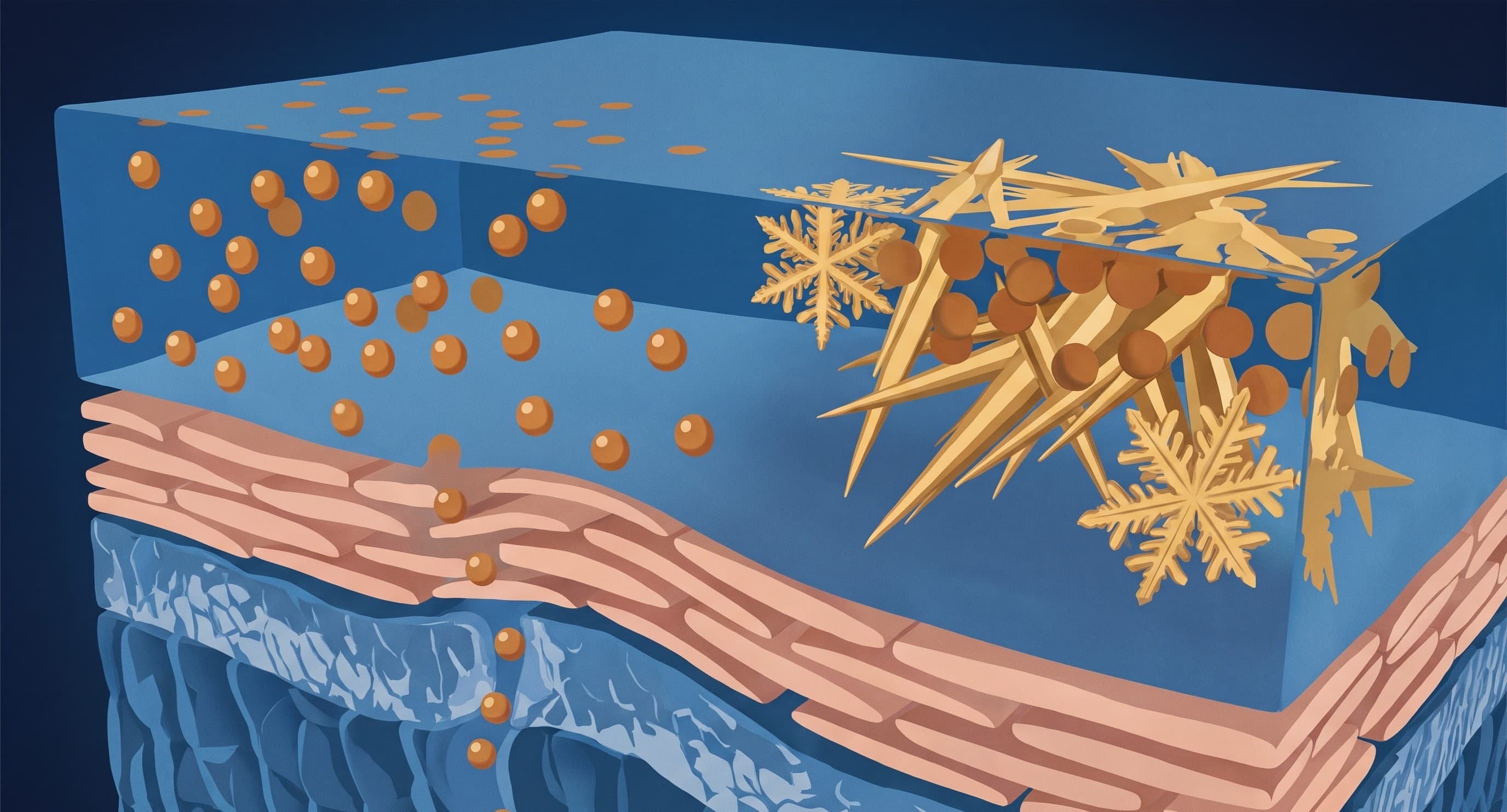
Rotigotine, chemically designated as (6S)-6-[propyl(2-thiophen-2-ylethyl)amino]-5,6,7,8-tetrahydronaphthalen-1-ol, is a non-ergoline dopamine D2/D3/D1 receptor agonist developed to treat Parkinson's disease and moderate-to-severe primary restless legs syndrome. Because rotigotine undergoes extensive first-pass hepatic metabolism resulting in an oral bioavailability under five percent, effective therapy requires continuous parenteral administration. UCB formulated rotigotine as a matrix-type transdermal therapeutic system (marketed as Neupro), in which the active drug is molecularly dispersed in a hydrophobic, non-polar silicone pressure-sensitive adhesive (PSA) matrix applied directly to the skin.
For transdermal flux across the hydrophobic lipid bilayer of the human stratum corneum to occur at therapeutic rates, the active pharmaceutical ingredient must remain thermodynamically active in a molecularly dissolved, amorphous state within the silicone adhesive. When Neupro was initially approved and commercialized in the United States and Europe, the solid-state drug substance existed as polymorph Form I, an amorphous-to-metastable crystalline state with a melting point of approximately 77 degrees Celsius.
However, in early 2008, UCB faced an existential formulation crisis. Batches of Neupro transdermal patches distributed worldwide began exhibiting visible, snowflake-shaped dendritic precipitates and sharp, needle-like crystalline clusters within the silicone matrix. Laboratory analysis revealed that rotigotine had spontaneously nucleated into a previously unknown, thermodynamically stable polymorph designated Form II.
Form II possesses a significantly higher melting point (approximately 97 degrees Celsius), greater crystal lattice packing energy, and lower Gibbs free energy than Form I. Crucially, Form II exhibits substantially lower saturation solubility in the hydrophobic silicone adhesive. As Form II crystals nucleated and grew, molecularly dissolved rotigotine was progressively depleted from the polymer matrix. Because passive transdermal diffusion is strictly driven by the chemical potential gradient of freely dissolved drug, this crystallization caused skin permeation flux to plummet, resulting in subtherapeutic systemic dosing, clinical failure, and an immediate worldwide market recall in 2008.
### Rational Formulation Design: PVP as a Solid-State Crystallization Inhibitor
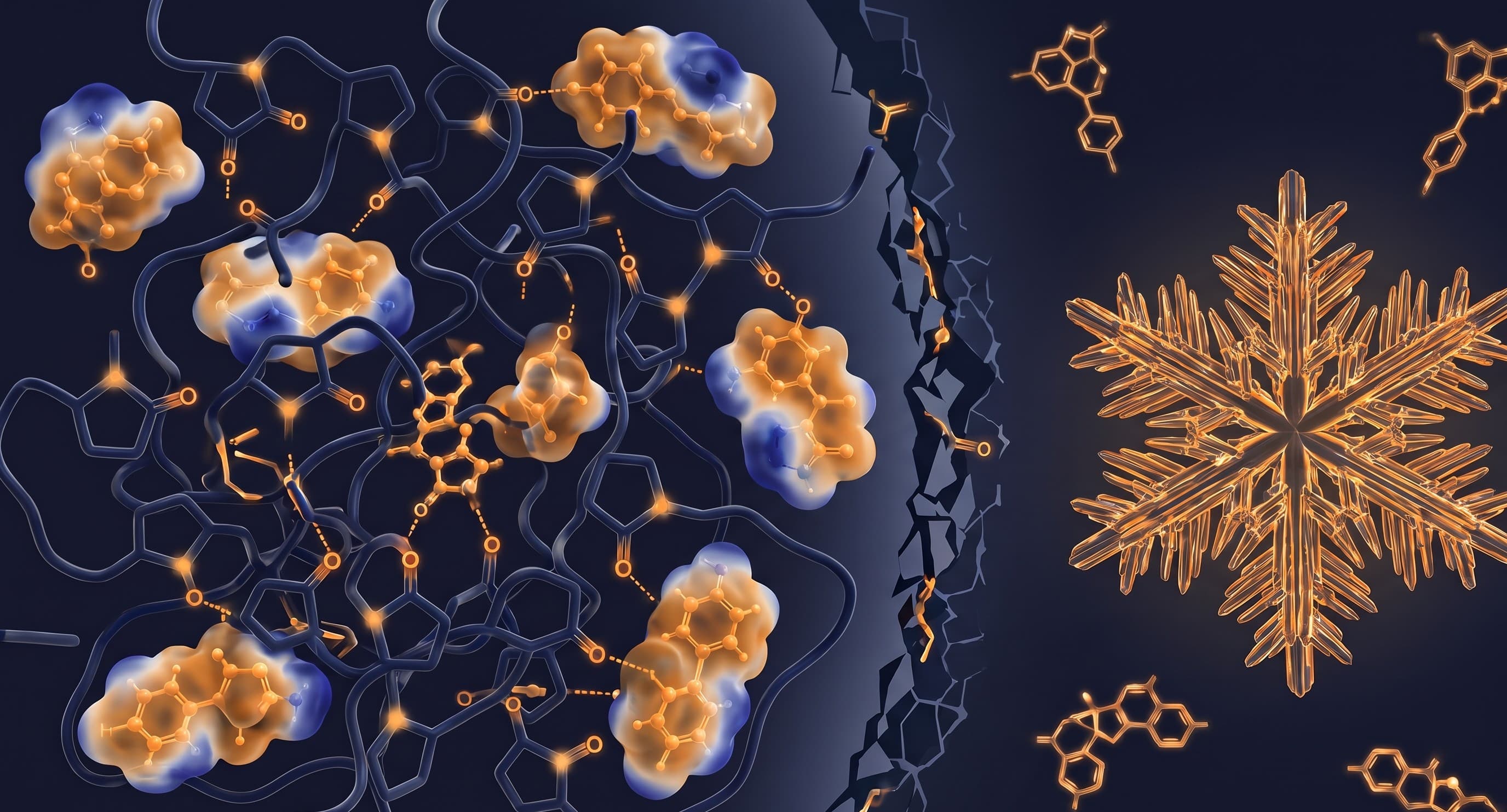
To salvage the product, formulation scientists investigated macromolecular excipients capable of inhibiting Form II nucleation. UCB determined that polyvinylpyrrolidone (PVP; povidone; poly[1-(2-oxopyrrolidin-1-yl)ethylene]) acted as an exceptional solid-state crystallization inhibitor.
The chemical mechanism rests on specific intermolecular non-covalent interactions: 1. Hydrogen Bonding: The lactam ring of each repeating vinylpyrrolidone unit contains a highly polarized carbonyl oxygen atom that serves as a powerful hydrogen-bond acceptor. This carbonyl oxygen forms directed intermolecular hydrogen bonds with the weakly acidic phenolic hydroxyl (-OH) group of the rotigotine molecule. 2. Steric Immobilization: By anchoring the phenolic pharmacophore to the bulky, flexible polymeric backbone of PVP, the polymer effectively forms a molecular solid dispersion. This sterically restricts rotigotine molecules from undergoing the rotational realignment and tight pi-stacking necessary to assemble into the Form II crystal lattice. 3. Solubility Enhancement: PVP creates micro-dispersed hydrophilic domains within the bulk hydrophobic silicone matrix, elevating the apparent saturation solubility of rotigotine and suppressing the thermodynamic driving force for phase separation.
UCB obtained U.S. Patent No. 10,130,589 ('the '589 patent'), titled 'Polyvinylpyrrolidone for the stabilization of a transdermal therapeutic system.' Claim 1 recited a transdermal therapeutic system comprising a self-adhesive matrix layer containing rotigotine and PVP in a specific weight ratio of rotigotine to PVP between 9:1.5 and 9:5 (approximately 1.8:1 to 6:1), demonstrating that patches formulated within this window remained entirely free of Form II crystals for over two years at 25 degrees Celsius.
### The Prior Art Overlap Trap: The Muller Patents
Generic challenger Actavis Laboratories UT, Inc. filed an Abbreviated New Drug Application (ANDA) seeking FDA approval for generic rotigotine transdermal patches, and UCB sued for infringement. Actavis conceded infringement but asserted that claims 1-3 of the '589 patent were invalid for obviousness under 35 U.S.C. 103 in view of UCB's own earlier disclosures, known as the 'Muller patents' (U.S. Patent Nos. 6,884,434 and 7,413,747).
The Muller patents, which formed the original patent estate for Neupro, disclosed transdermal silicone patches containing rotigotine and PVP. While Muller had not mentioned Form II (which was unknown when Muller was prosecuted) and had characterized PVP generally as a dispersing agent or solubilizer, Muller disclosed rotigotine-to-PVP weight ratios ranging broadly from about 1:0.1 to 1:10 (equivalent to 9:0.9 to 9:90). The claimed range of 9:1.5 to 9:5 in the '589 patent fell entirely within Muller's broader disclosure.
The U.S. District Court for the District of Delaware (Judge Richard G. Andrews) held claims 1-3 invalid for obviousness, finding that the claimed range overlapped with the prior art and that UCB failed to demonstrate criticality or unexpected results.
### The Federal Circuit Affirmance: Structure Trumps Newly Discovered Mechanism
On appeal, the Federal Circuit, in a precedential opinion authored by Chief Judge Kimberly A. Moore and joined by Circuit Judges Alan D. Lourie and Sharon Prost, affirmed the invalidity judgment.
The court addressed three core patent law doctrines:
1. The Presumption of Obviousness for Overlapping Ranges: Under established Federal Circuit precedent, including In re Peterson and In re Aller, where the ranges of a claimed composition fall within or overlap with ranges disclosed in the prior art, a prima facie case of obviousness exists. The court held that Actavis had established a prima facie case because the 9:1.5 to 9:5 range was squarely encompassed within Muller's 1:0.1 to 1:10 disclosure.
2. Newly Discovered Benefits of Known Compositions: UCB vigorously argued that the prior art did not render the claims obvious because the Muller patents never recognized the existence of Form II, never warned of spontaneous crystallization, and never taught that PVP could function as a solid-state crystallization inhibitor. Chief Judge Moore rejected this rationale, reaffirming a foundational tenet of patent law: discovering a previously unknown property, mechanism, or advantage of an already disclosed chemical composition does not make the composition patentable. Because Muller taught combining rotigotine, PVP, and silicone adhesive in transdermal patches for the identical therapeutic purpose, UCB's subsequent discovery of why PVP stabilized the patch against Form II crystallization was merely uncovering the scientific explanation for a composition that was already in the prior art.
3. Failure of Unexpected Results and Blocking Patents: To rebut the presumption of obviousness, UCB attempted to establish unexpected results, pointing to stability data showing that patches containing PVP remained crystal-free for two years while patches without PVP crystallized. The Federal Circuit held this comparison legally deficient. Under settled law, unexpected results must be demonstrated across the entire scope of the claimed range and must compare the claimed invention against the closest prior art -- here, patches containing PVP within adjacent ranges disclosed by Muller, not patches containing zero PVP. Finally, UCB argued that the commercial resurrection of Neupro following the 2008 recall constituted objective evidence of commercial success. The Federal Circuit affirmed that this success lacked a legal nexus to the '589 patent because commercial exploitation was legally blocked by earlier unexpired patents, including the Muller patents. When a market is controlled by blocking patents, commercial success does not reflect non-obviousness because competing generic manufacturers were legally precluded from entering the market.
### Strategic Takeaways for Formulation and Patent Teams
The UCB v. Actavis decision offers vital lessons for pharmaceutical scientists and patent counsel: - Mechanistic Insights Do Not Salvage Overlapping Formulations: Documenting an elegant intermolecular mechanism (such as hydrogen-bonded solid dispersion preventing crystal nucleation) will not establish non-obviousness if the physical components and weight ratios were already broadly described in earlier art. - Range Narrowing Demands Boundary-Line Proof: When seeking to carve a narrower subgenus or concentration window from a broad genus in the prior art, innovators must generate comparative data directly contrasting compositions inside the claimed window against compositions immediately outside it, rather than against placebos or negative controls. - Blocking Patents Constrain Secondary Exclusivity: Relying on commercial rescue to overcome obviousness will fail if earlier foundational patents prevented competitors from practicing the adjacent chemical space.
What we do
See if this applies to one of your matters
We run genus/species (Markush) claim coverage analysis, Section 3(d) compliance screening, and prior-art structural triage on real chemical structures: not keyword search. If a case like this one is live for you, we'll run a free sample on a compound of your choosing.